Finding useful storage for a hallway, compact dining area, or apartment living room can be difficult when every inch matters. The best sideboards for narrow spaces add concealed storage and surface area without overwhelming the room.
This roundup compares 10 slim sideboards in varied widths, styles, finishes, and configurations so you can choose a piece that fits your layout and daily storage needs.
Best 10 Sideboards for Narrow Spaces Picks for 2026
Best Slim Mid-Century Pick
39-Inch Fluted Walnut Sideboard

- 9.25-inch-deep profile for tight spaces
- Fluted doors with warm walnut finish
- Two outlet holes and anti-tip construction
Best For: Narrow hallways, entryways, and compact coffee bars
Best Adjustable Storage
Compact Walnut Sliding-Door Sideboard
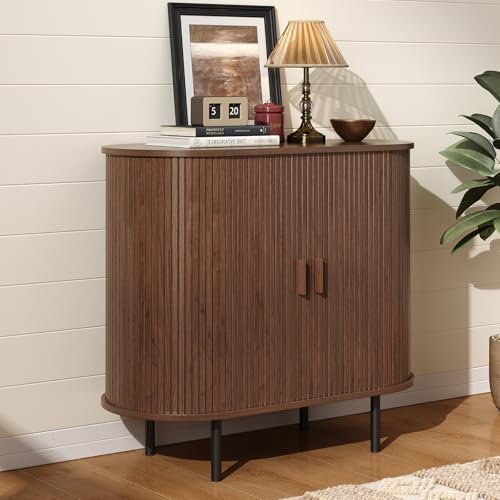
- 31.5-inch width for smaller walls
- Sliding door saves front clearance
- Shelf adjusts to three height positions
Best For: Compact kitchens, entryways, and flexible everyday storage
Best Modular Option

- Slim 9.3-inch depth
- Can combine multiple matching units
- Outlet holes and anti-tip strap included
Best For: Shallow hallways and expandable wall storage
Best Small Coffee Bar

- Compact 28.3-inch width
- Drawer plus adjustable shelf
- Soft-close hinges and full-extension slides
Best For: Small coffee bars and compact dining spaces
Ultra-Slim Pick
39" Narrow Sideboard Buffet Cabinet

- Extra-slim 9.25-inch depth
- Modular 39-, 78-, or 117-inch configurations
- Cable hole and anti-tipping design
Best For: Very narrow hallways, kitchens, and expandable storage walls
Style-and-Storage Pick

- Compact 30.88-inch width
- Adjustable shelf with three positions
- Raised base supports robot-vacuum access
Best For: Small rooms needing attractive enclosed storage
Organization Pick
Slim Walnut Sideboard with Drawers

- Two drawers plus three shelves
- Adjustable storage and useful tabletop
- 31.75-inch width with robot-vacuum clearance
Best For: Compact coffee bars, entryways, and mixed storage needs
Best with Extra Features
39-inch Narrow Walnut Sideboard

- 9.25-inch shallow depth for tight areas
- Modular design expands to longer configurations
- Walnut veneer, cable cutouts, and anti-tip strap
Best For: Narrow hallways and expandable storage layouts
Best Sliding-Door Design
32-inch Slim Walnut Accent Cabinet

- Sliding doors need no extra swing space
- Two-tier interior conceals everyday clutter
- 100-pound top capacity with cable management
Best For: Tight hallways and compact apartments
Best Simple Pick
31.5-inch Narrow Fluted Sideboard
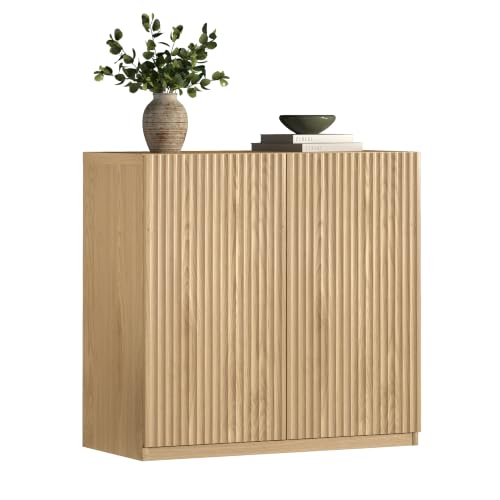
- Two adjustable shelves customize interior storage
- Modular units align with minimal visible gaps
- Soft-close hinges and integrated finger pulls
Best For: Flexible storage in living rooms, entryways, and offices
Best Slim Mid-Century Pick – 39-Inch Fluted Walnut Sideboard
For shoppers comparing sideboards for narrow spaces, this 39-inch Ball & Cast cabinet stands out for its especially slim 9.25-inch depth. Its fluted doors, walnut finish, two shelves, and cord-routing holes make it practical for an entryway, hallway, dining area, or compact coffee bar.
Best For: Narrow hallways, entryways, coffee stations, and buyers who want mid-century style with concealed storage.
Pros:
- Very shallow 9.25-inch profile helps preserve walkway space.
- Fluted doors and warm walnut finish add distinctive mid-century character.
- Two outlet holes help route cords for lamps, coffee makers, or chargers.
- Includes anti-tip construction and two shelves for organized storage.
Cons:
- Its shallow depth limits storage capacity for larger items.
- Assembly is required.
This is a strong choice when depth is the primary concern. Measure carefully around baseboards and outlets, but the slim footprint and cable-management features make it particularly adaptable to tight spaces.
Best Adjustable Storage – Compact Walnut Sliding-Door Sideboard
Among sideboards for narrow spaces, this 31.5-inch walnut cabinet offers a compact width while retaining useful interior flexibility. Its sliding door avoids a swinging-door clearance issue, and the adjustable shelf provides three height positions for different household items.
Best For: Small entryways, kitchens, living rooms, and homes needing flexible storage in a compact cabinet.
Pros:
- 31.5-inch width suits smaller walls and compact rooms.
- Sliding door design needs less clearance than a hinged door.
- Adjustable shelf offers three height options.
- Curved edges and included wall connection hardware support a softer, more secure design.
Cons:
- At 15.75 inches deep, it is not as slim as the shallowest options.
- Only one shelf is included.
- Assembly is required.
This cabinet is a sensible compromise for buyers who need a relatively narrow width but still want more interior depth. Check the available walkway clearance, especially in very tight hallways.
Best Modular Option – Black Arched-Fluted Sideboard
This black 39-inch sideboard is designed specifically for sideboards for narrow spaces, with a slim 9.3-inch depth that fits shallow hallways and compact foyers. Its real wood veneer, arched fluted doors, outlet holes, and modular format make it useful alone or as part of a longer wall arrangement.
Best For: Shallow hallways, narrow dining areas, and shoppers who may want to combine multiple matching units.
Pros:
- 9.3-inch depth helps keep walkways open.
- Real wood veneer and arched fluted doors provide a decorative finish.
- Multiple units can be combined to create a longer credenza.
- Includes two outlet holes and an anti-tip wall safety strap.
Cons:
- The modular design may encourage purchasing more than one unit for larger walls.
- Only one shelf is listed.
- Assembly is required.
This is the most flexible pick for buyers planning around an unusually shallow wall or a future expansion. Use one cabinet for a compact setup, or match additional units when you need more continuous storage.
Best Small Coffee Bar – Natural Fluted Buffet Cabinet
For sideboards for narrow spaces that need dedicated beverage or dining storage, this natural cabinet has a compact 28.3-inch width and a 13.8-inch depth. It combines two doors, one drawer, an adjustable shelf, quiet-close hinges, and full-extension drawer slides for practical everyday access.
Best For: Small coffee or tea bars, compact dining rooms, and buyers who prefer a drawer alongside cabinet storage.
Pros:
- 28.3-inch width works well where wall space is limited.
- Adjustable shelf accommodates different item sizes.
- Full-extension drawer slides provide easier access to stored items.
- Soft-close hinges and a natural fluted design add functional and visual appeal.
Cons:
- Its 13.8-inch depth requires more clearance than the slimmest cabinets.
- The listing specifies wall mounting, so installation planning is important.
- Assembly requires a screwdriver.
This option prioritizes organized coffee-bar storage over the smallest possible depth. It is a good fit when you have modest width available and want a drawer, adjustable shelf, and more structured cabinet access.
Ultra-Slim Pick – 39" Narrow Sideboard Buffet Cabinet
For shoppers comparing sideboards for narrow spaces, this 39-inch cabinet stands out with its exceptionally shallow 9.25-inch depth. Its walnut wood veneer, geometric doors, cable hole, and modular design make it a practical choice for hallways, dining areas, kitchens, or living rooms where every inch matters.
Best For: Very narrow hallways, compact dining rooms, coffee stations, and modular storage layouts.
Pros:
- Extra-slim 9.25-inch depth suits tight spaces.
- Can be combined with additional units to create 78- or 117-inch storage runs.
- Includes a cable hole and built-in anti-tipping hardware.
- Geometric doors and walnut veneer add a warm, modern look.
Cons:
- Its two shelves may offer less compartmentalized storage than drawer-based designs.
- Assembly is required.
This is the strongest fit when minimizing depth is the main priority. The modular option also gives you room to expand later, while the cable management and wall anchoring improve everyday practicality.
Style-and-Storage Pick – IFGET 34" Arched Sideboard
Among sideboards for narrow spaces, this IFGET cabinet offers a relatively compact 30.88-inch width while adding useful enclosed storage. The fluted arched doors, adjustable shelf, and raised base give it a decorative profile that works in entryways, dining rooms, living rooms, or kitchens.
Best For: Small rooms where you want enclosed storage, adjustable organization, and a statement front.
Pros:
- Compact width and 15.75-inch depth work well in tighter layouts.
- Adjustable shelf provides three height positions.
- Five-point-seven-inch clearance accommodates robot vacuums.
- Includes anti-tip kits and protective foot pads.
Cons:
- Its 34-inch height and 15.75-inch depth require more room than ultra-slim designs.
- Assembly takes about 1.5 hours and calls for one or two adults.
This cabinet balances visual impact with flexible storage. Choose it over a shallower model when you can spare additional depth and prefer a taller, enclosed cabinet with easy floor access underneath.
Organization Pick – Slim Walnut Sideboard with Drawers
This walnut cabinet is a practical option for sideboards for narrow spaces when you want both drawers and shelving. Measuring 31.75 inches wide and 15.75 inches deep, it combines two drawers, adjustable shelves, a usable tabletop, and floor clearance for flexible organization in kitchens, entryways, bedrooms, or living rooms.
Best For: Compact coffee bars, entryways, and small rooms needing a mix of drawers, shelves, and display space.
Pros:
- Two drawers and three shelves offer varied storage.
- Adjustable shelving helps accommodate different items.
- Tabletop provides space for decor, coffee supplies, or small appliances.
- Bottom clearance allows robot-vacuum access.
Cons:
- At 15.75 inches deep, it is not as space-saving as the 9.25-inch cabinet.
- Only one door is listed, so some storage remains semi-open rather than fully enclosed.
- Assembly details are less specific in the supplied notes.
This is the most organization-focused choice of the three, especially if drawers are important for smaller essentials. Its walnut finish and multipurpose tabletop also make it easy to use as a compact coffee bar or console.
Best with Extra Features – 39-inch Narrow Walnut Sideboard
For shoppers comparing sideboards for narrow spaces, this 39-inch cabinet stands out for its shallow 9.25-inch depth and modular design. Its walnut veneer, slatted doors, and cable cutouts make it practical as an entryway console, buffet, or media stand.
Best For: Narrow hallways, compact apartments, and buyers who may want to connect multiple cabinets into a longer credenza.
Pros:
- Shallow 9.25-inch depth suits cramped spaces.
- Can be spliced with one or two matching units for expanded storage.
- Walnut veneer and water-based coating provide a durable, scratch- and splash-resistant finish.
- Pre-installed cable cutouts and included anti-tip hardware add convenience and safety.
Cons:
- Modular expansion requires purchasing additional matching units.
- Assembly is required.
This is a flexible choice when floor space is limited but future storage needs may grow. Its unusually shallow profile is especially useful in passageways, while the modular system supports larger wall arrangements.
Best Sliding-Door Design – 32-inch Slim Walnut Accent Cabinet
This 32-inch cabinet is a practical option among sideboards for narrow spaces because its sliding doors do not require extra clearance. The compact footprint, two-tier interior, and walnut mid-century styling work well in entryways, dining areas, and small apartments.
Best For: Tight hallways and rooms where hinged doors would interfere with nearby furniture or walking paths.
Pros:
- Sliding doors save swing space in narrow areas.
- Two-tier storage accommodates dishes, books, toys, decor, and other household items.
- Top supports up to 100 pounds for display items.
- Includes cable management, anti-tip hardware, and labeled assembly parts.
Cons:
- Its 11.8-inch listed depth is less shallow than some narrow sideboards.
- Only one shelf is listed, limiting interior adjustability.
- Assembly is required.
Choose this model when door clearance is your main concern. The sliding-door layout keeps access convenient without adding a swing radius, and the 100-pound top capacity gives it useful display space.
Best Simple Pick – 31.5-inch Narrow Fluted Sideboard
For sideboards for narrow spaces with more flexible interior organization, this 31.5-inch fluted cabinet offers two adjustable shelves and a modular format. Its natural wood look, integrated finger pulls, and soft-close hinges give it a streamlined appearance for living rooms, entryways, bedrooms, or home offices.
Best For: Buyers who want adjustable shelf heights and the option to place multiple matching cabinets side by side.
Pros:
- Two adjustable shelves allow storage to be customized.
- Modular units can be spliced with minimal visible gaps.
- Flush-to-floor base and integrated pulls create a clean, handle-free look.
- Soft-close hinges help doors close quietly without slamming.
Cons:
- At 15.4 inches deep, it is not the shallowest option for very tight passageways.
- Maximum listed weight capacity is 56 pounds.
- Assembly and modular expansion may require additional planning or units.
This cabinet is a strong fit when internal flexibility matters more than the thinnest possible profile. The adjustable shelves and soft-close doors add everyday convenience, while the seamless-splicing design supports coordinated storage walls.
How We Picked These Sideboards for Narrow Spaces
We focused on cabinets designed to deliver meaningful storage within a compact footprint. The selection includes models roughly 28 to 39 inches wide, with options for entryways, dining rooms, living rooms, home bars, and coffee stations. We considered door and drawer layouts, adjustable shelving, overall proportions, material descriptions, cable-management features, and the visual impact of finishes such as walnut, natural wood, black, and fluted fronts.
Because room layouts vary, we also looked for useful differences rather than choosing several nearly identical cabinets. The list includes low and tall silhouettes, solid-wood and veneer-style options, modern arched details, sliding doors, and modular designs.
Quick Comparison
- Best for very tight areas: Choose a cabinet around 28 to 32 inches wide, but verify its depth and door clearance.
- Best all-purpose size: A 34- to 39-inch sideboard generally offers a useful balance of capacity and flexibility.
- Best for electronics or a coffee setup: Look for outlet holes, cable access, and shelves that can accommodate appliances.
- Best for visual lightness: Fluted doors, raised legs, sliding doors, or a taller narrow profile can reduce the cabinet’s visual weight.
- Best for flexible organization: Adjustable shelves and a combination of enclosed doors and drawers make storage easier to customize.
Key Buying Factors for Sideboards for Narrow Spaces
Measure More Than the Width
Measure the available wall, cabinet depth, nearby furniture, baseboards, and door swing. Leave enough walking clearance for people to pass comfortably and for hinged doors to open fully. Also check the product’s assembled dimensions rather than relying on the advertised width alone.
Match Storage to the Room
Adjustable shelves work well for dishes, serving pieces, books, and baskets. Drawers are better for small accessories, linens, or office supplies, while open shelf spacing may matter if you plan to store taller bottles or appliances. For media or coffee-bar use, confirm that cable holes and interior clearance match your equipment.
Check Construction and Stability
Read the material description carefully: solid wood, wood veneer, engineered wood, and mixed construction offer different looks, weights, and price points. Review assembly requirements, hardware quality, shelf capacity, and whether an anti-tip kit is included. Tall cabinets especially should be secured according to the manufacturer’s instructions.
Choose a Finish That Supports the Space
Dark finishes can add contrast but may look heavier in a small room. Natural or walnut tones bring warmth, while fluted panels and arched details add texture. Consider how the cabinet coordinates with flooring, trim, dining furniture, and existing hardware before prioritizing appearance alone.
Who Should Buy Which Sideboards for Narrow Spaces?
Choose a compact 28- or 31.5-inch model if your main priority is fitting storage into a tight entryway or apartment wall. A 34- to 39-inch cabinet is a better choice when you need room for dinnerware, linens, bar supplies, or living-room accessories. Pick a taller arched cabinet when floor space is limited but vertical storage is available. Sliding doors suit narrow walkways because they do not project into the room, while hinged doors are often easier to use when you have adequate clearance. Finally, prioritize outlet holes and cable access for a coffee station, charging area, or media setup.