A reliable proofing box can make temperature-sensitive dough easier to manage without taking over your counter. The best bread proofing boxes for small kitchens balance steady warmth, usable capacity, simple controls, and storage-friendly designs.
We selected 10 options ranging from foldable electric proofers to roomy dough containers, so you can match your baking style, available space, and batch size to the right setup.
Best 10 Bread Proofing Boxes for Small Kitchens Picks for 2026
Compact Precision Pick

- 50–113°F control and 48-hour timer
- Folds flat for compact storage
- Includes rack and dual-view window
Best For: Small kitchens and single-batch fermentation
Drawer-Friendly Classic

- Folds to 2.75 inches for storage
- 70–120°F control with humidity tray
- Also works as a low-heat appliance
Best For: Regular bakers with limited storage space
Large-Batch Value
Extra Large Dough Proofing Box
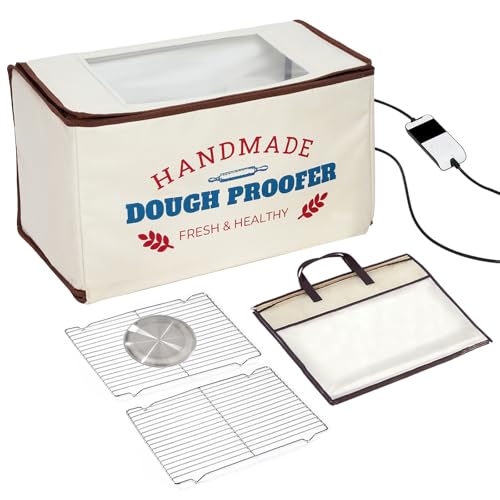
- Fits two bowls or multiple bannetons
- Three-sided heating and 50–130°F control
- 24-hour timer with audible alert
Best For: Bulk fermentation with fold-flat storage
Maximum Capacity Pick

- Fits a half sheet pan or two large baskets
- 68–122°F control with 48-hour timer
- Six-layer insulation and three-sided heating
Best For: Family baking and large fermentation batches
Best Folding Value

- Folds for compact storage
- 50–113°F control with 48-hour timer
- Viewing window and included metal rack
Best For: Flexible home proofing and fermentation
Best Space-Saving Containers

- Two stackable 6L containers
- Holds up to 3,000g of dough
- Dishwasher safe with rise markings
Best For: Compact, no-heat dough proofing
Best Precision Control
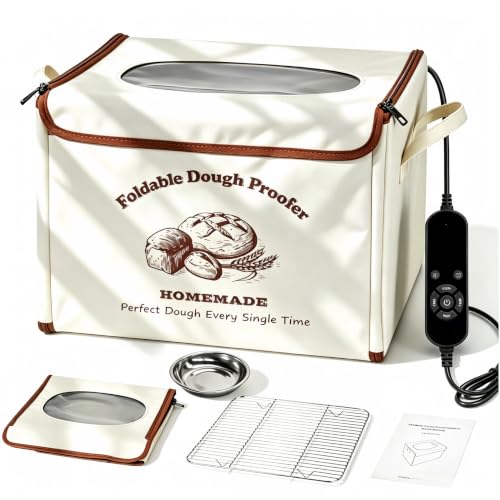
- 70–122°F PID temperature control
- Folds to just 45mm thick
- Includes bowl, hygrometer, and stand
Best For: Temperature-controlled sourdough and fermentation
Best Stackable Capacity
Commercial Pizza Dough Proofing Box

- Fits up to six dough balls
- Stacks with or without lids
- Includes labels and erasable markers
Best For: Batch pizza and bread dough proofing with organized storage
Best Heated Folding Option
Temperature-Controlled Dough Proofer

- Adjusts from 50°F to 113°F
- Includes a 12-hour timer
- Folds for compact storage
Best For: Temperature-controlled bread and sourdough fermentation
Compact Precision Pick – Folding Bread Proofing Box
For bakers comparing bread proofing boxes for small kitchens, this foldable 12-by-12-inch proofer combines adjustable warmth with a compact footprint. Its 50–113°F range, 48-hour timer, viewing window, and included rack make it practical for sourdough, pizza dough, and other fermentation projects.
Best For: Small kitchens needing a foldable, versatile proofer for single bowls, jars, and everyday fermentation.
Pros:
- Folds flat and offers front- or top-facing viewing.
- Adjustable 50–113°F temperature range with a timer up to 48 hours.
- Five-layer insulation, waterproof interior, and stainless steel shelf.
- Also supports yogurt and kombucha fermentation.
Cons:
- The 12-inch cube is designed for smaller batches rather than bulk baking.
- Its 63-watt heating system has a narrower temperature range than some larger models.
This is a space-conscious choice when storage and temperature stability matter more than maximum capacity. The fold-flat design is particularly useful for occasional bakers with limited cabinet or counter space.
Drawer-Friendly Classic – Brod & Taylor Folding Proofer
The Brod & Taylor Folding Proofer is a strong option among bread proofing boxes for small kitchens because it folds to just 2.75 inches and provides controlled warmth for dough. Its 70–120°F proofer setting, optional humidity tray, and established multi-use design suit regular home baking.
Best For: Frequent bakers who want a slim, established proofer that can also handle other low-temperature kitchen tasks.
Pros:
- Folds down to 2.75 inches for cabinet or drawer storage.
- Provides 70–120°F temperature control with an included water tray for humidity.
- Can ferment yogurt and kombucha, melt chocolate, and prepare soft cheeses.
- Offers a 3-year warranty with product registration.
Cons:
- The accessory shelf for additional capacity is sold separately or included only with the bundle.
- Its opened footprint is larger than compact cube-style proofers.
Choose this model if a thin folded profile is a top priority and you value broader kitchen use beyond bread. The optional shelf can expand its utility, but the base version is best suited to standard batches.
Large-Batch Value – Extra Large Dough Proofing Box
Although larger than many bread proofing boxes for small kitchens, this foldable model earns consideration when you need substantial capacity without permanent counter space. It fits two large mixing bowls, multiple bannetons, or quart jars, while three-sided heating and 50–130°F control support flexible fermentation.
Best For: Bakers who need extra interior room for multiple doughs but still want a fold-flat design.
Pros:
- Large interior accommodates two mixing bowls, multiple bannetons, or quart jars.
- Three-sided heating is designed to reduce cold spots.
- 50–130°F control includes a Celsius/Fahrenheit switch.
- 24-hour timer has an audible end-of-cycle alert.
Cons:
- Its 21.6-inch width may be challenging for very tight counters during use.
- The timer is limited to 24 hours, shorter than some competing models.
This is a practical compromise for households that bake in volume but cannot dedicate permanent space to a large appliance. Measure your available counter and storage area carefully before choosing it.
Maximum Capacity Pick – XL KomBella Bread Proofer
The KomBella XL is aimed at family baking rather than the smallest counters, but its collapsible construction keeps it relevant when comparing bread proofing boxes for small kitchens with occasional bulk-baking needs. Its 23.62-inch length, 68–122°F control, 48-hour timer, and three-sided heating provide room and control for multiple doughs.
Best For: Families and serious home bakers who need maximum proofing capacity and can accommodate a larger setup.
Pros:
- Fits multiple starter jars, one half sheet pan, or two large proofing baskets.
- Offers 68–122°F control with a timer extending to 48 hours.
- Three-sided heating and six-layer insulation support even, stable warmth.
- Folds flat for storage when the baking session is finished.
Cons:
- The 23.62-inch width requires significant counter or floor space during use.
- Its 151-watt heating system is larger than those of more compact proofers.
If your priority is fitting several doughs or large baskets at once, this model offers the most capacity in the group. Its foldable design helps with storage, but it is not the best fit for a consistently crowded countertop.
Best Folding Value – Adjustable Bread Proofing Box
If you need bread proofing boxes for small kitchens, this folding model is a practical option when you want adjustable warmth without leaving a bulky appliance on the counter. It offers 50–113°F temperature control, a timer up to 48 hours, and an observation window for monitoring dough without opening the box.
Best For: Home bakers who want a flexible, fold-away proofer for sourdough, pizza dough, yogurt, or starter warming.
Pros:
- Folds for more compact storage between bakes.
- Adjustable 50–113°F temperature range and 48-hour timer.
- Insulated construction with three heating zones for even warming.
- Includes a metal rack and viewing window.
Cons:
- Its 11-inch height and 15-inch width still require dedicated storage space when unfolded.
- The polyester-and-fabric construction may require more careful cleaning than a rigid container.
This is a versatile choice for small kitchens that need a heated proofing environment but cannot dedicate permanent counter space to a proofer. The foldable design and broad timer range are its main advantages.
Best Space-Saving Containers – 6L Dough Proofing Boxes
For small kitchens, these bread proofing boxes for small kitchens take a low-profile, container-based approach rather than adding a heated appliance. The two 6-liter containers hold up to 3,000 grams of dough, stack neatly, and let you monitor rising through translucent walls and volume markings.
Best For: Bakers who prefer simple, reusable dough containers for mixing, folding, refrigerating, and proofing.
Pros:
- Two stackable containers support compact refrigerator or proofer storage.
- Translucent walls and volume markings make rise tracking easy.
- Lids help retain humidity and prevent a dry dough skin.
- BPA-free polypropylene is dishwasher safe and freezer friendly.
Cons:
- They do not provide active temperature control or heating.
- The rectangular container format may be less suitable for bakers who prefer proofing baskets.
This set is a strong fit if your priority is minimizing clutter and simplifying dough handling. Its stackable design and easy cleanup are especially useful in compact kitchens, though temperature-sensitive proofing will depend on the surrounding environment.
Best Precision Control – Foldable PID Dough Proofer
Among bread proofing boxes for small kitchens, this foldable PID model stands out for temperature precision and compact storage. It provides 70–122°F control with stated accuracy up to ±1°F, a 1–24-hour timer, and a 45mm folded profile for easier storage after baking.
Best For: Bakers who want a more controlled proofing environment for sourdough, yeast dough, pizza, or other home fermentation projects.
Pros:
- PID temperature control is specified to maintain accuracy up to ±1°F.
- Folds to 45mm thick for storage in space-constrained kitchens.
- Includes a stainless steel bowl, hygrometer, and iron stand.
- Overheat protection and a waterproof food-grade interior add practical safety features.
Cons:
- The 70°F minimum is less suitable when you need lower-temperature warming.
- Its 12-by-15.7-by-12-inch operating footprint still needs room during use.
- Cleaning is limited to wiping with a damp cloth; it should not be rinsed.
This is the most precision-focused option of the three, combining a compact folded profile with temperature stability and fermentation accessories. Choose it when repeatable warmth matters more than the simplest cleanup or lowest-complexity setup.
Best Stackable Capacity – Commercial Pizza Dough Proofing Box
For bread proofing boxes for small kitchens, this stackable polypropylene container offers substantial capacity without requiring multiple separate trays. It holds up to six dough balls, stacks with or without its lid, and fits neatly into refrigerator or prep-space workflows.
Best For: Home bakers and pizza makers who need to proof several dough balls together and organize batches efficiently.
Pros:
- Holds up to six dough balls in a 15.67-by-11.69-inch footprint.
- Stackable with or without the lid to help maximize storage space.
- Includes a FIFO label sticker and two erasable markers for batch tracking.
- BPA-free, food-grade polypropylene and dishwasher safe.
Cons:
- Its broad rectangular footprint may be bulky for very small refrigerators.
- The non-airtight lid allows airflow but may not suit bakers seeking a fully sealed container.
This is a practical choice when capacity and organization matter more than the smallest possible footprint. The non-airtight lid is designed to support fermentation, while the stackable shape helps compensate for its relatively wide dimensions.
Best Heated Folding Option – Temperature-Controlled Dough Proofer
This heated proofing box is a versatile pick among bread proofing boxes for small kitchens because it folds down for storage while providing adjustable warmth. Its 50°F-to-113°F temperature range, timer, and insulated construction are designed to make fermentation more consistent.
Best For: Bakers who want controlled proofing temperatures and need a larger fermentation space that can be stored compactly between uses.
Pros:
- Adjustable temperature range from 50°F to 113°F.
- Offers a 0-to-12-hour timer and an NTC sensor for temperature monitoring.
- Folds for storage in cabinets, drawers, or corners.
- Transparent window lets you check dough without opening the box.
Cons:
- Measures 16 by 12 by 10 inches when open, so it needs setup space.
- Hand-wash only and not oven or microwave safe.
- Its heated design may be more functionality than casual bakers need.
For kitchens where fermentation temperature is difficult to maintain, this model offers the most control of the three. Its foldable structure helps address storage concerns, although the open footprint and electrical heating features make it less minimal than a simple dough tray.
Best Compact Single-Tray Pick – 5-Quart Dough Proofing Container
For small kitchens, this 5-quart container keeps the proofing setup simple: mix, stretch, fold, and rise in one BPA-free tray. Its translucent walls, volume markings, and stackable design make it a convenient everyday option among bread proofing boxes for small kitchens.
Best For: Home bakers who want one compact container for a large dough batch, sourdough, or pizza dough.
Pros:
- Holds up to 6.6 pounds of dough or six dough balls.
- Translucent walls and volume markings make rising easy to monitor.
- Stackable with or without the lid and designed to fit refrigerators.
- BPA-free polypropylene resists stains, odors, and dough residue.
Cons:
- Only one container is included.
- The 12.6-by-10.3-inch footprint may still occupy significant shelf space.
- The lid is designed to retain moisture, which may be less suitable when more airflow is preferred.
This is the most straightforward choice for routine dough preparation. It combines a relatively compact rectangular form with useful markings and a moisture-retaining lid, making it well suited to bakers who do not need active temperature control.
How We Picked the Best Bread Proofing Boxes for Small Kitchens
We evaluated these products by focusing on the needs of home bakers with limited workspace. Key considerations included footprint, foldability, temperature range, timer controls, interior capacity, cleanup, and how easily each box can be stored between baking sessions. We also included both heated proofers and unheated containers because they solve different problems: electric models help maintain a consistent environment, while containers provide an economical way to cover and organize dough.
Capacity matters, but larger is not automatically better. A compact box may be more useful in a small kitchen if it can accommodate your normal dough batch and then fold flat or fit easily in a cabinet.
Quick Comparison
| Type | Best for | Main advantage | Potential trade-off |
|---|---|---|---|
| Folding electric proofer | Sourdough and yeast breads | Controlled warmth and compact storage | Needs counter space and an outlet |
| Large electric proofer | Multiple loaves or large batches | More interior room | Bulkier when in use |
| Dough container | Pizza dough and refrigerated fermentation | Simple, stackable, and easy to clean | Does not actively regulate temperature |
| Container set | Several dough portions | Useful for dividing and organizing batches | Less suitable for warm proofing on its own |
Key Buying Factors for Bread Proofing Boxes for Small Kitchens
Counter Footprint and Storage
Measure the space where you will proof dough, not just the folded dimensions. Check the box’s length, height, and clearance around controls. Foldable designs are especially useful when cabinet or pantry storage is limited.
Temperature Control
Adjustable low-temperature settings help create a more predictable proofing environment, particularly in cool rooms. Look for a range that suits your recipes and controls that are easy to read. A timer is helpful, but it should not replace checking dough volume and texture.
Capacity and Interior Layout
Match capacity to your typical batch. Consider whether the unit includes a rack, tray, or enough height for a covered bowl. Containers should leave room for dough expansion and have lids that seal securely without making cleanup difficult.
Cleaning and Materials
Removable racks and wipe-clean interiors simplify maintenance. For dough containers, prioritize food-contact materials, smooth corners, and lids that can be washed without trapping flour or oil.
Who Should Buy Which Bread Proofing Boxes for Small Kitchens?
Choose a folding electric proofer if you bake sourdough or yeast bread regularly and want controlled warmth in a storage-friendly package. Select a larger heated model if you frequently proof multiple loaves or substantial batches and have dedicated counter space.
A stackable pizza dough container is the practical choice for pizza makers who portion dough and use room-temperature or refrigerator fermentation. A multi-container set works well for bakers managing several dough balls at once. If your kitchen is especially tight, prioritize foldability and realistic batch capacity over maximum size, then use the temperature settings and timer as convenience features rather than substitutes for observing the dough.