Reliable fermentation is easier when dough stays in a controlled environment. The best bread proofing boxes help maintain a steady temperature while protecting dough from drafts, drying, and kitchen temperature swings.
This roundup compares 10 bread proofing boxes and dough containers for sourdough bakers, pizza makers, and anyone who wants more predictable rise times.
Best 10 Bread Proofing Boxes Picks for 2026
Best Overall
GIYUDOT Folding Bread Proofing Box
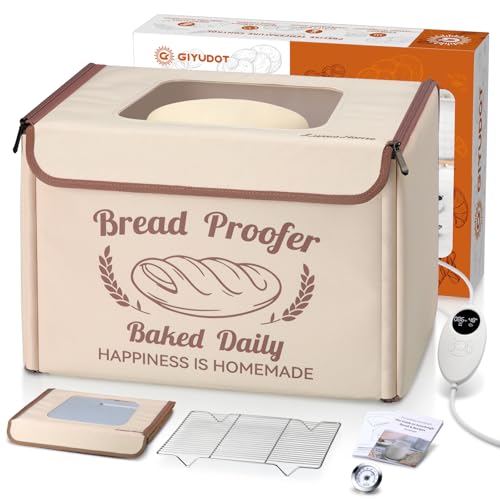
- Three-zone heating with 50–113°F control
- 48-hour timer and 36-liter foldable design
- Includes rack, humidor, viewing window, and recipes
Best For: Home bakers wanting versatile, compact fermentation control
Best Extra-Large Option
Extra Large Dough Proofing Box
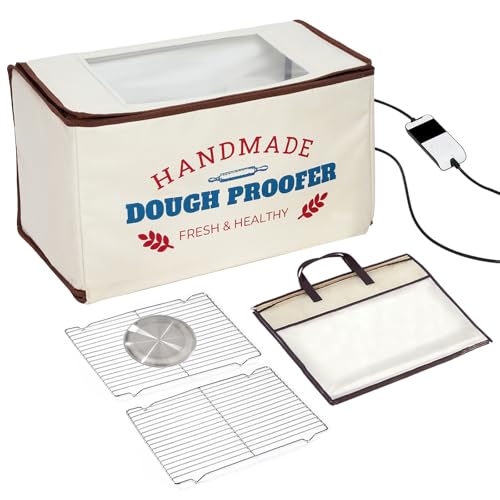
- Wide chamber fits two bowls or multiple bannetons
- Three-sided heating with 50–130°F control
- 24-hour audible timer and fold-flat storage
Best For: Multi-batch bakers who need maximum interior room
Best Manual Pizza Setup
Commercial Pizza Dough Proofing Box
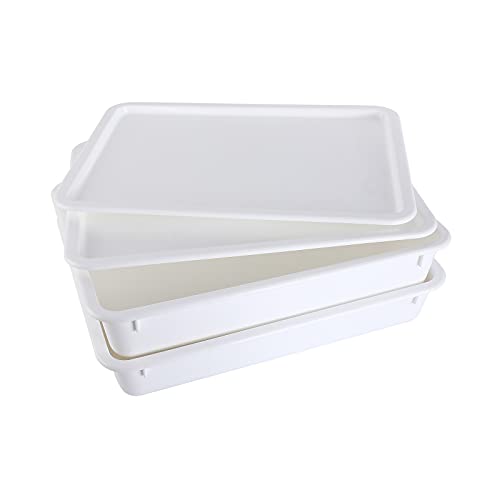
- Two covered, stackable BPA-free plastic trays
- Commercial-grade format for pizza dough
- No electricity, temperature control, or timer required
Best For: Pizza makers proofing portioned dough at ambient conditions
Best Long-Ferment Control
Parmedu Folding Bread Proofing Box

- 41–122°F control with four heating zones
- 99-hour timer for extended fermentation
- Movable probe reads dough core or chamber air
Best For: Sourdough bakers managing overnight and long ferments
Best All-in-One Dough Container
Brod & Taylor 6L Proofing Containers

- Two 6L containers hold up to 3,000g of dough each
- Marked translucent walls simplify rise tracking
- Dishwasher-safe and freezer-friendly BPA-free polypropylene
Best For: Home bakers proofing bread, sourdough, and pizza dough
Best Heated Proofer
Folding Bread Proofing Box with Timer

- Adjustable 50–113°F temperature range
- Timer supports settings up to 48 hours
- Foldable insulated design with viewing window
Best For: Controlled fermentation of dough, starters, yogurt, and pizza crust
Best for Pizza Dough Batches

- Holds up to six pizza dough balls
- Stackable with or without the lid
- Includes label sticker and two erasable markers
Best For: Organized batch proofing in home or commercial kitchens
Best Precision Bread Proofing Box
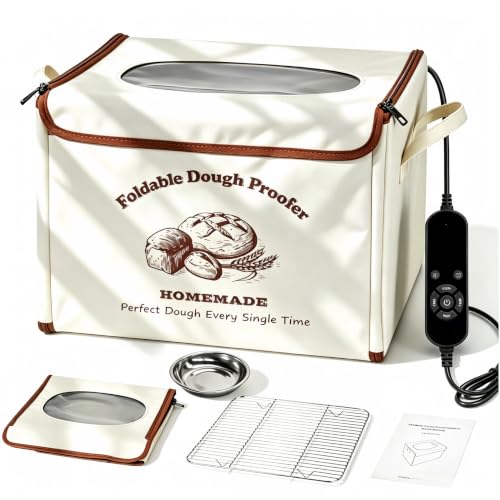
- 70°F–122°F range with ±1°F PID control
- 1–24-hour timer for flexible fermentation
- Folds to 45mm for compact storage
Best For: Precision-focused sourdough and bread bakers
Best Large Bread Proofing Box
Folding Warming Box with Sensor

- 16 x 12 x 10-inch space for multiple bowls
- 50°F–113°F control with 12-hour timer
- NTC sensor and transparent viewing window
Best For: Batch proofing and multi-bowl fermentation
Best Overall – GIYUDOT Folding Bread Proofing Box
For bakers who want broad control in a compact footprint, this folding bread proofing box combines three heating zones, a 50–113°F range, and a 48-hour timer. Its viewing window and included rack make it practical for sourdough, pizza dough, and other fermentation projects.
Best For: Home bakers seeking versatile temperature control, long timing, and fold-flat storage.
Pros:
- Three heating zones help distribute warmth across the chamber.
- Adjustable 50–113°F temperature range with a timer of up to 48 hours.
- 36-liter interior, viewing window, stainless steel rack, and included humidor.
- Folds for easier storage in compact kitchens.
Cons:
- Its temperature range tops out below the 130°F maximum offered by some alternatives.
- The listed interior size may be more space than occasional bakers need.
With its combination of insulation, monitoring visibility, accessories, and multi-purpose fermentation support, this is a well-rounded choice for regular home baking.
Best Extra-Large Option – Extra Large Dough Proofing Box
This extra-large bread proofing box is designed for high-volume home baking, with room for two large mixing bowls, multiple bannetons, or quart jars. Its three-sided heating, 50–130°F control, and audible 24-hour timer make it useful when capacity and straightforward operation matter most.
Best For: Bakers proofing multiple doughs or containers at the same time.
Pros:
- Extra-wide interior accommodates multiple bowls, bannetons, or jars.
- Three-sided heating is designed to reduce cold spots.
- 50–130°F range with one-touch Celsius/Fahrenheit switching.
- 24-hour timer includes an audible alarm, and the unit folds flat for storage.
Cons:
- The 21.6-inch width requires more counter space when in use.
- The timer is limited to 24 hours, shorter than some long-fermentation models.
If you regularly prepare several batches or prefer a higher maximum temperature, this spacious, portable proofer offers useful capacity without permanent kitchen storage.
Best Manual Pizza Setup – Commercial Pizza Dough Proofing Box
Pizza Dough Proofing Box, Commercial Grade 17.25" x 13", 2 Trays and Covers | Stackable
Check Price On AmazonUnlike heated bread proofing boxes, this commercial-grade pizza dough proofing box provides a simple covered container for organizing and proofing dough portions. The two BPA-free plastic trays stack when covers are removed, making it a practical option for pizza preparation and cold or room-temperature workflows.
Best For: Pizza makers who want stackable trays rather than an electrically heated chamber.
Pros:
- Includes two 17.25 by 13 by 3.54-inch trays with covers.
- Food-grade, BPA-free plastic construction.
- Stackable design saves storage space when covers are removed.
- Sturdy commercial-style format suits repeated pizza preparation.
Cons:
- It has no active temperature control or timer.
- Hand washing is recommended.
- The shallow tray format is less suitable for large bowls or tall dough containers.
This is the straightforward choice for portioned pizza dough and stackable storage. Choose a heated proofer instead if you need precise temperature regulation for sourdough or winter baking.
Best Long-Ferment Control – Parmedu Folding Bread Proofing Box
For extended fermentation schedules, this folding bread proofing box offers a 41–122°F range and a 99-hour timer. Its movable probe can measure either dough-core or chamber temperature, while four heating zones help maintain warmth around bowls, baskets, and trays.
Best For: Bakers managing overnight sourdough, starters, yogurt, kombucha, or other long fermentations.
Pros:
- 99-hour timer supports long fermentation schedules.
- Movable probe can monitor dough core temperature or box air.
- Four heating zones promote distributed warmth.
- Folding design, viewing window, rack, and storage bag suit home kitchens.
Cons:
- The listed capacity is 5 liters, smaller than some extra-large proofers.
- Its maximum temperature is 122°F, below the 130°F range of one competing model.
- The product details list an unusually shallow height, so buyers should confirm the usable interior dimensions.
The dough-temperature probe and unusually long timer distinguish this model for controlled, extended fermentation. It is especially appealing when schedule flexibility matters more than maximum capacity.
Best All-in-One Dough Container – Brod & Taylor 6L Proofing Containers
For bakers who want straightforward bread proofing boxes without adding another appliance, this two-pack combines generous capacity with easy rise tracking. The translucent, marked sides help you judge fermentation at a glance, while the lids help retain moisture during proofing.
Best For: Home bread, sourdough, and pizza bakers who want to mix, fold, proof, and store dough in the same containers.
Pros:
- Each 6-liter container holds up to 3,000 grams of dough.
- Translucent walls and volume markings make dough growth easy to monitor.
- Lidded design helps retain humidity and prevent a dry dough skin.
- Dishwasher-safe, freezer-friendly, BPA-free polypropylene construction.
Cons:
- The rectangular containers may take more shelf space than compact round bowls.
- They are designed for dough storage and proofing rather than active temperature control.
This is a practical choice if you value capacity, visibility, and easy cleanup. Its stackable, low-profile shape is especially useful for refrigerator storage or use inside a compatible folding proofer.
Best Heated Proofer – Folding Bread Proofing Box with Timer
This heated bread proofing box is aimed at bakers who want more control than room-temperature fermentation provides. Its adjustable 50–113°F range, three heating zones, and long timer support consistent warming for dough, starters, yogurt, and pizza preparation.
Best For: Bakers who need adjustable warmth and timed fermentation in a compact, foldable setup.
Pros:
- Temperature adjusts from 50–113°F, with a timer of up to 48 hours.
- Three heating zones are designed for even warming.
- Foldable construction helps reduce storage space when not in use.
- Viewing window lets you monitor dough without opening the box.
Cons:
- It requires access to power, unlike passive proofing containers.
- The 11-by-15-by-11-inch footprint may be substantial for smaller kitchens.
- The supplied notes describe capacity for one standard proofing bowl rather than multiple dough batches.
Choose this model when temperature stability is a priority. The insulated construction and adjustable controls offer more fermentation control, while the foldable design makes the larger footprint easier to manage between bakes.
Best for Pizza Dough Batches – Stackable 6-Ball Proofing Box
For preparing several pizza dough portions at once, this commercial-style bread proofing box offers a broad, shallow layout that fits up to six dough balls. Its stackable polypropylene construction helps organize batches, while the included labels and erasable markers support date and dough tracking.
Best For: Home kitchens, pizzerias, and food-service users proofing multiple pizza or bread dough portions in organized batches.
Pros:
- Capacity for up to six pizza dough balls in a 12-liter box.
- Stackable with or without the lid to use refrigerator and prep space efficiently.
- BPA-free, food-grade polypropylene is stain resistant and dishwasher safe.
- Includes a label sticker and two erasable markers for batch organization.
Cons:
- The lid is intentionally non-airtight, so it does not provide a sealed environment.
- It is a single box rather than a multi-container set.
- Its 15.67-by-11.69-inch footprint may be large for compact refrigerators.
This box is a strong fit for portioned pizza dough and high-volume prep. The non-airtight lid allows some airflow and can help limit condensation, but bakers wanting a sealed container should consider a different style.
Best Precision Bread Proofing Box – Foldable PID Dough Proofer
For bakers who want tighter control over fermentation, this bread proofing box combines adjustable 70°F–122°F heating with PID temperature control rated to ±1°F. The 1–24-hour timer and fold-flat 45mm design make it practical for sourdough, pizza dough, and kitchens where storage space is limited.
Best For: Home bakers who prioritize precise temperature settings, extended proofing times, and compact storage.
Pros:
- PID temperature control with an adjustable 70°F–122°F range.
- 1–24-hour timer supports short and long fermentation schedules.
- Folds to 45mm thick and includes a stainless steel bowl, hygrometer, and iron stand.
- Food-grade waterproof interior, overheat protection, and a 28-liter capacity.
Cons:
- Its 235W heated design may be more equipment than casual bakers need.
- The interior should be wiped clean rather than rinsed.
This is the most feature-focused option in the group, especially for sourdough routines that benefit from repeatable warmth and timed fermentation. The foldable construction helps offset its larger countertop footprint when in use.
Best Dough Container for Bread Proofing Boxes – 5-Quart Stackable Dough Tray
This 5-quart dough container is a simple, space-conscious companion for bread proofing boxes. Its lid helps retain moisture, while translucent sides and volume markings let you monitor dough growth without opening the container. It can hold up to 6.6 pounds of dough or as many as six dough balls.
Best For: Sourdough bakers who want one covered container for mixing, folding, proofing, refrigerator storage, and tracking rise.
Pros:
- Large 5-quart capacity holds up to 6.6 pounds of dough.
- Translucent walls and volume markings make rise monitoring easy.
- Lid helps reduce air drying by retaining moisture.
- Stackable polypropylene design fits fridges and compatible folding proofing boxes.
Cons:
- This is a container rather than a heated proofing appliance.
- Only one container is included.
Choose this model when your priority is organized dough handling rather than temperature regulation. The wide base is useful for stretch-and-fold work, and the stackable shape makes it especially practical for fridge fermentation or use inside a compatible proofer.
Best Large Bread Proofing Box – Folding Warming Box with Sensor
This large bread proofing box provides a 50°F–113°F temperature range, a 0–12-hour timer, and an NTC sensor that can sit on the proofing container to monitor actual dough temperature. Measuring 16 x 12 x 10 inches, it accommodates multiple bowls while its transparent top window lets you check progress without opening the box.
Best For: Bakers who proof multiple containers at once and need a roomy, foldable warming space with visible fermentation progress.
Pros:
- Large 16 x 12 x 10-inch interior accommodates multiple fermentation bowls.
- 50°F–113°F temperature control and a 12-hour timer support varied recipes.
- NTC sensor monitors the actual temperature at the dough container.
- Insulated three-layer construction and transparent viewing window improve usability.
Cons:
- The maximum temperature is lower than the first proofer’s 122°F range.
- Hand-wash care is required, and it is not oven- or microwave-safe.
- Its larger 16-inch footprint requires more counter space during use.
This option stands out for capacity and visibility. Its insulated fabric construction folds for storage, while the sensor and window make it easier to monitor several doughs without repeatedly opening the warming box.
How We Picked These Bread Proofing Boxes
We focused on the features that have the greatest effect on everyday baking: temperature range, timer settings, usable capacity, foldability, visibility, and ease of cleaning. The selection includes heated folding proofers, large commercial-style containers, stackable pizza dough boxes, and unheated dough-rising containers.
We also considered whether each design suits a specific workflow. A compact folding unit may be ideal for occasional sourdough baking, while a large box or multi-container setup makes more sense for pizza batches or high-volume preparation.
Quick Comparison
| Best For | Look For | Most Useful Feature |
|---|---|---|
| Sourdough | Low, adjustable heat | Precise temperature control |
| Pizza batches | Wide footprint and stackability | Multiple trays or containers |
| Large dough quantities | High capacity | Strong lid and spacious interior |
| Small kitchens | Collapsible construction | Fold-flat storage |
| Simple dough storage | Unheated food-safe container | Easy cleaning and organization |
Key Buying Factors for Bread Proofing Boxes
Temperature Control
Adjustable heat is the main advantage of an electric proofer. Look for a range that supports gentle sourdough fermentation as well as faster proofing for yeast dough. Avoid assuming that a higher maximum temperature is always better; accurate low-temperature operation is often more valuable.
Capacity and Shape
Check interior dimensions rather than relying only on labels such as “large” or “extra large.” Dough expands, so the box should leave room above and around the dough. Wide, shallow containers work well for pizza dough balls, while taller interiors are better for loaves or bulk fermentation.
Timer and Controls
A timer can reduce the need to monitor proofing manually, especially during overnight or long sourdough rises. Longer timer ranges are useful for slow fermentation, while simple controls may be preferable if you mainly bake standard sandwich bread.
Cleaning and Storage
Removable trays, smooth food-contact surfaces, and a secure lid make cleanup easier. Folding proofers save cabinet space, but confirm that the hinges, rack, and heating components can be stored safely when collapsed.
Containers, Lids, and Accessories
For pizza workflows, stackable trays, covers, labels, and markers can improve organization. For bread dough, a clear lid and enough headroom help you track expansion without repeatedly opening the container.
Who Should Buy Which Bread Proofing Boxes?
Choose a folding heated proofer if you want controlled fermentation but have limited storage space. These models are especially practical for sourdough and occasional home baking.
Choose a large or commercial-style box if you regularly prepare several pizza dough balls or large batches. Wider dimensions and stackable trays can make portioning and scheduling easier.
Choose a proofing container without active heating if your kitchen is already warm and you mainly need a covered, food-safe place for dough to rise. These options are typically simpler, quieter, and easier to clean.
Before buying, measure your counter and storage area, estimate your usual dough batch size, and decide whether temperature regulation or simple containment is your priority. The best Bread Proofing Boxes are the ones that match your baking volume without adding unnecessary setup or cleanup.