If you want backup power that can handle more than lights and phones, a solar generator for whole house use needs serious output, fast recharge options, and enough battery capacity to keep essentials running.
In this roundup, we focus on larger systems built for home backup, from expandable power stations to split-phase models that better fit common household needs.
Best 10 Solar Generator for Whole House Picks for 2026
Whole-Home Heavy-Duty Backup
PECRON F5000LFP 5120Wh Solar Generator

- 7200W output with 120V/240V dual voltage
- Expands to 35.8kWh with extra batteries
- 6400W solar input and 0ms UPS outlets
Best For: serious home backup with high loads and expandable storage
Fast-Recharging Home Backup
Anker SOLIX F3000 3,072Wh Solar Generator
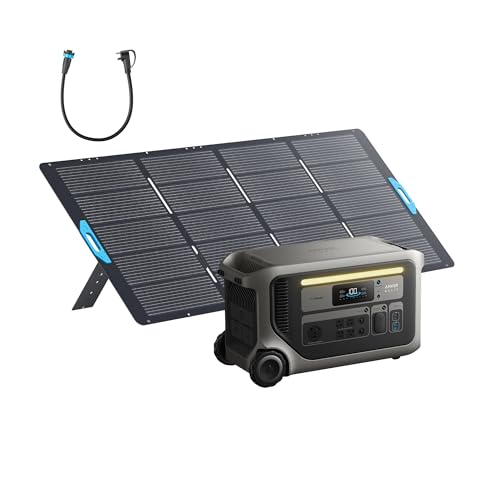
- 6,000W recharging for fast recovery
- Expandable up to 24kWh for longer outages
- Low idle power helps conserve stored energy
Best For: efficient home backup with fast recharge and scalable storage
Balanced Dual-Voltage Backup
OSCAL PowerMax 6000 3,600Wh Solar Generator
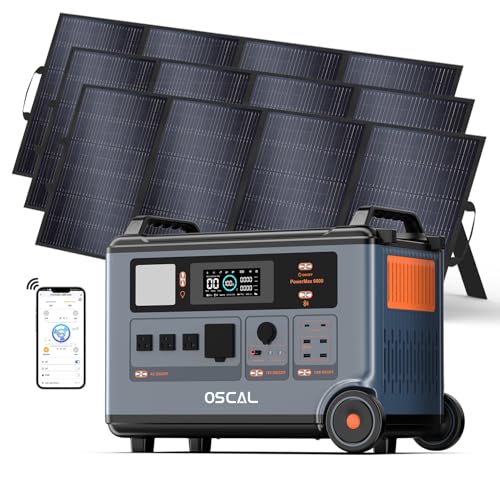
- 6000W output with 120V/240V split-phase power
- Charges quickly with 2200W AC and 2400W solar input
- 5-8 ms UPS switching supports sensitive devices
Best For: families needing fast-charging dual-voltage emergency backup
Lightweight Expandable Home Backup
Jackery HomePower 3600 Plus 3584Wh Solar Generator
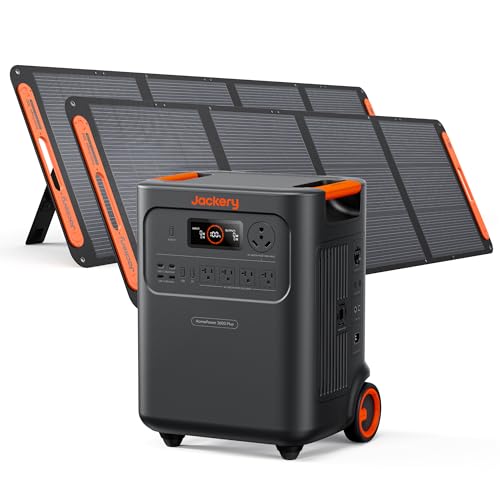
- 3600W output, or 7200W in parallel
- Expandable up to 21kWh per unit
- Wheels and handle improve portability
Best For: buyers wanting portable plug-and-play home backup
Whole-Home Heavy Duty Pick
OSCAL PowerMax 6000 with 4x400W panels

- 6000W output, 9000W surge, 120/240V dual voltage
- 3600Wh capacity with 14 outlet sources
- Fast AC and solar charging with LiFePO4 battery
Best For: Large-home backup power with dual-voltage support
Essential Backup Runner-Up
Jackery HomePower 3000 with 2 solar panels

- 3600W output with 7200W surge
- 3072Wh LiFePO4 battery and under-20ms UPS
- Recharges in 1.7 hours with hybrid AC/DC
Best For: Critical home essentials during outages
Compact Emergency Choice
Jackery Solar Generator 1000 v2 with 200W panel

- 1500W output with 3000W surge
- 1070Wh LiFePO4 battery in a 23.8 lb unit
- 1-hour emergency charging via app
Best For: Portable backup for essentials and emergency charging
Jackery Home Backup
Jackery HomePower 3600 Plus for Whole-Home Backup
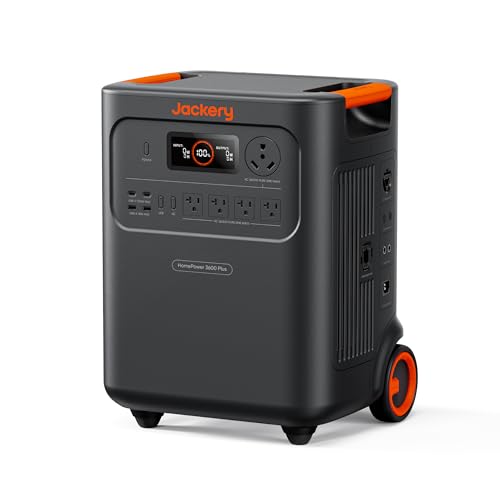
- 3600W output; 7200W in parallel for heavier loads
- 3584Wh expandable up to 21kWh per unit
- Plug-and-play design with fast AC, solar, and hybrid charging
Best For: Homeowners needing plug-and-play backup with strong expansion potential
EcoFlow Power Hub
EcoFlow DELTA Pro 3600Wh Whole-Home Power Station
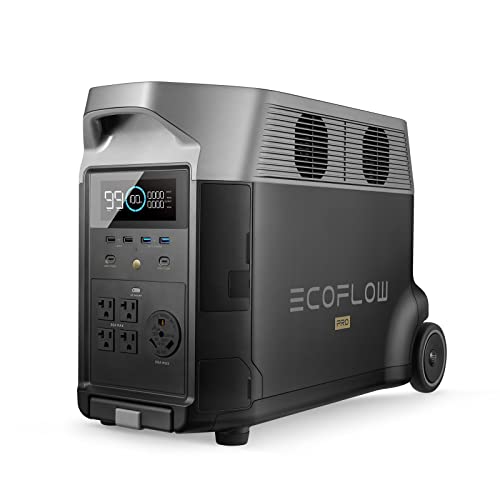
- 3600Wh battery expands to 25kWh with add-ons
- 3600W output, up to 7200W when pairing two units
- Fast recharge and app-based monitoring/control
Best For: Buyers wanting a flexible, high-output home backup system
EcoFlow Solar Starter
DELTA 3 Classic with 220W Panel

- 1800W output with 3600W surge for essentials
- 0 to 80% in 45 minutes via AC charging
- Includes a 220W solar panel and <10ms UPS
Best For: Home users wanting a compact solar backup kit for essential loads
Whole-Home Heavy-Duty Backup – PECRON F5000LFP 5120Wh Solar Generator
If you want a solar generator for whole house backup that can actually handle demanding loads, the PECRON F5000LFP is built around high output, dual-voltage support, and a large expandable battery. Its 5120Wh capacity, 7200W AC output, and 120V/240V capability make it a serious option for emergency home power, especially when you need to keep essential systems and larger appliances running.
Best For: Homeowners who want a high-capacity backup system with strong surge handling, UPS support, and room to expand over time.
Pros:
- 7200W AC output with 120V/240V dual-voltage support for heavier household loads
- Expandable up to 35.8kWh with additional batteries for longer outages
- 0ms online UPS outlets help keep sensitive gear like WiFi, CPAPs, and computers running
- 6400W max solar input supports fast recharging from solar setups
Cons:
- At 123.9 pounds, it is not the most portable unit to move around
- Best suited to users who need a large backup system rather than a compact power station
The PECRON F5000LFP is a strong fit if your priority is whole-home resilience rather than lightweight portability. Between its high output, UPS functionality, and expandable storage, it looks designed for serious home backup planning.
Fast-Recharging Home Backup – Anker SOLIX F3000 3,072Wh Solar Generator
The Anker SOLIX F3000 is a solar generator for whole house support when you want a strong mix of output, fast recharging, and low standby waste. With 3,072Wh of capacity, expandable storage up to 24kWh, and 120V/240V support through pairing, it is geared toward outage backup for key home appliances and longer-duration power planning.
Best For: Buyers who want quick recharging, low idle power use, and an expandable home backup system.
Pros:
- Hyper-fast 6,000W recharging when combining fuel generator and solar input
- Ultra-low idle power consumption helps preserve backup runtime
- Expandable to 24kWh for much longer outage coverage
- Includes a 400W solar panel in the package for immediate solar setup
Cons:
- Starting capacity is 3kWh, so heavy whole-house use will depend on expansion
- Only 2 total outlets listed in the details, which is less flexible than some rivals
This model stands out when rapid recovery matters as much as stored energy. If you want a solar generator for whole house preparedness with efficient standby behavior and scalable capacity, the F3000 is an attractive option.
Balanced Dual-Voltage Backup – OSCAL PowerMax 6000 3,600Wh Solar Generator
The OSCAL PowerMax 6000 is positioned as a practical solar generator for whole house emergency backup with dual-voltage output and a fast recharge profile. Its 3,600Wh capacity, 6000W AC output, and 120V/240V support make it a flexible pick for households that need broad compatibility without stepping up to a much larger system.
Best For: Families who want a compact but capable dual-voltage backup unit with very fast charging and UPS protection.
Pros:
- 6000W output with 120V/240V split-phase support for a wide range of appliances
- 2200W AC charging and 2400W solar charging for fast refills
- EPS UPS switching in 5-8 ms helps keep equipment running during outages
- 14 outlet sources offer good flexibility for home and outdoor use
Cons:
- 3600Wh capacity may be limiting for longer whole-house backup needs
- Heavier than a typical portable power station at 45.5 kilograms
For buyers who want a balanced setup rather than maximum storage, this OSCAL model makes a lot of sense. It combines fast charging, dual-voltage support, and LiFePO4 durability in a package that is well suited to emergency home power.
Lightweight Expandable Home Backup – Jackery HomePower 3600 Plus 3584Wh Solar Generator
The Jackery HomePower 3600 Plus is a solar generator for whole house backup if you want a lighter, easier-to-move system with strong home-focused features. It delivers 3600W output, 3584Wh of LFP storage, and can expand up to 21kWh per unit, making it a flexible option for outages, kitchens, garages, and essential household circuits.
Best For: Homeowners who want a portable, plug-and-play backup solution with long battery life and expansion options.
Pros:
- 3600W output, or 7200W in parallel, for substantial home appliance support
- Expandable up to 21kWh per unit, with even more capacity possible in multi-unit setups
- Four charging options, including 2-hour hybrid AC+DC recharge
- Wheels and telescopic handle make it easier to move than heavier whole-home units
Cons:
- 3600W output is lower than some larger whole-house backup competitors
- To reach the highest capacity, you will need expansion hardware and additional units
This Jackery is a strong pick for buyers who value convenience as much as capacity. It offers a practical path to home backup with fast charging, expandable storage, and a design that is easier to live with day to day.
Whole-Home Heavy Duty Pick – OSCAL PowerMax 6000 with 4x400W panels
If you want a solar generator for whole house readiness, the OSCAL PowerMax 6000 stands out for its 120/240V dual-voltage output, 6000W running power, and 14 outlet sources. It is built to handle a wide range of household loads during outages, while the included 4x400W solar panels and fast charging options make it easier to stay prepared.
Best For: Homeowners who want high-output backup power with dual-voltage support and fast recharge options.
Pros:
- 6000W output with 9000W surge and 120/240V dual-voltage support.
- Large 3600Wh capacity with 14 outlet sources for multiple devices.
- Fast recharge options: up to 2200W AC input or 2400W solar input.
- LiFePO4 battery with up to 3500 cycles and 25-year claimed service life.
Cons:
- At 25.5 kg, it is not a lightweight portable option.
- More power than many users need for simple camping or small-device use.
- Large system size may be overkill if you only need essentials backup.
This is the most whole-house-oriented option in the group, especially if you need broader voltage compatibility and a large set of outlets. It makes the most sense for buyers prioritizing home emergency coverage over compact portability.
Essential Backup Runner-Up – Jackery HomePower 3000 with 2 solar panels
For a solar generator for whole house essentials, the Jackery HomePower 3000 focuses on keeping core loads running rather than powering every appliance. Its 3600W output, 3072Wh capacity, and UL-certified UPS with under-20ms switchover make it a strong fit for fridges, routers, lights, and similar must-have devices during outages.
Best For: Households that want reliable backup for essentials with fast UPS switchover.
Pros:
- 3600W output with 7200W surge for home essentials.
- 3072Wh LiFePO4 battery with 4000 cycles to 70% capacity.
- UL-certified UPS switches within under 20ms.
- Recharges in 1.7 hours via hybrid AC/DC and supports solar, car, or generator input.
Cons:
- Not designed around full-house whole-home coverage.
- Only 4 outlets, so it is less flexible for many simultaneous loads.
- Solar charging with the included 2x200W panels is slower than AC charging.
This model is best viewed as a dependable home backup center for critical appliances and electronics. If your goal is to keep the essentials on without going all-in on a larger power system, it is a practical choice.
Compact Emergency Choice – Jackery Solar Generator 1000 v2 with 200W panel
The Jackery Solar Generator 1000 v2 is a smaller solar generator for whole house backup needs when you only want to cover a few essentials. With 1500W AC output, a 1070Wh LiFePO4 battery, and a very light 23.8 lb build, it is better suited to portable emergency use, RV trips, and selective home loads than to running an entire home.
Best For: Buyers who want a compact backup unit for essentials, travel, and emergency charging.
Pros:
- 1500W AC output with 3000W surge for small appliances and devices.
- Very portable at 23.8 lbs with a foldable handle.
- LiFePO4 battery rated for 4000 cycles and 10+ years of use.
- Fast charging options, including 1-hour emergency charging through the app.
Cons:
- 1070Wh capacity is far smaller than larger home-backup systems.
- Three AC outlets limit how much can run at once.
- Included 200W solar panel is better for recharge support than heavy-duty whole-home coverage.
This is the most portable pick here, but that portability comes with clear capacity limits. It works well if you need emergency backup for key devices, not if you are trying to power an entire house.
Jackery Home Backup – Jackery HomePower 3600 Plus for Whole-Home Backup
If you want a solar generator for whole house backup that’s built for real outage scenarios, the Jackery HomePower 3600 Plus is designed around high-output home use. With 3600W output, 120V/240V support in parallel, and expandable storage, it can handle heavy household loads like pumps, heaters, and dryers while keeping setup simple.
Best For: Homeowners who want plug-and-play backup power with strong output and expandable capacity.
Pros:
- 3600W output, with 7200W in parallel, for demanding household appliances.
- 3584Wh capacity expands up to 21kWh per unit, or 43kWh with multiple units.
- Four charging options, including hybrid AC+DC recharge in 2 hours.
- Plug-and-play design with no complex installation required.
Cons:
- Solar panel is optional, so the solar setup is not included.
- At 77.16 pounds, it is still a substantial unit to move around.
- Only 2 outlets are listed in the provided details.
The Jackery HomePower 3600 Plus stands out if your priority is straightforward, high-capacity home backup rather than a small portable station. Its expandable battery system and fast recharge options make it a strong fit for keeping essential systems running through longer outages.
EcoFlow Power Hub – EcoFlow DELTA Pro 3600Wh Whole-Home Power Station
The EcoFlow DELTA Pro is a strong pick if you’re shopping for a solar generator for whole house support and want high output plus flexible charging. Its 3600Wh battery, 3600W AC output, and expandability to 25kWh give it the kind of capacity and scalability that works well for home backup planning.
Best For: Households that want a high-output power station with app control and lots of charging flexibility.
Pros:
- 3600Wh LFP battery with capacity expandable to 25kWh.
- 3600W output, expandable to 4500W with X-Boost, or 7200W when pairing two units.
- Charges very quickly: 1.8 hours on 240V, 2.7 hours on 1800W wall power, or 2.8 hours with solar.
- 15 output methods and app control over Wi-Fi or Bluetooth.
Cons:
- At 99 pounds, it is heavy compared with smaller portable units.
- Solar charging speed depends on using multiple high-wattage panels.
- Some expansion features require extra batteries or smart generators.
DELTA Pro is built for buyers who want a serious home backup platform instead of a basic portable battery. The combination of fast charging, broad output options, and app monitoring makes it especially practical for managing outage power at home.
EcoFlow Solar Starter – DELTA 3 Classic with 220W Panel
If you want a solar generator for whole house essentials without jumping straight to a massive system, the DELTA 3 Classic is a compact, practical option. It delivers 1800W output, fast AC charging, and a 220W solar panel bundle that makes it easier to keep refrigerators, laptops, and other key devices powered during outages.
Best For: Home users who want a smaller backup kit with included solar charging and UPS protection.
Pros:
- 1800W output with 3600W surge for common household appliances.
- Charges from 0 to 80% in 45 minutes via AC.
- Included 220W solar panel recharges the unit in 5.8 hours.
- <10ms UPS mode helps protect sensitive electronics from downtime.
Cons:
- 1024Wh capacity is smaller than larger whole-home backup systems.
- Solar panel and power station may arrive separately.
- Not intended for the same long-duration heavy loads as larger expandable units.
This bundle makes sense if you want a solar-ready backup solution that is easier to size and manage. It is best viewed as a compact home emergency power option rather than a full-scale whole-house replacement.
How We Picked the Best Solar Generator for Whole House Use
We prioritized systems with strong AC output, useful surge capacity, expandable storage, and solar input that can actually replenish the battery in reasonable time. For home backup, we also favored LiFePO4 batteries, dual-voltage or split-phase support, and brands with clear expansion paths.
Just as important, we looked at practical setup: port availability, recharge flexibility, and whether the system makes sense as a backup source for refrigerators, networking gear, lights, sump pumps, or other essential loads.
Quick Comparison
Smaller-capacity models work best for essential circuits and shorter outages, while higher-capacity units with 3,000Wh to 5,000Wh or more are better suited to longer runtimes. If you need stronger household compatibility, split-phase 120V/240V output is a major advantage for a Solar Generator for Whole House planning.
Expandable systems can also be a smarter buy than a larger fixed battery, especially if you expect to scale from emergency backup to longer off-grid support later.
Key Buying Factors for a Solar Generator for Whole House
Output and Surge Power
Check both continuous AC output and peak surge. A higher watt rating helps start compressors and power multiple appliances at once, but it does not replace proper load management.
Battery Capacity and Expandability
Watt-hours determine runtime. For home backup, bigger is usually better, but expansion ports matter if you want to add batteries instead of replacing the entire system later.
Voltage Compatibility
Many whole-home setups benefit from 120V/240V support or split-phase capability. If you only need select circuits, a high-output 120V unit may still be enough.
Solar Input and Recharging
Higher solar input can shorten downtime after an outage. Fast AC charging is also valuable when you need to top off before a storm or during brief grid access.
Battery Chemistry and Portability
LiFePO4 batteries are generally preferred for longevity and thermal stability. Portability matters too, but larger home backup systems often trade weight for capacity.
Who Should Buy Which Solar Generator for Whole House?
If you want maximum household coverage and future expansion, choose a high-capacity, split-phase system. If you mainly want backup for essentials, a mid-size expandable model may be the better value. If you only need short-duration emergency power, a smaller portable unit can still be a smart entry point.
For most buyers, the best Solar Generator for Whole House use is the one that matches your actual loads, charging access, and outage length expectations—not simply the one with the highest advertised wattage.