A solar generator for power outage use can keep essentials running when the grid goes down, from lights and routers to phones, refrigerators, and CPAP machines. The best options balance battery capacity, output, charging speed, and portability.
Below, we focus on practical backup performance, not just big numbers on paper, so you can choose a system that fits your home, budget, and outage needs.
Best 10 Solar Generator for Power Outage Picks for 2026
Home Backup Beast
Jackery HomePower 3000 for outages

- 3,072Wh LFP battery for essential home backup
- 3,600W output with ≤20ms UPS switchover
- Includes 2x 200W solar panels and RV port
Best For: Homeowners needing dependable outage backup for critical appliances
Lightweight Blackout Pick
Jackery Explorer 300 solar kit

- 292Wh capacity with 300W pure sine wave output
- Weighs just 7.5 lbs for easy portability
- Includes 40W solar panel for off-grid recharging
Best For: Small-device backup, travel, and short outages
Expandable Home Backup
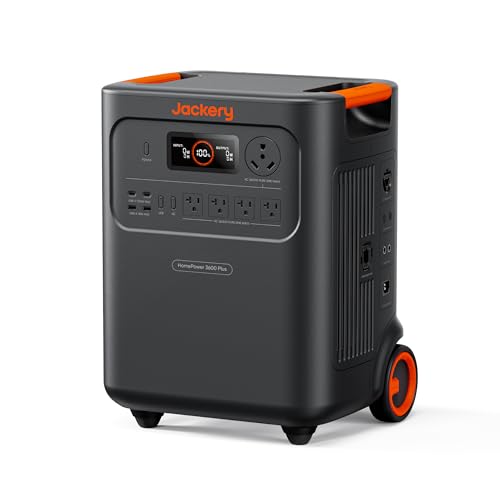
- 3,584Wh capacity, expandable to 21kWh per unit
- 3,600W output with 7,200W parallel support
- Fast recharge options include solar, AC, and gas
Best For: Longer outages and households needing scalable backup power
Budget Solar Starter

- 280Wh battery with 300W pure sine wave output
- Includes foldable 60W solar panel
- Multiple charging options: AC, solar, and car
Best For: Small electronics and light emergency backup on a budget
Premium Whole-Home Backup
Jackery Explorer 2000 v2 Solar Generator

- 2,042Wh LiFePO4 battery with 2,200W output
- 20ms UPS switchover for outage protection
- Quiet, fume-free indoor-safe backup power
Best For: Home backup during outages, storms, and emergencies
Budget Compact Kit
ZeroKor 300W Solar Generator Kit

- Includes 280Wh power station plus 40W panel
- Multiple AC, USB, and DC outlets for basics
- Protection features and gas-free operation
Best For: Light outage backup, camping, and small electronics
Fast-Charge Portable Backup

- 1,024Wh LiFePO4 battery with 2,000W output
- 49-minute fast recharge with HyperFlash tech
- 10ms UPS backup and up to 600W solar input
Best For: Fast-charging outage backup for essentials and travel
Fast-Charge Home Backup
EcoFlow DELTA 2 1024Wh Portable Power Station

- 0-80% AC charge in 50 minutes
- 1,800W output with 15 outlets
- Expandable from 1kWh to 3kWh
Best For: Rapid home backup with expandable capacity
Long-Run Fridge Backup
Anker SOLIX S2000 2010Wh Power Station
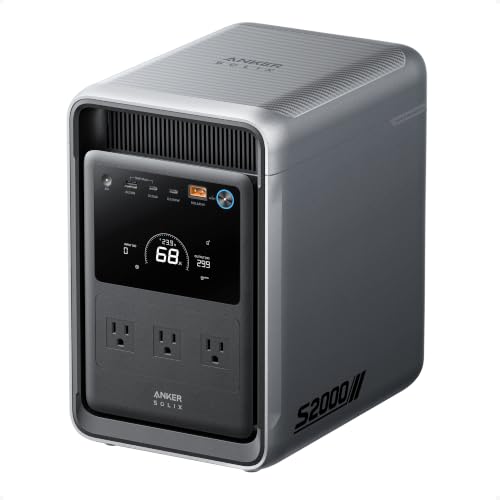
- Up to 35 hours of fridge backup
- 10,000-cycle LFP battery
- <10 ms UPS switchover
Best For: Long-lasting fridge backup and home essentials
Built-In Solar Kit
BLAVOR 1024Wh Solar Power Station

- Built-in 40W foldable solar panel
- 1,600W rated output, 3,200W surge
- 3,500+ charge cycles LiFePO4 battery
Best For: Ready-to-use backup with included solar panel
Home Backup Beast – Jackery HomePower 3000 for outages
If you want a solar generator for power outage support that can cover real household essentials, the Jackery HomePower 3000 is built for that job. Its 3,072Wh LFP battery, 3,600W output, and included 200W solar panels make it a strong fit for keeping fridges, lights, routers, and other critical devices running when the grid goes down.
Best For: Homeowners who want a high-capacity backup system for essential appliances, internet, and short-term outage coverage.
Pros:
- 3,600W output with 7,200W surge handles demanding home essentials.
- ≤20ms UPS switchover helps keep devices like routers and medical fridges running smoothly.
- Charges in 1.7 hours via hybrid AC+DC, with solar support up to 80% in 9 hours.
- Includes USB-C, USB-A, DC, and TT-30 RV output for flexible use.
Cons:
- Heavier and larger than compact portable power stations.
- Solar recharge time is practical, but not especially fast for a unit this size.
For outage preparedness, this model stands out because it combines meaningful capacity with fast transfer backup and multiple charging paths. It is a more serious home backup choice than a travel-first power station, especially if you want one unit to cover both emergencies and RV use.
Lightweight Blackout Pick – Jackery Explorer 300 solar kit
The Jackery Solar Generator 300 is a compact solar generator for power outage use when you only need to keep small electronics charged and a few light loads running. With a 292Wh battery, 300W output, and included 40W solar panel, it is a practical small backup option for phones, laptops, cameras, and similar devices.
Best For: Users who want a lightweight backup for small devices, travel, and short outages.
Pros:
- Very portable at just 7.5 lbs, making it easy to carry during emergencies or trips.
- 300W output supports up to 6 devices through AC, USB-C, USB-A, and car ports.
- LiFePO4 battery is rated for over 4,000 cycles for long service life.
- Can reach 80% in about 7.5 hours with the included 40W solar panel.
Cons:
- Not suited for large appliances or heavy household outage loads.
- Battery capacity is modest compared with home-backup models.
This is the most practical choice if your outage plan is about staying connected, not powering a whole home. It offers clean, simple backup power in a package that is easy to store, move, and recharge with solar.
Expandable Home Backup – Jackery HomePower 3600 Plus
For buyers comparing a solar generator for power outage protection, the Jackery HomePower 3600 Plus is aimed at serious home backup rather than casual portable use. It delivers 3,600W output, 3,584Wh of capacity, and expandable storage up to 21kWh per unit, so it can cover larger loads and longer outages than smaller stations.
Best For: Households that want expandable, plug-and-play backup for longer outages and higher-wattage appliances.
Pros:
- 3,600W output with dual-voltage support and 7,200W parallel capability.
- Expandable to 21kWh per unit, with up to 43kWh across multiple units.
- Fast charging options include 2 hours hybrid AC+DC, 4 hours solar, or 2.5 hours gas generator.
- Wheels and telescopic handle make it easier to move than many large-capacity units.
Cons:
- Solar panel is optional, so full solar use requires a separate purchase.
- At 77.16 pounds, it is still a substantial unit despite the rolling design.
This model is a strong fit if you want home backup that can scale as your needs grow. Its mix of high output, quick recharge paths, and expansion potential makes it one of the more flexible outage-focused options in this roundup.
Budget Solar Starter – ZeroKor 300W with 60W panel
If you need a basic solar generator for power outage situations and small device charging, this ZeroKor kit is a simple entry-level option. Its 280Wh battery, 300W output, and included 60W foldable solar panel make it useful for phones, tablets, laptops, and other low-power essentials when the lights go out.
Best For: Budget-minded buyers who need a compact backup for small electronics, camping, or light emergency use.
Pros:
- Includes a 60W foldable solar panel in the box.
- Multiple charging options: AC, solar, and 12V car input.
- Built-in protection features include short circuit, overload, and overheating protection.
- Supports several small devices at once through AC, DC, USB-A, USB-C, and quick-charge ports.
Cons:
- 300W limit means it is not for appliances over 300W.
- Battery capacity is small for extended outages.
This is best treated as a compact emergency and travel power source rather than a whole-home solution. For users who mainly need to keep personal electronics alive during short outages, it delivers a straightforward and portable package.
Premium Whole-Home Backup – Jackery Explorer 2000 v2 Solar Generator
If you need a solar generator for power outage readiness that can handle heavier household loads, the Jackery Explorer 2000 v2 is built for serious backup use. Its 2,042Wh LiFePO4 battery, 2,200W output, and 20ms UPS switchover make it a strong fit for keeping essential devices running when the grid goes down.
Best For: Homeowners who want a high-capacity backup unit for outages, emergencies, and indoor-safe use.
Pros:
- 2,042Wh capacity and 2,200W output support demanding gear like a refrigerator or microwave.
- 20ms seamless switching and UL1778 certification support backup-critical devices during outages.
- Quiet, fume-free operation with LiFePO4 battery chemistry is suitable for indoor use.
- Fast charging options include AC charging and solar charging with compatible panels.
Cons:
- Solar charging time depends on panel setup and can take around 6 hours with 400W panels.
- At 39.5 lbs, it is portable but still more substantial than smaller backup units.
- To connect Jackery solar panels correctly, the cable plug configuration must be followed carefully.
This is a strong pick if you want a backup-focused solar generator with real UPS capability and enough output for more than just phones and laptops. It balances capacity, speed, and indoor-safe operation better than many compact alternatives.
Budget Compact Kit – ZeroKor 300W Solar Generator Kit
If you want a solar generator for power outage situations without jumping to a large, expensive system, this ZeroKor kit keeps things simple. It pairs a 300W portable power station with a foldable solar panel and covers small devices, lights, and basic emergency charging.
Best For: Campers, RV users, and light-duty home backup needs for phones, tablets, laptops, and small electronics.
Pros:
- Includes both a 280Wh power station and a 40W solar panel in one kit.
- Multiple outlets cover USB, DC, and AC charging for common low-power devices.
- Built-in protection features include short circuit, over-current, over-voltage, and overload protection.
- Low-noise, gas-free design is useful for indoor and outdoor use.
Cons:
- 300W limit is not suitable for appliances over 300W.
- High-draw items like coffee makers, hair dryers, and water pumps are specifically called out as poor fits.
- More of a light backup kit than a full-home outage solution.
This is a practical entry-level option if your outage plan is focused on keeping small electronics charged and powering a few essentials. It is best viewed as a compact emergency kit rather than a heavy-duty backup generator.
Fast-Charge Portable Backup – Anker SOLIX C1000 Gen 2
For shoppers comparing a solar generator for power outage backup, the Anker SOLIX C1000 Gen 2 stands out for speed and portability. It combines a 1,024Wh LiFePO4 battery, 2,000W output, and fast recharge performance, making it a strong everyday backup choice for home, RV, or remote work use.
Best For: Users who want quick recharging, strong output, and compact backup power for outages and travel.
Pros:
- Fully recharges in 49 minutes with 1,600W AC input when HyperFlash mode is enabled.
- 2,000W output and 10 ports let it handle multiple devices at once.
- 10ms UPS backup helps keep CPAP machines and laptops running during outages.
- Solar recharging is supported with up to 600W input for off-grid use.
Cons:
- Solar panels are optional, so the full solar setup requires a separate purchase.
- 1,024Wh capacity is smaller than larger whole-home backup stations.
- Best suited to essential loads rather than long-duration heavy appliance use.
This is a smart pick if you value fast turnaround and dependable backup behavior more than maximum battery size. It hits a useful middle ground between compact portability and serious outage support.
Fast-Charge Home Backup – EcoFlow DELTA 2 1024Wh Portable Power Station
If you want a solar generator for power outage planning that can also recover fast from a wall outlet, the EcoFlow DELTA 2 is built for that role. Its 1,024Wh LFP battery, 1,800W AC output, and expandable capacity make it a flexible pick for home backup, camping, and RV use, while solar input support keeps it useful when you want a cleaner charging option.
Best For: Households that want rapid recharge speed and expandable backup capacity in one portable unit.
Pros:
- 0-80% charging in 50 minutes and full charge in 80 minutes with AC input
- 1,800W output and 15 outlets can handle a wide range of appliances
- Expandable from 1kWh to 3kWh with extra batteries
- Up to 500W solar input for off-grid or camping charging
Cons:
- Solar panel is optional, so the full solar setup costs extra
- At 27 pounds, it is portable but not ultra-light
For buyers prioritizing speed, output, and long-term battery chemistry, this DELTA 2 strikes a practical balance for outages and everyday backup. The 5-year service coverage and 3,000+ cycle LFP life add confidence if you plan to rely on it often.
Long-Run Fridge Backup – Anker SOLIX S2000 2010Wh Power Station
As a solar generator for power outage protection, the Anker SOLIX S2000 is aimed at keeping essential loads running longer with less hassle. Its 2,010Wh LFP battery, 1,500W continuous output, and low idle draw make it a strong option for home essentials, especially if your priority is fridge backup, UPS-style switchover, and flexible recharging.
Best For: Buyers who want long-lasting fridge backup and a compact 2kWh-class home backup station.
Pros:
- Up to 35 hours of fridge backup with 6W idle draw
- 10,000-cycle LFP battery is rated for a long service life
- 1,500W continuous output and 3,000W peak output cover most home essentials
- Supports six recharge methods, including up to 400W solar input
Cons:
- No 12V DC port, which may limit some accessory setups
- At 35.7 pounds, it is still a substantial unit to move around
This model stands out when runtime and efficiency matter more than sheer output. If you want a cleaner backup setup with front and rear outlets plus a fast UPS switchover, it is well suited to home outage use.
Built-In Solar Kit – BLAVOR 1024Wh Solar Power Station
If you want a solar generator for power outage use with panels already included, the BLAVOR portable power station offers a convenient all-in-one setup. It combines a 1,024Wh LiFePO4 battery, 1,600W rated output, and a built-in foldable 40W solar panel, making it appealing for emergency backup, camping, and RV trips where simplicity matters.
Best For: Shoppers who want an included solar panel and a ready-to-use backup power package.
Pros:
- Built-in 40W foldable solar panel for direct sunlight charging
- 1,600W rated output with 3,200W surge handles many appliances
- LiFePO4 battery is rated for 3,500+ cycles and 10+ years of use
- Includes multiple charging methods and 100W USB-C fast charging
Cons:
- Built-in solar panel is only 40W, so charging speed may be modest
- Solar panel is integrated rather than a larger external array
For buyers who value convenience and an eco-friendly backup setup, this BLAVOR unit is easy to understand and easy to deploy. Its included accessories and clear LCD display make it a practical pick for home and outdoor emergency power.
How We Picked the Best Solar Generator for Power Outage
For this roundup, we prioritized real-world outage usefulness: usable battery capacity, continuous AC output, surge handling, recharge options, solar input support, battery chemistry, and weight or expandability where it matters. A strong Solar Generator for Power Outage use should be able to start essential appliances, recharge efficiently, and run safely for repeated cycles.
Quick Comparison
Smaller units are best for phones, laptops, routers, and short backup tasks. Mid-size models are the sweet spot for most homes, offering enough output for a refrigerator, fans, or medical devices. Larger expandable systems are better if you want longer runtimes, more simultaneous loads, or a more complete emergency backup plan.
Key Buying Factors for a Solar Generator for Power Outage
Battery Capacity and Runtime
Look at watt-hours first. Higher capacity usually means longer runtime, but appliance wattage matters just as much. A 1,000Wh unit may cover basics for a day, while 2,000Wh or more is better for extended outages or heavier loads.
AC Output and Surge Power
Make sure the inverter can handle your most demanding device. Fridges, sump pumps, and some power tools draw extra starting power, so surge ratings matter. For a Solar Generator for Power Outage use, stable pure sine wave output is a plus for sensitive electronics.
Recharge Speed and Solar Input
Fast AC charging is helpful before storms, while solar input keeps you going during longer outages. Check both wall recharge time and solar panel compatibility so you know how quickly you can restore power.
Portability Versus Whole-Home Potential
Smaller units are easier to move and store. Larger models may be heavier but offer better runtime and higher output. If you need backup for critical circuits or longer blackouts, expandable systems are worth a closer look.
Who Should Buy Which Solar Generator for Power Outage?
If you want a simple emergency backup for phones, internet, and lights, choose a compact model. If you need refrigerator support, medical-device backup, or broader household coverage, go with a mid-size unit around 1,000Wh to 2,000Wh. If your goal is serious outage resilience, prioritize higher output, LiFePO4 batteries, and expandable capacity for future needs.
In short, the best choice depends on how much power you need, how long you need it, and whether portability or home backup matters more. Matching those priorities will lead you to the right Solar Generator for Power Outage preparedness.