Choosing a solar generator for off grid cabin use is about more than wattage. You need enough battery capacity for overnight loads, enough inverter output for appliances, and a setup that can recharge reliably.
This roundup focuses on practical options for cabins, weekend retreats, and remote properties, with a mix of portable power stations and larger kit-style systems.
Best 10 Solar Generator for Off Grid Cabin Picks for 2026
Whole-Home Backup Pick
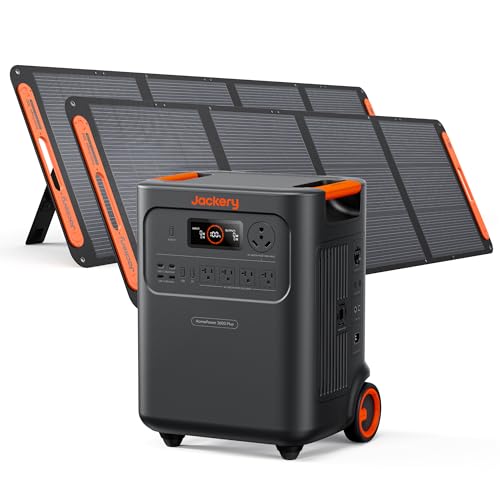
- 3,600W output for heavier cabin loads
- 3,584Wh battery expandable to 21kWh
- Fast charging with solar, AC, or hybrid input
Best For: Large cabins needing serious backup capacity
Starter Kit Pick
ECO-WORTHY 200W Complete Solar Kit
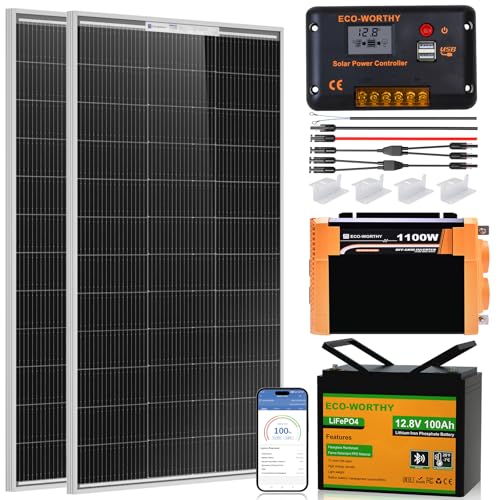
- All-in-one kit with panels, battery, inverter, and controller
- Stores 1.28kWh and makes about 800Wh per day
- Novice-friendly 4-step installation
Best For: Small cabins and first-time DIY off-grid setups
Compact Fast-Charge Pick

- 1,024Wh LFP battery with 1,800W output
- Fast AC and solar charging for quick turnaround
- 25-pound compact design with 10ms UPS backup
Best For: Lightweight cabin backup and everyday essentials
High-Capacity System Pick

- 7.168kWh battery storage for bigger needs
- 800W panel array with 3,000W inverter charger
- Complete kit includes MPPT, batteries, and cables
Best For: Full off-grid cabin setups with higher power demand
Ultra-Lightweight Backup Pick
Jackery Explorer 300 Portable Power Station

- 292Wh capacity with 300W rated output
- Only 7.5 lbs with an integrated handle
- LiFePO4 battery rated for over 4,000 cycles
Best For: Light cabin backup and portable charging for small devices
High-Power Hybrid System
Home Off Grid Power System 5000W Hybrid Kit
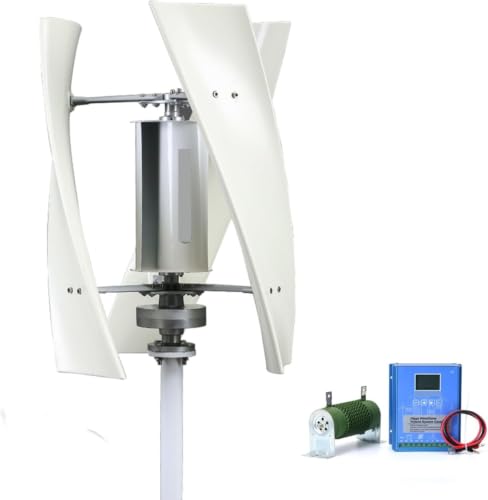
- 5000W system for larger cabin loads
- Hybrid solar-wind design for remote areas
- Supports 12V, 24V, and 48V systems
Best For: Permanent off-grid cabin power with higher-wattage needs
Balanced Cabin Power Pick
Jackery Solar Generator 1000 v2 with 200W Panel

- 1,070Wh capacity and 1,500W AC output
- Includes 200W solar panel
- LiFePO4 battery with 4,000+ cycles
Best For: Portable cabin power for appliances and emergency backup
Solar-Ready Cabin Kit
OUPES Mega 1 1024Wh with 240W Panel

- 240W panel included with 5–8 hour solar recharge claim
- 1024Wh LiFePO4 battery and 2000W AC output
- Expandable to 5120Wh with app monitoring and UPS support
Best For: Small off-grid cabins that need a starter kit with expansion potential
High-Output Cabin Power
1800W Solar Generator with 200W Panel
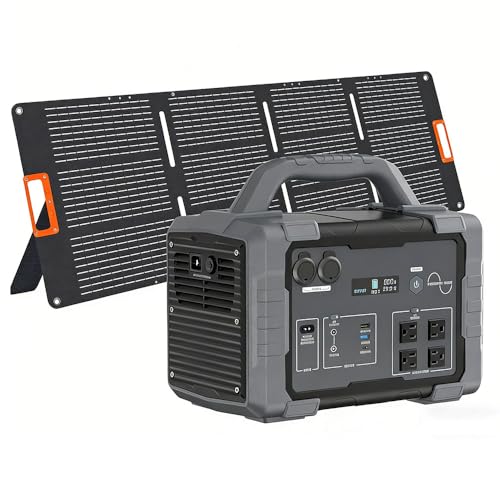
- 1800W continuous output with 3600W surge
- 1024Wh LiFePO4 battery and 200W solar panel included
- 1.5-hour AC charging plus 10 output ports
Best For: Off-grid cabins that need more power for appliances and tools
Compact Essentials Kit
EBL 500W with 100W Solar Panel

- 519.48Wh capacity with 500W pure sine wave output
- 100W foldable solar panel with 6–9 hour solar recharge
- Lightweight 14.1 lb station with up to 10 devices supported
Best For: Small off-grid cabins and essentials-only backup
Whole-Home Backup Pick – Jackery HomePower 3600 Plus
If you’re shopping for a solar generator for off grid cabin use, the Jackery HomePower 3600 Plus is built more like a serious backup system than a small portable unit. Its 3,600W output, large 3,584Wh battery, and expandable design make it a strong fit for cabins that need to keep essential appliances running through long outages or low-sun periods.
Best For: Cabins that need high-capacity backup power for larger appliances, extended outages, and flexible expansion.
Pros:
- 3,600W AC output can handle demanding loads like pumps, heaters, and dryers.
- 3,584Wh capacity is expandable up to 21kWh per unit, with even more capacity possible in multi-unit setups.
- Fast recharge options include hybrid AC+DC in 2 hours, AC in 2.5 hours, solar in 4 hours, or gas generator charging.
- Wheels and telescopic handle make it easier to move around a cabin or garage.
Cons:
- At 77.16 pounds, it is still a sizable unit despite the portable design.
- Best suited to higher-power needs, so it may be more system than a small cabin requires.
This is a good choice if your cabin setup needs more than phone charging and lighting. The expandable storage and strong output give it room to grow with your off-grid power needs.
Starter Kit Pick – ECO-WORTHY 200W Complete Solar Kit
For a solar generator for off grid cabin setup that keeps things simple, this ECO-WORTHY complete kit gives you the core parts in one box. It includes solar panels, a lithium battery, charge controller, inverter, and cables, which makes it a practical entry point for cabin owners who want a ready-made off-grid starter system.
Best For: First-time off-grid cabin owners who want a compact, all-in-one solar starter system.
Pros:
- Complete package includes 2x 100W panels, 100Ah lithium battery, 1100W inverter, 30A controller, and cables.
- Estimated daily output of 800Wh and 1.28kWh of stored power for basic cabin needs.
- Novice-friendly 4-step installation is designed to reduce setup hassle.
- Backed by 7/24 customer service and support.
Cons:
- 200W total panel rating is modest for larger cabin appliances.
- 1100W inverter limits what you can run at one time.
This kit makes sense if you want a complete, lower-complexity starting point rather than piecing together components yourself. It is best viewed as a basic off-grid power foundation, not a high-demand whole-cabin system.
Compact Fast-Charge Pick – BLUETTI Elite 100 V2
If you want a more compact solar generator for off grid cabin use, the BLUETTI Elite 100 V2 is built around portability and speed. With 1,024Wh of LFP storage, 1,800W AC output, and very fast AC or solar charging, it suits cabin owners who need dependable power for everyday essentials without a bulky footprint.
Best For: Cabins that need a lightweight, fast-charging power station for everyday essentials and short backup use.
Pros:
- 1,800W AC output can power many everyday appliances and devices.
- Fast recharge support includes 1200W AC charging or up to 1000W solar input.
- 10ms UPS switchover helps keep Wi-Fi routers and PCs running during outages.
- At 25 pounds, it is easy to carry and store in tight cabin spaces.
Cons:
- 1,024Wh capacity is much smaller than larger cabin backup systems.
- Best for essentials, not extended whole-cabin power demands.
This model is a smart pick if you value quick recovery time and easy portability over maximum storage. It works especially well for lighter cabin loads, short outages, and weekend off-grid stays.
High-Capacity System Pick – ECO-Worthy 7.168kWh Solar Kit
For a solar generator for off grid cabin project that leans into full-system power, this ECO-Worthy kit is designed to cover serious energy needs. It pairs 800W of solar panels with two large lithium batteries, a 3,000W inverter charger, and an MPPT controller, giving cabin owners a more complete off-grid setup than a basic portable station.
Best For: Cabins that need a larger complete solar system for running more appliances and storing substantial energy.
Pros:
- 7.168kWh of battery storage provides substantial reserve power.
- 800W of bifacial panels can generate an estimated 3.2kWh in 4 hours of sunlight.
- 3,000W inverter charger and UPS function support more demanding cabin equipment.
- Built as a complete system with panels, batteries, controller, inverter charger, Bluetooth module, and cables.
Cons:
- Much larger and more involved than a simple portable power station.
- Installation still requires connecting multiple system components.
This is the strongest option here if your cabin needs a true off-grid power bank with room to support heavier use. It is better for users who want a complete solar installation rather than a grab-and-go generator.
Ultra-Lightweight Backup Pick – Jackery Explorer 300 Portable Power Station
If you want a solar generator for off grid cabin use that stays easy to move around, the Jackery Explorer 300 is a compact option for light-duty power. Its 292Wh capacity, 300W output, and solar-ready design make it better suited for phones, laptops, cameras, and other small essentials than for running larger cabin appliances.
Best For: Cabin owners who need a lightweight backup power source for small electronics, occasional outage support, or weekend off-grid use.
Pros:
- Very portable at 7.5 lbs with an integrated handle.
- Can charge up to 6 devices through AC, USB-C, USB-A, and car ports.
- LiFePO4 battery is rated for over 4,000 cycles.
- Fast solar charging with compatible Jackery panels.
Cons:
- 300W rated output limits what cabin appliances it can run.
- Solar panel is optional, so the full kit costs extra.
- Battery capacity is modest for longer off-grid stays.
For cabin buyers who care most about portability, this is the easiest model in the group to carry and store. It makes sense as a compact solar generator for off grid cabin backup, but not as a whole-cabin power solution.
High-Power Hybrid System – Home Off Grid Power System 5000W Hybrid Kit
This hybrid solar wind setup is built for buyers who need serious output from a solar generator for off grid cabin applications. With 5000W high-wattage capacity and compatibility for 12V, 24V, and 48V systems, it is aimed at powering a cabin, garage, or other remote property where larger electrical loads matter more than portability.
Best For: Remote cabin owners who want a higher-capacity hybrid solar-wind power system for more demanding household or commercial-style loads.
Pros:
- High 5000W output for larger power needs.
- Hybrid solar-wind ready for broader energy options.
- Works with 12V, 24V, and 48V setups.
- Aluminum alloy body and self-lubricating bearing support low maintenance.
Cons:
- Large physical size makes it unsuitable for portable use.
- Product details are limited compared with full power station kits.
- Installation complexity may be higher than plug-and-play units.
If your cabin setup needs a more permanent energy system, this model stands out for raw output and hybrid flexibility. It is less of an all-in-one portable generator and more of an infrastructure-style power solution for off-grid property use.
Balanced Cabin Power Pick – Jackery Solar Generator 1000 v2 with 200W Panel
For shoppers comparing a solar generator for off grid cabin living, the Jackery Solar Generator 1000 v2 offers a practical middle ground between portability and useful capacity. Its 1,070Wh battery, 1,500W AC output, and included 200W solar panel make it a stronger fit for running common cabin essentials than smaller backup units.
Best For: Cabin users who want a portable but more capable solar generator for appliances, emergency backup, and extended off-grid stays.
Pros:
- 1,070Wh capacity with 1,500W AC output and 3,000W surge peak.
- Includes a 200W solar panel in the package.
- Fast charging options, including one-hour emergency charging.
- LiFePO4 battery rated for over 4,000 cycles.
Cons:
- Heavier than smaller portable power stations at 23.8 lbs.
- Full solar charging takes longer than emergency charging modes.
- Higher output still has limits versus a full home system.
This is the most balanced choice here if you want real cabin utility without moving into a full fixed installation. It has enough output for many everyday off-grid needs while staying compact enough to carry and store with less hassle.
Solar-Ready Cabin Kit – OUPES Mega 1 1024Wh with 240W Panel
If you want a solar generator for off grid cabin use that feels ready to deploy, the OUPES Mega 1 kit is built around a 1024Wh LiFePO4 power station and a 240W panel included in the box. It can recharge in about 5–8 hours in sunlight, supports simultaneous solar plus AC input, and is designed to keep essentials like a fridge, CPAP, and electronics running.
Best For: Cabin owners who want a compact kit with strong output, app monitoring, and room to expand later.
Pros:
- 1024Wh LiFePO4 battery with 2000W AC output for common cabin essentials
- 240W monocrystalline panel included, with solar recharge in about 5–8 hours
- Expandable to 5120Wh with an added B2 battery
- WiFi/Bluetooth app monitoring and a 20ms UPS switchover for outages
Cons:
- Best recharge times depend on sunlight conditions
- Expansion requires a separate battery purchase
- Heavier-duty cabin loads may eventually need more total capacity
This is a practical pick if you want an all-in-one starter system for a small off-grid cabin, especially if you value included solar and the option to grow the setup later. Its mix of UPS support, app control, and expandable storage makes it more flexible than a basic portable power station.
High-Output Cabin Power – 1800W Solar Generator with 200W Panel
For a solar generator for off grid cabin setups that need more AC power headroom, this 1800W kit pairs a 1024Wh LiFePO4 power station with a 200W solar panel. It is built to run higher-demand appliances, supports fast AC charging in about 1.5 hours, and is aimed at off-grid living, RV use, and home backup.
Best For: Cabins that need stronger continuous output for appliances, tools, and larger everyday loads.
Pros:
- 1800W continuous output with 3600W surge for demanding appliances
- 1024Wh LiFePO4 battery with 3,500+ life cycles to 80% capacity
- Includes a 200W foldable solar panel with up to 23.5% conversion efficiency
- Supports ultra-fast 1.5-hour AC wall charging and has 10 output ports
Cons:
- Large appliances may still drain the 1024Wh battery quickly
- Solar panel size may be more than some users want to carry frequently
- No expandable battery detail is listed in the supplied notes
This kit stands out when your cabin setup needs stronger output than the average portable station can provide. The combination of high continuous wattage, fast recharging, and a durable LiFePO4 battery makes it a solid pick for heavier daily use.
Compact Essentials Kit – EBL 500W with 100W Solar Panel
If your solar generator for off grid cabin needs are centered on essentials rather than big appliances, the EBL kit keeps things simple. It combines a 519.48Wh power station with a 100W foldable solar panel and is designed to recharge in about 6–9 hours of sun while powering small electronics and lower-wattage devices quietly.
Best For: Small cabins, weekend getaways, and backup setups focused on lights, devices, and other essentials.
Pros:
- 519.48Wh capacity with 500W pure sine wave AC output
- 100W monocrystalline panel included with up to 23.5% efficiency
- Can power up to 10 devices at once, including USB-C PD and wireless charging
- Lightweight 14.1 lb station with a foldable panel for easier transport
Cons:
- 500W output is not suited for heavier cabin appliances
- Solar recharge takes longer than larger-panel kits
- Smaller total capacity means shorter runtime for sustained use
This is the most portable option in the group and makes sense when your cabin power needs are modest. It is best viewed as an efficient essentials kit rather than a whole-cabin solution, but the included panel and multiple output types make it very versatile.
How We Picked the Best Solar Generator for Off Grid Cabin
We looked for systems that balance usable battery capacity, inverter output, solar charging speed, and real-world cabin flexibility. The best picks also use lithium iron phosphate batteries where possible, since LFP chemistry is generally better suited to frequent cycling and long-term use.
Quick Comparison
Not every Solar Generator for Off Grid Cabin living needs to do the same job. Smaller units are best for lights, phones, routers, and fans. Mid-size models can support laptops, kitchen electronics, and short appliance use. Larger kits are better when you want a more permanent cabin power solution with room to expand.
Key Buying Factors for a Solar Generator for Off Grid Cabin Use
Battery Capacity
Look at watt-hours first. A higher number usually means longer runtime, but real usage depends on what you power and for how long. For cabins, modest backup use may be fine under 1,000Wh, while heavier weekend or off-grid use often benefits from 2,000Wh or more.
Inverter Output
Make sure the inverter can handle your highest-load devices. Microwaves, coffee makers, pumps, and some power tools may require a strong continuous output and a higher surge rating. If you plan to run multiple appliances, headroom matters.
Solar Input and Recharge Speed
Fast solar recharging is critical in remote settings. Check both panel wattage and the system’s maximum solar input so you are not limited by a weak controller. If your cabin sees good sun, higher input capacity can make a big difference.
Portability Vs. Permanence
Some buyers want a moveable power station they can bring home or use for travel. Others want a more fixed cabin setup with panels, inverter charger, and battery bank. Choose based on whether your system needs to travel or stay put.
Expandability and Backup Features
Expandable battery support, UPS capability, and multiple output ports are useful if your power needs may grow. For a cabin that doubles as a storm shelter or remote work spot, these features add flexibility.
Who Should Buy Which Solar Generator for Off Grid Cabin?
If you only need light backup for essentials, a compact portable unit is the simplest choice. If you want a dependable weekend cabin setup, a mid-size solar generator kit offers a better balance of capacity and convenience. If your cabin is used regularly or has larger appliances, prioritize a higher-capacity system or a complete off-grid kit with stronger solar input and expansion potential.
The best Solar Generator for Off Grid Cabin use is the one that matches your loads, your sun conditions, and how hands-off you want the system to be.