If you want clearer insight into where your electricity goes, a home energy monitor without electrician can deliver fast, practical visibility without a major project.
Below, we focus on models that are built for easier installation, useful app reporting, and the kind of tracking that helps you cut waste with confidence.
Best 10 Home Energy Monitor Without Electrician Picks for 2026
UL-Certified Whole-Home Monitoring
Emporia Vue 3 Smart Energy Monitor

- UL Listed for safety confidence
- Clamp-on sensors fit many panels
- App shows real-time usage and solar data
Best For: Homeowners wanting whole-home monitoring with solar support
Easy Install Solar Tracker
Smart Home Energy Monitor with CTs

- Pluggable terminals simplify setup
- Bi-directional tracking for solar systems
- Smart Life app adds alerts and automation
Best For: Buyers wanting simple installation and solar-aware tracking
Panel-Level Power Control
SIEMENS Inhab Smart Home Energy Monitor

- Tracks mains and up to 16 circuits
- Sends personalized energy alerts
- Adds time-of-use and load-shedding features
Best For: Homeowners wanting detailed circuit-level monitoring
Wireless Z-Wave Energy Tracking
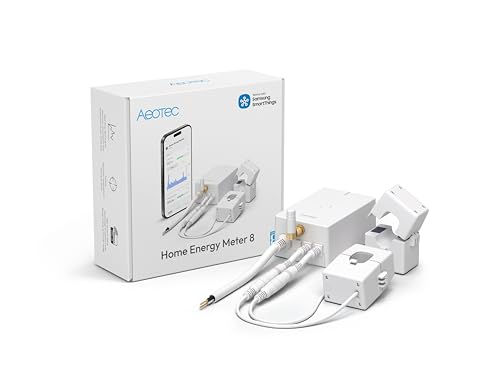
- Z-Wave Long Range with secure encryption
- Clamp-on sensors track usage and production
- Works with SmartThings and HomeAssistant
Best For: Smart home users wanting Z-Wave-based monitoring
Whole-Home Circuit Monitor
Meross 18-Circuit Energy Monitor

- Tracks 18 circuits with real-time energy data.
- Clamp-on install is designed for quick setup.
- Local storage, alerts, and no subscription fees.
Best For: Homeowners wanting detailed whole-home monitoring without cloud lock-in
Privacy-First Solar Monitor
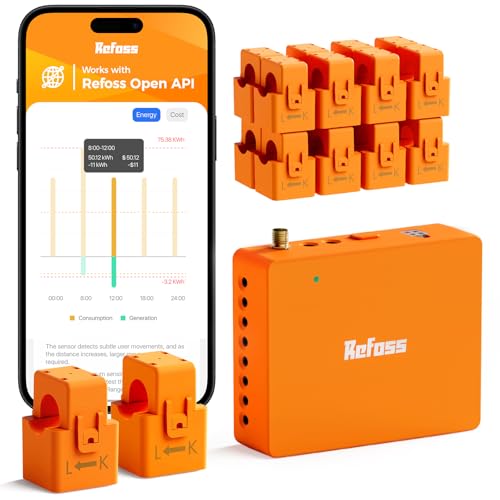
- ±1% precision across 18 circuits.
- Local UI, Open API, MQTT, and WebSocket support.
- Solar metering plus 5 years of stored daily data.
Best For: Users who want accurate, private monitoring with solar automation
Rental-Friendly Circuit Tracker

- 16 clamp-on sensors for circuit-level tracking.
- Supports cost allocation with time-of-use pricing.
- Can run LAN-only or MQTT-only for privacy.
Best For: Rentals and shared homes needing transparent usage allocation
Local Control Pick
Refoss Smart Home Energy Monitor

- No cloud required; local Web UI, Open API, and MQTT
- Native Home Assistant integration and OpenClaw support
- Solar surplus automation plus ±1% circuit monitoring
Best For: Privacy-focused smart homes with solar automation
Three-Circuit Tracker
WiFi Home Energy Monitor with 3 CT Clamps
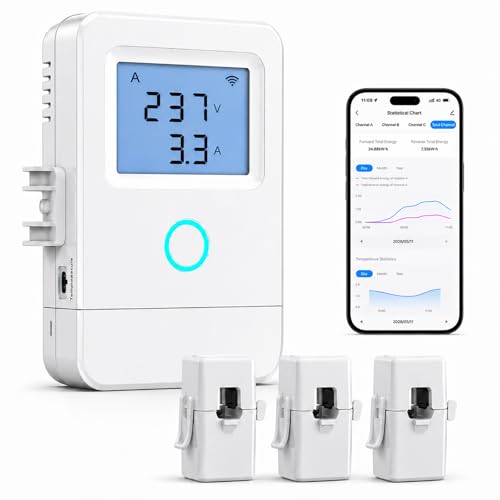
- Monitors 3 selected circuits with included CT clamps
- Smart Life/Tuya app shows voltage, current, power, and energy
- High-temp alerts and historical trends for major loads
Best For: Tracking a few major circuits from your phone
Wide-Coverage Monitor
Smart Energy Consumption Monitor with 18 Circuit Monitoring

- 18-circuit setup with 2x200A and 16x50A sensors
- SmartLife app plus Tuya integration for remote viewing
- Bidirectional measurement suits solar and large appliances
Best For: Homes needing broad circuit-level monitoring
UL-Certified Whole-Home Monitoring – Emporia Vue 3 Smart Energy Monitor
If you want a home energy monitor without electrician guesswork, the Emporia Vue 3 is built for whole-home tracking with clamp-on sensors that install in the circuit panel of most homes. It gives real-time electricity data in the app, supports solar and net metering, and is aimed at households that want actionable insight into where power is going.
Best For: Homeowners who want UL-listed, app-based whole-home monitoring with solar support.
Pros:
- UL Listed and CE Listed for added safety confidence
- Clamp-on sensors support installation in many home circuit panels
- Real-time monitoring through iPhone, Android, or web app
- Supports solar, net metering, and up to sixteen branch sensors
Cons:
- Requires 2.4 GHz Wi‑Fi and an internet connection
- Branch sensors are sold separately
- Some system types need an additional 200A sensor
The Vue 3 is a strong pick if you want detailed panel-level visibility and the safety reassurance of UL certification. It is especially useful for buyers who want to monitor usage patterns and spot savings opportunities from an app.
Easy Install Solar Tracker – Smart Home Energy Monitor with CTs
This home energy monitor without electrician-style complexity focuses on a quick setup using pluggable terminals and compact split-core CTs. It tracks live electricity use, supports bi-directional monitoring for solar and battery systems, and pairs with the Smart Life app for alerts and automation.
Best For: Buyers who want simple installation and solar-aware energy tracking.
Pros:
- Quick installation with pluggable terminals and split-core CTs
- Bi-directional monitoring measures usage and grid export
- Smart Life app supports alerts and automation scenes
- Supports HEMS features like dynamic load balancing and zero export mode
Cons:
- Only supports single-phase 3-wire systems
- Wi‑Fi version requires 2.4 GHz connectivity
- Brand ecosystem may matter if you do not use Smart Life
For shoppers who care most about a hassle-reduced install and solar visibility, this model is practical and feature-rich. Its app-based controls make it a good fit for users building a simple home energy management setup.
Panel-Level Power Control – SIEMENS Inhab Smart Home Energy Monitor
If you need a home energy monitor without electrician-level overreach, the Siemens Inhab is designed for whole-home and circuit-level monitoring from new or existing panels. It tracks usage in real time, sends personalized notifications, and adds advanced energy functions like time-of-use management, peak demand management, and net metering.
Best For: Homeowners who want detailed panel and circuit monitoring with smart energy features.
Pros:
- Monitors both mains and up to 16 branch circuits
- Works in new and existing electrical panels
- Provides custom alerts for unusual energy behavior
- Supports advanced functions like load shedding and net metering
Cons:
- Uses multiple sensors, so the setup is more involved than basic monitors
- US and Canada only for the mobile app
- Branch-level monitoring depends on panel capacity and installation compatibility
The Inhab stands out for buyers who want deep visibility rather than just whole-home totals. It is a serious monitoring option if you want circuit-level detail and smarter control over household energy use.
Wireless Z-Wave Energy Tracking – Aeotec Home Energy Meter 8
For shoppers looking for a home energy monitor without relying on a Wi‑Fi-first setup, the Aeotec Home Energy Meter 8 uses Z-Wave Long Range and clamp-on sensors for real-time usage and production tracking. It is designed for split-phase or 2-phase mains and integrates with certified Z-Wave hubs like SmartThings and HomeAssistant.
Best For: Smart home users who want Z-Wave-based energy monitoring with long-range connectivity.
Pros:
- Z-Wave Long Range connectivity with secure S2 and AES-128 encryption
- Clamp-on sensors support easy monitoring of mains power
- Works with SmartThings, HomeAssistant, and other Z-Wave systems
- Tracks both energy consumption and production, including solar
Cons:
- Requires a compatible Z-Wave hub
- Designed for up to 2 phases/split phases only
- Not a direct app-only solution without a hub ecosystem
The Home Energy Meter 8 is a smart choice if you already use Z-Wave and want privacy-focused monitoring with long wireless range. It is especially appealing for users who value system integration over standalone app simplicity.
Whole-Home Circuit Monitor – Meross 18-Circuit Energy Monitor
If you want a home energy monitor without electrician guesswork for everyday visibility, this Meross unit gives you circuit-level tracking with clamp-on sensors and no subscription fees. It covers two main circuits plus 16 branch circuits, so you can see where power is going and spot unusual spikes before they turn into bigger bills.
Best For: Homeowners who want whole-home and circuit-level monitoring with local data control.
Pros:
- Monitors 18 circuits with real-time power, voltage, current, and power factor data.
- Clamp-on design is built for quick installation and supports common US home wiring types.
- Local data, Home Assistant support, and no subscription fees keep ongoing costs low.
- Smart alerts help catch unusual usage spikes early.
Cons:
- Not compatible with Delta systems.
- Setup still involves a breaker panel install, even if it is clamp-on based.
- Best value comes if you will actually use the circuit-level data and reports.
Overall, this is a strong pick if you want detailed energy monitoring with privacy-friendly local storage and enough circuit coverage to make the data useful for bill reduction.
Privacy-First Solar Monitor – Refoss 18-Circuit Meter
For shoppers looking for a home energy monitor without electrician-heavy complexity, the Refoss model focuses on high-precision circuit tracking and local control. It monitors 18 circuits, stores data locally, and supports Home Assistant integration, making it a practical fit for users who want detailed usage insight without relying on a cloud account.
Best For: Privacy-conscious users who want precise circuit monitoring and solar-aware automation.
Pros:
- Professional ±1% precision across 18 circuits helps pinpoint where electricity is going.
- Local Web UI, Open API, MQTT, and WebSocket support keep control on your network.
- Built for solar metering and time-of-use optimization with Home Assistant integration.
- Stores daily data for 5 years and supports CSV export without subscription fees.
Cons:
- Not every setup will need all 18 circuits, so it may be more monitor than some homes require.
- Like other panel monitors, installation still requires access to the electrical panel.
- Best features are most useful if you plan to use Home Assistant or local automation tools.
In short, Refoss stands out for users who want accurate circuit data, strong privacy, and solar-focused energy management in one system.
Rental-Friendly Circuit Tracker – SEM-Meter 16 Sensor Monitor
If you need a home energy monitor without electrician-centric features that still gives useful visibility, this SEM-Meter system is aimed at practical circuit tracking. It uses clamp-on sensors, supports common single-phase, split-phase, and three-phase setups, and is especially appealing for rental homes or shared apartments where you want to allocate usage fairly.
Best For: Rental homes, shared apartments, and users who need transparent circuit-by-circuit billing.
Pros:
- Includes 16 circuit-level sensors for monitoring major appliances and room loads.
- Supports real-time usage, cost tracking, and time-of-use pricing templates.
- Works with Home Assistant and can run in LAN-only or MQTT-only setups for privacy.
- Designed for fair electricity allocation in rentals and shared spaces.
Cons:
- Some panels with busbar-only access may need flexible sensors sold separately.
- One-year warranty is shorter than some competing monitors.
- Home Assistant plus MQTT is required for the most private setup modes.
As a result, this is a smart choice when you want to break down energy use by circuit and handle billing or cost sharing with more transparency.
Local Control Pick – Refoss Smart Home Energy Monitor
If you want a home energy monitor without electrician-style cloud dependency, the Refoss unit is built around local access and privacy-first control. It works with a built-in Web UI, Open API, and MQTT, so you can review usage data inside your home network and keep monitoring even if the internet goes down.
Best For: Smart-home users who want local control, Home Assistant support, and solar-focused automation.
Pros:
- Local Web UI, Open API, and MQTT support with no cloud required
- Native Home Assistant integration plus OpenClaw support
- Solar and zero feed-in automation can shift loads to midday surplus power
- Supports circuit-level monitoring with up to 18 sensors and ±1% accuracy
Cons:
- Panel installation still involves working inside the electrical panel
- May be more than you need if you only want basic whole-home tracking
The Refoss stands out if your priority is private, local energy monitoring with real automation options. It suits homes with solar or advanced smart-home setups where data ownership and flexible integrations matter most.
Three-Circuit Tracker – WiFi Home Energy Monitor with 3 CT Clamps
This home energy monitor without electrician guesswork is aimed at tracking selected panel circuits rather than every load in the house. With three included CT clamps and app-based readings, it gives you a simple way to watch high-use circuits like HVAC, a water heater, laundry equipment, or solar-related lines.
Best For: Homeowners who want to monitor a few major circuits with app-based tracking.
Pros:
- Tracks up to 3 selected circuits with included CT clamps
- View voltage, current, power, and energy data in Smart Life/Tuya
- Useful for HVAC, water heater, laundry, garage, or solar-related circuits
- Includes historical usage trends and a high-temp alert feature
Cons:
- Panel wiring is involved and the listing recommends a qualified electrician if you’re not familiar with it
- Only one connected circuit supports remote ON/OFF control, with relay control up to 15A
This is a practical pick if you mainly want visibility on a few high-impact circuits instead of a full panel solution. The app monitoring and historical trends make it easier to spot where energy is being used and where costs may be climbing.
Wide-Coverage Monitor – Smart Energy Consumption Monitor with 18 Circuit Monitoring
For a home energy monitor without electrician-level complexity in the day-to-day experience, this model focuses on broad circuit visibility through a large sensor setup. It supports 18-circuit monitoring with app access, so you can watch major appliances, inverters, and other loads in real time from anywhere.
Best For: Users who want wide circuit coverage and Tuya-based remote monitoring.
Pros:
- Monitors 18 circuits with 2x200A and 16x50A sensors
- Supports real-time voltage, current, power factor, and bidirectional data
- Works with the SmartLife app and supports Tuya device integration
- Can track appliances such as air conditioners, furnaces, water heaters, washers, and dryers
Cons:
- Requires 2.4 GHz WiFi with internet access for app monitoring
- Installation and servicing are meant for qualified personnel
- Incorrect clamp direction can show negative readings
This option makes sense when you want more comprehensive circuit-level insight rather than a few targeted channels. Its broad sensor count and bidirectional measurement support are especially useful for homes with solar or multiple high-draw appliances.
How We Picked the Best Home Energy Monitor Without Electrician
We prioritized monitors that are realistically manageable for homeowners who want a Home Energy Monitor Without Electrician, with a focus on clamp-on or CT-based designs, app-based dashboards, and clear real-time reporting. We also looked for products that support whole-home visibility, circuit-level detail, solar or bi-directional tracking where relevant, and strong smart-home compatibility.
Quick Comparison
For most buyers, the right choice comes down to installation ease, the number of circuits you want to track, and whether you need local data access or cloud features. Whole-home monitors are simpler to start with, while multi-circuit models offer deeper insight into appliances, HVAC, EV charging, or solar production.
Best for Simple Setup
Choose a clamp-based whole-home monitor if you want the shortest path to basic usage tracking.
Best for Detailed Insights
Choose a multi-circuit model if you want to identify energy hogs room by room or circuit by circuit.
Key Buying Factors for a Home Energy Monitor Without Electrician
First, check the electrical panel requirements. Some monitors still require access to the panel and should only be installed if you are comfortable working safely around live equipment. If that is a concern, look for products marketed as easy-install or clamp-on, but remember that “no electrician” does not always mean “no panel access.”
Next, compare monitoring scope. A single pair of CT clamps gives you whole-home data, while 8, 16, or 18 circuit sensors provide far better detail. If you want to understand which devices are driving costs, circuit-level monitoring is worth the extra setup.
Also consider software quality. A good app should show live watts, historical trends, cost estimates, and alerts without making the interface hard to use. Local storage, open API support, and Home Assistant compatibility are valuable if you want more privacy or home automation control.
Finally, verify electrical compatibility: phase type, amperage rating, solar or net metering support, and Wi-Fi or Z-Wave connectivity. The best monitor is the one that fits your panel and your goals, not just the one with the longest spec sheet.
Who Should Buy Which Home Energy Monitor Without Electrician?
If you want a quick overall picture and minimal complexity, choose a basic whole-home monitor. If you are trying to lower bills by finding specific waste, go with a circuit-level model. If you already use smart home platforms, pick one with strong integration and local data options. And if you manage a rental, solar setup, or a home with many major loads, a higher-channel monitor will usually be the better long-term fit.
In short, the best Home Energy Monitor Without Electrician is the one that matches your panel, your comfort level, and how much detail you want from day one.