If you want to see exactly where your power goes, an energy monitor with circuit sensors can make a huge difference. These systems go beyond a simple whole-home reading and help you track individual circuits, major appliances, and in some cases solar production.
In this roundup, we focus on options that balance accuracy, app experience, install flexibility, and smart home compatibility so you can choose the right setup for your home and budget.
Best 10 Energy Monitor with Circuit Sensors Picks for 2026
UL-Certified Whole-Home Tracking
Emporia Vue 3 with 8 Circuit Sensors
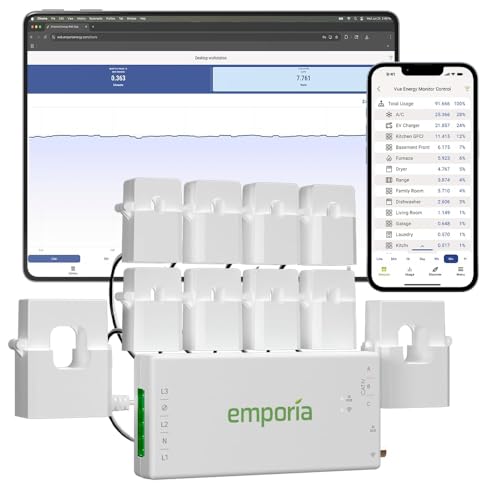
- UL Listed for safer installation
- 8 clamp-on circuit sensors included
- Tracks solar and net metering
Best For: Whole-home monitoring with certified safety and app-based energy insights
Local Solar Intelligence
Meross 18-Circuit Energy Monitor

- Tracks 18 circuits with clamp-on sensors
- Local data, no cloud, no subscriptions
- Home Assistant support for solar automation
Best For: Privacy-first solar homeowners who want detailed circuit monitoring
Panel-Level Utility Control
SIEMENS Inhab Smart Energy Monitor

- Tracks mains and 16 branch circuits
- Custom alerts for abnormal energy use
- Supports TOU, peak, and solar management
Best For: Users who want advanced panel monitoring and utility-focused controls
Private Local Automation
Refoss Smart Home Energy Monitor

- Local Web UI, API, and MQTT access
- Native Home Assistant integration
- Solar surplus automation without cloud reliance
Best For: Smart-home users who want local, private energy monitoring
Rental-Friendly Circuit Tracker
Smart Home Energy Monitor with 16 50A Sensors

- 16 circuit sensors for room-by-room tracking
- Works with Home Assistant and MQTT local control
- Tracks usage, cost, solar, and net metering
Best For: Shared homes and rentals needing fair circuit-level billing
Safety-First Whole Home Monitor
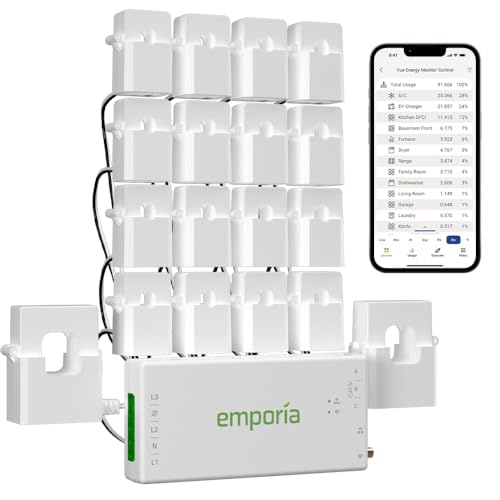
- UL Listed and CE Listed for safety
- 16 branch sensors for appliance-level tracking
- Supports solar, net metering, and app-based reporting
Best For: Homeowners who want certified safety and solar monitoring
Privacy-Focused Circuit Monitor
Meross 18-Circuit Energy Monitor
- 18-circuit monitoring with main and branch sensors
- Local data, no subscriptions, no cloud lock-in
- Smart alerts plus Home Assistant support
Best For: Privacy-minded users who want local monitoring and automation
Whole-Home Bundle
Emporia 16-Sensor + 4 Smart Plugs

- 16 circuit sensors for panel-level tracking
- 4 smart plugs add outlet control and usage data
- Emporia app with cloud access and automations
Best For: Whole-home monitoring with extra smart plug control
Local Privacy Pick
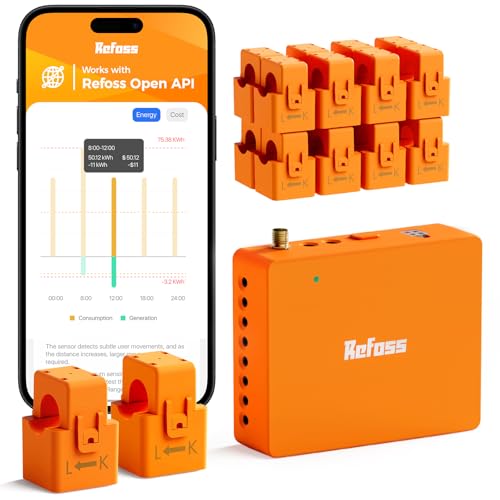
- Monitors up to 18 circuits with ±1% precision
- Local web UI, Open API, MQTT, and Home Assistant support
- 5 years of data storage with CSV export
Best For: Privacy-focused users who want local control and detailed circuit data
Three-Circuit Monitor
Smart Life Tuya 3-CT Clamp Meter
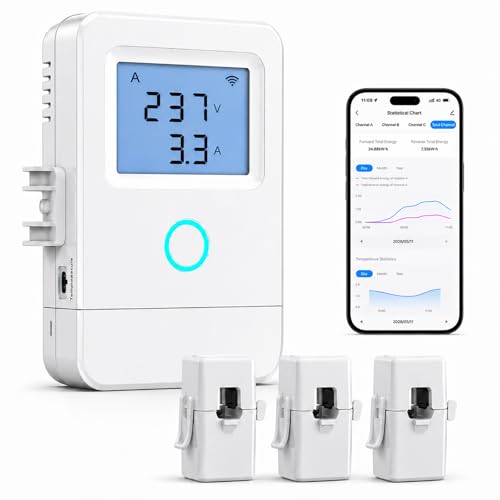
- Monitors up to 3 selected circuits
- Smart Life/Tuya app shows power and energy data
- Includes temperature alerts and one relay-controlled circuit
Best For: Targeted monitoring of a few high-use circuits
UL-Certified Whole-Home Tracking – Emporia Vue 3 with 8 Circuit Sensors
If you want an energy monitor with circuit sensors for whole-home visibility, the Emporia Vue 3 gives you panel-level tracking with clamp-on sensors and app-based reporting. It’s built for homeowners who want real-time usage data, solar and net metering support, and a safety-focused setup backed by UL and CE listing.
Best For: Homeowners who want UL-listed whole-home monitoring with solar and net metering support.
Pros:
- UL Listed and CE Listed for safer home energy monitoring.
- Includes 8 circuit sensors and installs in most home circuit panels.
- Supports solar and net metering, plus real-time app monitoring.
- Accurate to within ±2% according to the product notes.
Cons:
- Requires 2.4 GHz Wi‑Fi and an internet connection.
- 1-second data is only available while actively viewing the app.
- Some 3-phase setups need an additional 200A sensor sold separately.
Overall, the Vue 3 is a practical pick if you want reliable circuit-level insight and energy automation without giving up safety certifications. It balances useful app features with straightforward whole-home monitoring.
Local Solar Intelligence – Meross 18-Circuit Energy Monitor
This energy monitor with circuit sensors is aimed at users who want detailed circuit-level data and smart alerts without paying subscription fees. The Meross unit monitors two main circuits plus 16 branch circuits, and it adds Home Assistant support for local automation, solar surplus detection, and deeper control over high-use appliances.
Best For: Solar homes and smart-home users who want local data, no subscriptions, and circuit-level control.
Pros:
- Monitors 18 circuits total: 2 main circuits and 16 branch circuits.
- ETL-certified and compliant with UL 61010 testing standards.
- No subscriptions, with local data access and Home Assistant support.
- Includes smart alerts, cost charts, and up to 5 years of data storage.
Cons:
- Advanced automations depend on Home Assistant integration.
- Installation still requires working inside the electrical panel.
- Best features are most useful if you actively analyze the data.
For buyers who value privacy and automation, the Meross stands out as a very capable panel monitor. It is especially appealing for solar households that want to redirect surplus power instead of feeding it back to the grid.
Panel-Level Utility Control – SIEMENS Inhab Smart Energy Monitor
The SIEMENS Inhab is an energy monitor with circuit sensors designed for users who want direct panel measurements and app-based control. It tracks both whole-home and circuit-level usage for up to 16 branch circuits, while also adding alerts and management tools for time-of-use, peak demand, excess solar, and compatible load shedding.
Best For: Homeowners who want circuit-level monitoring plus advanced utility-management features.
Pros:
- Measures mains and up to 16 branch circuits directly at the panel.
- Offers custom notifications for unusual energy behavior.
- Supports time-of-use, peak demand, excess solar, and net metering.
- CE marked and UL Listed in the US and Canada.
Cons:
- USA and Canada only.
- Requires installation in electrical panels, so it is not a plug-in product.
- The feature set is broader than some buyers may actually need.
If you want more than basic usage tracking, the Inhab brings utility-oriented controls into one monitoring platform. It is a strong fit for homeowners who want panel data and actionable energy notifications in the same system.
Private Local Automation – Refoss Smart Home Energy Monitor
If you want an energy monitor with circuit sensors that stays off the cloud, the Refoss focuses on local control through a built-in Web UI, Open API, and MQTT. It also integrates natively with Home Assistant, stores data locally, and adds solar surplus automation for homes that want to use more of their own generated power.
Best For: Privacy-conscious smart homes and solar setups that want local control and automation.
Pros:
- Local access through Web UI, Open API, and MQTT with no cloud required.
- Native Home Assistant integration right out of the box.
- Supports solar surplus automation for EV chargers, water heaters, and more.
- ETL certified, with up to 5 years of stored daily data and no subscriptions.
Cons:
- Best suited to users who want to build automations.
- Branch-circuit monitoring is detailed but still requires panel installation.
- Some advanced features are centered around Home Assistant workflows.
The Refoss is a strong choice if privacy and local reliability matter as much as measurement accuracy. It combines circuit-level visibility with flexible automation tools for modern smart homes.
Rental-Friendly Circuit Tracker – Smart Home Energy Monitor with 16 50A Sensors
If you need an energy monitor with circuit sensors for a rental home, shared apartment, or multi-room property, this SEM-Meter model gives you detailed circuit-level visibility without installing multiple meters. It supports clamp-on installation for many panel types, tracks real-time usage and cost, and can run locally with MQTT for a privacy-focused setup.
Best For: Landlords, property managers, and homeowners who want circuit-by-circuit energy tracking with flexible billing support.
Pros:
- Includes 16 branch sensors for monitoring multiple appliances and circuits
- Supports real-time power, cost tracking, and time-of-use pricing templates
- Works with Home Assistant and can operate in LAN-only mode with MQTT
- Supports solar and net metering monitoring
Cons:
- Panels with busbar-only access may need separate flexible sensors
- Not the simplest option if you only need basic whole-home monitoring
This is a strong pick when you want circuit-level data and billing transparency in shared living setups. The local control option is especially useful if you want to avoid cloud dependence while still keeping detailed usage records.
Safety-First Whole Home Monitor – Emporia Vue 3 with 16 Sensors
The Emporia Vue 3 is an energy monitor with circuit sensors for homeowners who want app-based visibility, solar support, and UL-listed safety. It installs in many circuit panels with clamp-on sensors, tracks real-time electricity use, and works with the Emporia Energy app for ongoing monitoring and automation.
Best For: Homeowners who want a UL-listed energy monitor with strong app support and solar tracking.
Pros:
- UL Listed and CE Listed for added safety confidence
- Includes sixteen 50A branch sensors for appliance-level monitoring
- Supports solar and net metering monitoring
- Works with the Emporia app for live reporting and cost insights
Cons:
- Requires 2.4 GHz WiFi with an internet connection
- 3-phase support may require an additional 200A sensor sold separately
For buyers who want a well-known home energy monitor with clear safety certification, the Vue 3 is an easy product to shortlist. Its app-based data access and solar monitoring features make it useful for both everyday savings and longer-term energy management.
Privacy-Focused Circuit Monitor – Meross 18-Circuit Energy Monitor
If you want an energy monitor with circuit sensors that emphasizes local data, alerting, and long-term history, the Meross EM16 is built for that job. It offers 18-circuit monitoring, supports Home Assistant, and avoids subscriptions while still giving you detailed cost and usage charts.
Best For: Buyers who want local-first monitoring with smart alerts and Home Assistant automation.
Pros:
- 18-circuit setup with 2 main circuits plus 16 branch circuits
- Local data support with no subscriptions and no cloud lock-in
- Smart alerts for unusual usage spikes and threshold breaches
- Stores up to 5 years of data and supports exportable reports
Cons:
- Solar automation features are tied to Home Assistant setup
- May be more advanced than basic users need
The Meross model stands out if privacy and automation matter as much as savings. Its combination of local control, detailed history, and alerting makes it a practical choice for users who want insight without ongoing fees.
Whole-Home Bundle – Emporia 16-Sensor + 4 Smart Plugs
If you want an energy monitor with circuit sensors that covers both panel-level tracking and everyday plug-in devices, this Emporia bundle is built for broad visibility. It includes 16 sensors for main-panel and individual circuit monitoring, plus 4 smart plugs so you can see outlet-level use and automate selected devices.
Best For: Homeowners who want whole-home electricity tracking with added smart plug control and app-based automation.
Pros:
- Includes 16 circuit sensors for second-by-second visibility across up to 16 individual circuits.
- Comes with 4 Wi-Fi smart plugs for remote control, scheduling, and outlet-level energy monitoring.
- Supports the free Emporia app on iOS and Android with cloud-stored data for anytime access.
- Includes solar net metering support and energy-management features for peak demand and time-of-use planning.
Cons:
- Most useful for users who want to monitor multiple circuits, not just a single load.
- Requires app-based setup and ongoing use to get the most value from automations and alerts.
This bundle stands out if you want monitoring and control in one package, especially for households trying to reduce waste from both circuits and plugged-in devices. The combination of detailed circuit data, smart plugs, and solar-aware tools makes it a practical pick for active energy management.
Local Privacy Pick – Refoss 16-Sensor Monitor
This energy monitor with circuit sensors is a strong choice if you want detailed circuit tracking and a local-first setup. Refoss monitors up to 18 circuits with professional ±1% precision and pairs it with local web access, Open API support, and Home Assistant compatibility.
Best For: Buyers who want detailed circuit monitoring with local data storage and smart home integration.
Pros:
- Tracks up to 18 individual circuits with ±1% precision for detailed electricity audits.
- Includes local web UI, Open API, MQTT, and WebSocket support without cloud dependence.
- Works with Home Assistant via Refoss_RPC for multi-platform control.
- Stores daily data for 5 years and supports CSV export with no subscription fees.
Cons:
- Designed for panel installation, so setup is best handled by someone comfortable with electrical work.
- Focuses on monitoring and automation rather than plug-in device control.
Refoss is especially appealing if privacy and long-term data access matter as much as circuit visibility. With local control, solar-aware automation, and five years of exportable data, it suits users who want a serious monitoring tool rather than a basic app-only meter.
Three-Circuit Monitor – Smart Life Tuya 3-CT Clamp Meter
If you only need targeted circuit visibility, this energy monitor with circuit sensors is built for selected panel loads rather than full-home coverage. It ships with 3 CT clamps for monitoring up to three circuits and uses the Smart Life/Tuya app to show voltage, current, power, and energy from your phone.
Best For: Users who want to watch a few high-use circuits like HVAC, water heater, or solar-related loads.
Pros:
- Includes 3 CT clamps to monitor up to three selected circuits at once.
- Shows voltage, current, power, and energy in the Smart Life/Tuya app.
- Useful for high-power loads such as HVAC, water heaters, laundry, garage equipment, and solar circuits.
- Offers historical energy data and an external temperature sensor with alerts above 50°C.
Cons:
- Only covers three circuits, so it is less comprehensive than multi-sensor whole-home monitors.
- Installation involves electrical wiring and may require a qualified electrician.
This model makes sense when you want to focus on a few expensive circuits instead of monitoring everything in the panel. Its app visibility and temperature alert feature add useful control for homes, workshops, and small setups with known heavy loads.
How We Picked the Best Energy Monitor with Circuit Sensors
We looked for the features that matter most in an Energy Monitor with Circuit Sensors: enough sensor channels for your panel layout, clear real-time data, dependable app or web access, and support for useful extras like solar monitoring or automations. We also favored models with practical install options, because panel spacing, breaker count, and service limits can make a big difference in what will fit.
Quick Comparison
The main differences come down to sensor count, amperage support, and how the data is handled. Some models are better for users who want cloud-based apps and smart home integrations, while others stand out for local control, open APIs, or web dashboards. If you need circuit-by-circuit visibility across many loads, choose a higher-channel unit. If you mainly want to monitor a few critical circuits, a smaller system may be enough.
Key Buying Factors for an Energy Monitor with Circuit Sensors
Sensor Count and Panel Fit
Make sure the monitor can cover the circuits you care about, not just the whole home. More channels help with HVAC, water heating, EV charging, laundry, and other high-usage loads, but they also require more room and more planning during installation.
Clamp and Current Ratings
Check both the main sensor rating and the branch-circuit sensor rating. Main sensors need to handle your service size, while branch sensors should match the circuits you plan to monitor. If you expect to expand later, leave room for growth.
Data Access and Smart Features
Think about how you want to use the data. Some buyers want simple mobile alerts and cost tracking. Others want local dashboards, open APIs, or Home Assistant support. If privacy and reliability matter, local storage or no-cloud operation can be a major advantage.
Solar, Cost, and Automation Support
If you have solar, look for net usage or surplus tracking. Cost estimation can also help you identify expensive loads faster. Smart plug or automation support is useful if you want the monitor to trigger actions instead of only reporting data.
Who Should Buy Which Energy Monitor with Circuit Sensors?
Choose a high-channel system if you want detailed circuit-level insight across a busy panel or plan to compare multiple appliances. Pick a simpler monitor if your goal is broad whole-home tracking with a few priority circuits. If you prefer self-hosted control, look for local API access and web-based dashboards. For renters or smaller homes, compact systems with fewer sensors can be easier to install and still provide meaningful savings insights.
For most buyers, the best Energy Monitor with Circuit Sensors is the one that fits your panel, supports the circuits you care about, and gives you data in the format you will actually use.