Finding the best bed canopy for an autistic child can make a bedroom feel more predictable, private, and comfortable. The right tent-style canopy may reduce visual distractions while creating a familiar space for sleep, quiet time, or sensory regulation.
These 10 options vary in blackout coverage, ventilation, door design, bed compatibility, and style. Use the guide below to match the canopy’s features to your child’s sensory preferences and room setup.
Best 10 Bed Canopy for Autistic Child Picks for 2026
Best Sensory Hideaway
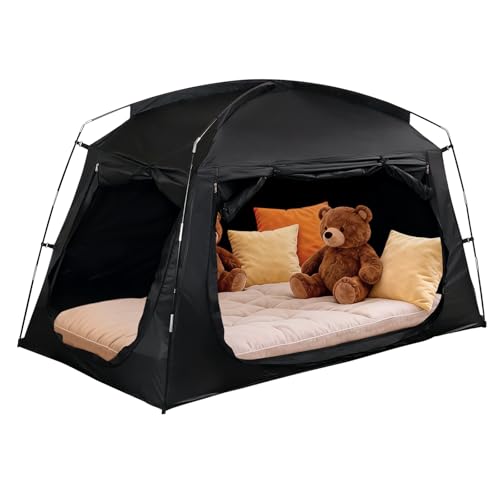
- Twin-size bed or floor use
- Dark, private sensory space
- Sets up in about five minutes
Best For: Children needing a portable calm-down or sleep space
Best Access Design

- 93% blackout sleep environment
- Three zippered access doors
- Mesh ventilation and storage pockets
Best For: Light-sensitive sleepers wanting flexible entry
Best Decorative Canopy

- Soft ivory cotton-and-chiffon design
- Fits cribs and multiple bed sizes
- Includes hanging installation accessories
Best For: A gentle reading, play, or bedtime nook
Best Year-Round Option
Portable Three-Door Sleep Tent
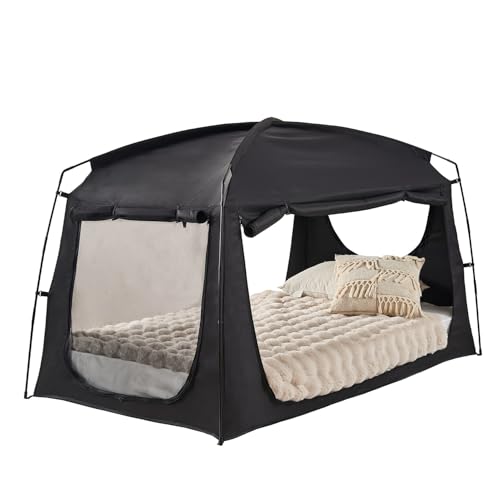
- 90% light-blocking interior
- Mesh airflow for seasonal comfort
- Portable twin-size design
Best For: A roomy, portable sleep sanctuary with airflow
Soft Fairy Retreat

- Soft, breathable chiffon construction
- Fits cribs, twin, and queen beds
- Creates a private reading and play nook
Best For: Decorative, lightweight bedroom retreats
Blackout Sleep Fort

- Freestanding fiberglass frame
- Mesh and 80% blackout door layers
- Includes pockets, cable opening, and light hook
Best For: Enclosed twin-bed sleep and quiet-play spaces
Dark Quiet Zone
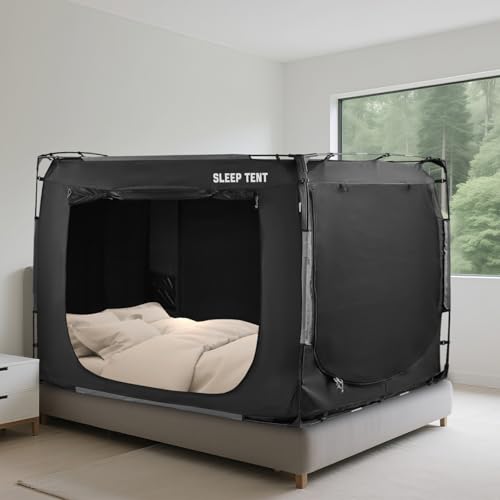
- Stable rectangular fiberglass frame
- Three doors with mesh and light-reducing panels
- Washable design with storage bag and pockets
Best For: Darker, enclosed twin-bed personal spaces
Airy Pop-Up Retreat
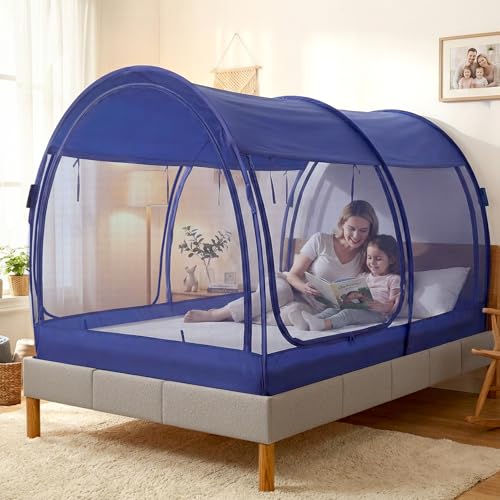
- Quick pop-up setup and compact storage
- Four doors plus two mesh windows
- Breathable, washable fabric for indoor use
Best For: Twin beds needing a portable, breathable privacy space
Blackout Playhouse Haven

- Blackout fabric supports a darker sleep space
- Dual doors open from either side
- Folds compactly and needs no setup tools
Best For: Full beds needing privacy and blackout coverage
Connected Cozy Nook

- Approximately 95% light and noise shading
- Three doors with mesh ventilation windows
- Pockets, night-light hook, and cable opening
Best For: Twin beds needing blackout, ventilation, and built-in organization
Best Sensory Hideaway – Twin Blackout Bed Tent
For families seeking a bed canopy for autistic child needs, this twin-size sensory tent creates a darker, enclosed space for sleeping, quiet time, or calming down. It can sit on a twin bed or the floor and sets up in about five minutes.
Best For: Children who benefit from a portable, light-reducing calm-down corner or private sleep space.
Pros:
- Twin-size interior measures 75 x 39 x 47 inches.
- Dark polyester design helps reduce light and distractions.
- Two sides open from inside and outside for easier entry and exit.
- Lightweight design works on a bed or floor and includes strong fiberglass poles.
Cons:
- It is not waterproof or water resistant.
- Care instructions specify dry cleaning, and the notes say not to machine wash.
- There is no mattress or built-in floor described.
This is a practical choice when sensory privacy and flexible placement matter most. Its black-out styling and simple setup make it especially useful for bedrooms, while the floor option adds versatility for supervised quiet play.
Best Access Design – Three-Door Blackout Bed Tent
This twin bed canopy for autistic child routines combines a 93% blackout design with mesh ventilation and three zippered doors. The floorless structure is easy to organize around and folds into the included carrying bag when not in use.
Best For: Light-sensitive sleepers who want multiple access points, airflow, and a tidy floorless setup.
Pros:
- Three doors provide access from both sides and the end.
- Combines blackout fabric with mesh layers for airflow.
- Built-in hooks and two storage pockets add useful organization.
- Measures 75 x 39 x 47 inches and includes a carrying bag.
Cons:
- The product is listed for one occupant.
- It is not water resistant or waterproof according to the specifications.
- Hand washing is recommended rather than machine washing.
The three-door layout is the standout feature for children who prefer easy, flexible entry. Consider this model when blackout coverage, ventilation, and storage are more important than a fully enclosed tent floor.
Best Decorative Canopy – Ruffled Cotton Privacy Nook
For shoppers who prefer a softer room accent than a structured tent, this hanging bed canopy can create a private reading, sleeping, or play nook. Its ivory cotton-and-chiffon design is sized to work with cribs, twin beds, queen beds, and other setups.
Best For: Children who enjoy an imaginative, softly decorated privacy nook for reading, play, or bedtime.
Pros:
- Soft, breathable, lightweight cotton and chiffon construction.
- Ruffled ivory styling adds a gentle decorative element.
- Can be used over a crib, twin bed, queen bed, or other bed sizes.
- Includes a steel ring, hook panel, tape, screws, and instructions.
Cons:
- This is a hanging canopy rather than a freestanding blackout tent.
- Its listed opacity is 0.7, so it may not block as much light as blackout models.
- Hand washing is required, and the canopy is not waterproof.
This canopy is best viewed as a calming decorative enclosure, not a fully light-sealed sensory tent. Check the ceiling or mounting location carefully before installation, and use it where a soft visual boundary is the main goal.
Best Year-Round Option – Portable Three-Door Sleep Tent
This portable bed canopy for autistic child sleep routines offers a 90% light-blocking interior, mesh windows, and a three-door layout. Its twin-size structure is designed for bedrooms and can also fit bunk or cubby beds, with a storage bag for portability.
Best For: Children or families needing a roomy, portable sleep sanctuary with blackout coverage and seasonal airflow.
Pros:
- 90% light-blocking fabric helps reduce light pollution.
- Mesh panels support airflow while the design is intended for year-round use.
- Three doors and two windows provide flexible access and ventilation.
- Sets up in under five minutes and includes a travel storage bag.
Cons:
- The listed size is twin, and the mattress is not included.
- At about 6 pounds, it is heavier than the lighter sensory tent in this roundup.
- Care instructions include hand wash or dry clean rather than machine washing.
With its larger 78.7 x 41.3 x 47.2-inch footprint and reinforced construction, this model suits shoppers prioritizing durability and portability. Its water-resistant specification should not be confused with being fully waterproof.
Soft Fairy Retreat – Elegant Lace Bed Canopy
For families looking for a gentle bed canopy for autistic child, this chiffon hanging canopy creates a cozy, semi-private nook for sleep, reading, or quiet play. Its lightweight fabric, round design, and beige fairy-tale styling suit a nursery or child’s bedroom, though installation requires securing the included hook or adhesive pad.
Best For: Children who enjoy imaginative, softly decorated reading or sleep spaces.
Pros:
- Soft, breathable chiffon fabric offers a lightweight feel.
- Fits cribs, twin beds, queen beds, and other bed sizes.
- Can create a private nook for reading, sleeping, and play.
- Includes installation accessories and decorative pom-pom styling.
Cons:
- Semi-transparent fabric provides limited visual blocking rather than full blackout.
- Hand-wash care may require extra maintenance.
- Requires ceiling or wall installation.
This is the most decorative option of the three, emphasizing softness and fantasy over structured enclosure. Consider it when a calming canopy-style nook is more important than blackout coverage or a freestanding frame.
Blackout Sleep Fort – Pink Twin Bed Tent
This structured bed tent is a practical bed canopy for autistic child who may benefit from a more defined personal space. The twin-size enclosure uses fiberglass poles, breathable polyester-cotton fabric, double-layer doors, and 80% blackout fabric to support sleep, reading, or quiet play.
Best For: Children who prefer a spacious, enclosed twin-bed retreat with adjustable light control.
Pros:
- Freestanding frame installs without tools and can be removed for washing.
- Three doors provide flexible access, with mesh and blackout layers.
- Breathable fabric and a floorless design support ventilation and easy sheet changes.
- Includes storage pockets, a charging-cable opening, and a night-light hook.
Cons:
- The 75-by-39-by-47-inch design is intended for a twin-size bed.
- At 7.4 pounds, it is less lightweight than a hanging canopy.
- Hand or machine washing requires removing and handling the tent.
Compared with a decorative canopy, this model offers stronger boundaries and substantially more light reduction. Its doors and interior features make it suitable for a child who wants a contained space for sleep or independent activities.
Dark Quiet Zone – Black Twin Bed Tent
For a child who prefers a darker, clearly defined environment, this twin bed tent works as a sturdy bed canopy for autistic child. Its rectangular fiberglass frame, black pongee fabric, three zippered doors, and 70% light-reducing panels create a private space for bedtime, naps, play, or alone time.
Best For: Children who value a darker, enclosed twin-bed space with multiple entry points.
Pros:
- Inserted 8 mm fiberglass poles provide a stable rectangular structure.
- Three doors open from inside or outside for flexible access.
- Each door combines breathable mesh with a light-reducing inner panel.
- Washable, foldable, and supplied with a storage bag and pockets.
Cons:
- Black fabric may feel visually intense for children who prefer lighter colors.
- The twin-specific dimensions may not fit other mattress sizes.
- Hand-wash care and pole removal add setup for cleaning.
This option prioritizes stability, privacy, and adjustable ventilation over decorative styling. It is a strong fit when a child wants a darker personal zone but still needs easy access through multiple doors.
Airy Pop-Up Retreat – Twin Bed Tent
For families comparing a bed canopy for autistic child use, this lightweight pop-up tent offers a defined indoor space without attaching to a bed frame. Its breathable fabric, mesh panels, and four zippered doors make it practical for sleep, play, privacy, or reducing light and noise.
Best For: Twin-bed users who want a portable, breathable enclosure with flexible access from multiple sides.
Pros:
- Sets up quickly with a pop-up frame and shock-corded poles.
- Four doors and two windows support easy access and airflow.
- Can be used on a mattress, by itself as a privacy tent, or for daytime play.
- Folds into a compact carrying bag and is machine washable.
Cons:
- Mattress is not included.
- At 39 by 75 inches, it is designed for twin-size use.
- It is not water resistant, so it is intended for indoor use.
This is a versatile choice when portability, ventilation, and easy access matter more than full blackout. The soft pongee fabric and mesh construction create a cozy, enclosed environment while preserving airflow.
Blackout Playhouse Haven – Full Bed Canopy
This full-size bed canopy is a straightforward option for families seeking a bed canopy for autistic child routines centered on privacy and a more enclosed sleep environment. The blackout fabric, soft construction, and dual-door layout provide a dedicated space for sleeping or quiet play.
Best For: Full-size beds or full mattresses where blackout coverage and two-way access are priorities.
Pros:
- Blackout material helps create a private, darker sleep space.
- Two doors allow entry and exit from either direction.
- Sturdy fiberglass poles support the tent structure.
- No tools are required for setup, and the canopy folds for storage.
Cons:
- Hand-wash care is required.
- It is not water resistant and is intended for indoor use.
- The full-size design is larger and less compact than a twin model.
Choose this model if a full bed and a darker, more private enclosure are the main goals. Its pennant banners add a playhouse feel, while the dual doors keep access practical for children and caregivers.
Connected Cozy Nook – Blackout Twin Bed Tent
For shoppers evaluating a bed canopy for autistic child comfort, this twin tent combines substantial light blocking with ventilation and practical storage. Three zippered doors, independent mesh windows, cable openings, and interior pockets make it suited to a personal sleep space with convenient everyday features.
Best For: Twin-bed users who want a darker enclosure with airflow, storage pockets, and a charging-cable opening.
Pros:
- Provides approximately 95% shading to help limit light and noise.
- Three doors with mesh windows balance privacy and ventilation.
- Includes two storage pockets, a night-light hook, and cable openings.
- Fiberglass poles help keep the structure upright and stable.
Cons:
- Assembly is required, although instructions are included.
- Hand-wash care is specified.
- The listed 75-by-39-inch footprint is intended for twin-size use.
This model stands out for children who benefit from a darker, more self-contained sleep area but still need airflow and easy access. Its built-in organization and charging opening add convenience without requiring permanent bed installation.
How We Picked the Best Bed Canopy for Autistic Child
We focused on features that matter when choosing a Bed Canopy for Autistic Child: light control, ventilation, entry points, fabric feel, setup, stability, and compatibility with the intended mattress. The selection includes enclosed blackout tents, breathable privacy canopies, decorative hanging designs, and models sized for twin, full, queen, or king beds.
Because sensory needs differ, no single canopy is ideal for every child. A dark, enclosed tent may help children who are distracted by light, while a mesh-window model can feel less confining. Always consider whether your child prefers an enclosed retreat or a more open canopy.
Quick Comparison
| Feature | Best For | What to Check |
|---|---|---|
| Blackout fabric | Children sensitive to light or visual distractions | Coverage, seams, and whether doors close fully |
| Mesh windows | Better airflow and a less enclosed feel | Ventilation, visibility, and fabric durability |
| Multiple doors | Easy access from different sides of the bed | Zipper quality and safe, unobstructed exits |
| Pop-up construction | Portable use or quick setup | Folding method, frame strength, and storage size |
| Hanging canopy | Decorative privacy over a crib or bed | Secure mounting and appropriate ceiling clearance |
Key Buying Factors for a Bed Canopy for Autistic Child
Light and Sensory Control
Blackout claims can vary, so look for descriptions that explain how much of the bed is covered and whether the entrance can be closed. Darker interiors may support rest, but some children may prefer a lighter, breathable enclosure.
Airflow and Temperature
Choose mesh panels, windows, or generous ventilation when your child runs warm or dislikes stuffy spaces. Do not block vents, and make sure the canopy does not trap excessive heat around the mattress.
Size and Mattress Fit
Measure the mattress, not just the bedroom. A canopy that is too small may restrict movement, while an oversized model can bunch up or leave gaps. Confirm whether the product is designed for a floor mattress, twin bed, full bed, or another size.
Access and Safety
Doors should open smoothly and remain easy for your child to use. Inspect zippers, seams, poles, and attachment points regularly. Keep cords and mounting hardware secure, and follow the manufacturer’s age, weight, and supervision guidance.
Fabric and Maintenance
Soft, washable materials are usually easier to live with, especially for children who use the canopy daily. Avoid fabrics or decorative details that cause discomfort, shed fibers, or create snagging concerns.
Who Should Buy Which Bed Canopy for Autistic Child?
Choose a blackout bed tent for a child who needs stronger control over light and bedroom distractions. A mesh-window or multi-door model is often better for children who want privacy but may feel uncomfortable in a fully enclosed space. Pick a hanging ruffle or lace canopy when appearance and a gentle visual boundary matter more than blackout performance.
For travel, shared rooms, or temporary sensory retreats, prioritize a lightweight pop-up design that folds compactly. For permanent use, prioritize the correct mattress fit, sturdy construction, washable fabric, and reliable airflow. Whichever style you choose, introduce it gradually and let your child decide how open or enclosed the space should be.