Growing vegetables indoors is easier when plants receive consistent, usable light every day. The right grow light can help seedlings, herbs, leafy greens, and compact fruiting plants develop more reliably than a dim windowsill.
We selected 10 LED options across several formats, from high-output bars and panels to flexible clip-on lamps, so you can match light coverage, controls, and installation to your growing space.
Best 10 Grow Lights for Vegetables Picks for 2026
Best Value for Veggie Starts

- Full-spectrum red and white LED mix
- 4-level dimmer for growth-stage control
- Covers about a 2 by 2-foot vegetative area
Best For: Seedlings, herbs, and compact vegetable-growing setups
Best for Large Shelves
Barrina 4FT Linkable Grow Light Set

- Six 4-foot full-spectrum LED bars
- Linkable design for extended shelves
- Includes clips, cords, tape, and cable ties
Best For: Large indoor racks, shelves, and grow-tent layouts
Best Compact Shelf Kit
16-Inch Six-Bar Grow Light Strips

- Six flexible 16-inch full-spectrum bars
- 6-, 12-, and 18-hour timer options
- Mounts with screws, tape, or ties
Best For: Compact shelves, herbs, seedlings, and potted vegetables
Best Daylight-Style Setup

- Six 4-foot 5000K white fixtures
- Full-spectrum output for seeding through bloom
- Linkable and supplied with mounting hardware
Best For: Large indoor shelves, seedling racks, and grow rooms
Flexible Starter Pick
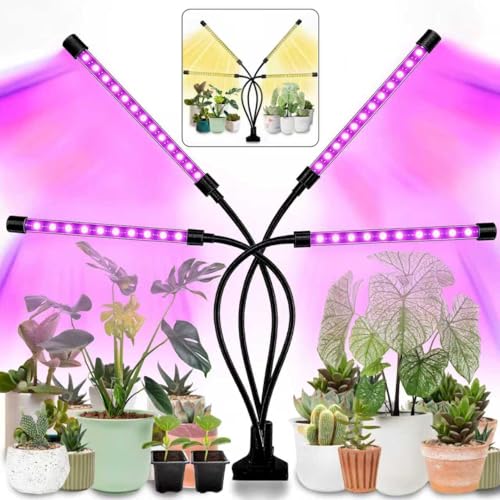
- 80 LEDs with three selectable spectrum modes
- 10 brightness levels and a 3/9/12-hour timer
- Four adjustable heads with clip-on placement
Best For: Small indoor vegetable starts, herbs, and targeted plant lighting
High-Output Coverage Pick
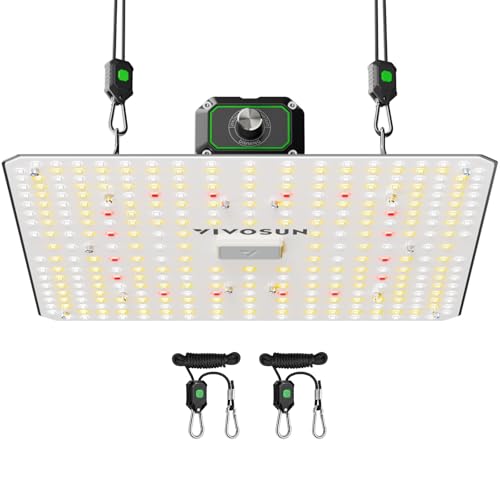
- 100W full-spectrum output with red and far-red LEDs
- Uniform diode layout and four-level dimming
- IP65-rated housing for humid growing areas
Best For: High-intensity overhead lighting for broader indoor vegetable coverage
Adjustable Stand Pick

- 214-LED full-spectrum panel with red and white LEDs
- Six brightness levels and a 4/8/12-hour timer
- Tripod adjusts from 27.8 to 68 inches
Best For: Freestanding indoor vegetable growing with adjustable plant height
Best Adjustable Desk Grow Light
bseah Full Spectrum 2-Tube Lamp
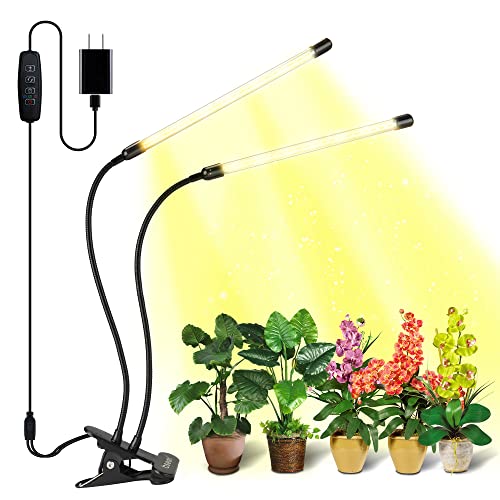
- Full-spectrum yellow-and-white LEDs
- 10 dimming levels and daily timer
- Stable metal gooseneck tabletop design
Best For: Small indoor gardens and tabletop vegetable plants
Best Four-Head Coverage
SYEIORAOM Full Spectrum Grow Light

- 72 LEDs with red-and-white spectrum
- Four flexible, adjustable light heads
- Telescopic height adjustment
Best For: Multi-plant indoor setups with limited sunlight
Best Clip-On Multi-Mode Light

- 84 LEDs with white and red spectrum
- Three modes and 10 brightness levels
- Clip base, flexible heads, and timer
Best For: Adjustable lighting for compact indoor vegetable stations
Best Value for Veggie Starts – Dimmable 70W LED Grow Light
If you need grow lights for vegetables, herbs, or seedlings without a large power draw, this 70-watt LED model offers a practical balance of output, adjustability, and coverage. Its full-spectrum mix and 4-level dimmer make it easier to tailor brightness as plants develop.
Best For: Seedlings and vegetative plants in an indoor growing area up to about 2 by 2 feet.
Pros:
- Full-spectrum combination of 660nm red, 3000K white, and 5000K white light.
- Uses 70 watts while providing performance comparable to a stated 150W HPS/MH light.
- Four-level dimmer supports different plant types and growth stages.
- Fanless aluminum heat sinks help manage heat without adding fan noise.
Cons:
- Designed for a relatively compact 2 by 2-foot vegetative area.
- Requires hanging installation rather than standing on a shelf.
This is a sensible choice when you want a compact, dimmable fixture for vegetable seedlings and leafy growth. The included hooks and 3-year limited warranty add practical value, though larger gardens will need more than one light.
Best for Large Shelves – Barrina 4FT Linkable Grow Light Set
For gardeners building a larger indoor setup, these grow lights for vegetables provide six 4-foot LED fixtures that can be linked in a series. The full-spectrum design, included mounting hardware, and multiple power cords make them well suited to shelves, racks, grow tents, and greenhouse-style spaces.
Best For: Long plant shelves, seedling racks, hydroponic rooms, and larger indoor growing areas.
Pros:
- Six 4-foot bars provide broad coverage for shelves and growing racks.
- Full-spectrum output includes blue and red light for germination, leafy growth, bloom, and fruiting.
- Link up to six lights using the included connecting cords.
- Aluminum reflectors are designed to improve efficiency and heat dissipation.
Cons:
- Uses a combined 252 watts, so it is more power-hungry than compact single-fixture options.
- Pink light and ceiling or hanging installation may not suit every room.
- The lights are not water resistant.
This six-pack is a strong fit when length and modular installation matter more than portability. Its clips, tapes, cable ties, and connecting cords simplify setup, but confirm compatibility with the updated Barrina GM Series cords when mixing generations.
Best Compact Shelf Kit – 16-Inch Six-Bar Grow Light Strips
These grow lights for vegetables are designed for compact shelves and plant stands where flexible mounting matters. Six 16-inch bars combine warm white, cool white, and 660nm red LEDs, while the built-in timer and dimmer help automate a small indoor garden.
Best For: Seedlings, herbs, potted vegetables, and plants grown on compact shelves or stands.
Pros:
- Six short bars fit neatly under shelves and in smaller growing spaces.
- Full-spectrum output spans 380 to 800nm and includes 660nm red LEDs.
- 6-, 12-, and 18-hour timer settings support repeatable daily lighting.
- Can be mounted with screws, double-sided tape, or included ties.
Cons:
- Its 16-inch bars are less suitable for wide shelves or large vegetable plants.
- Requires a corded power connection and is intended for indoor use.
- The set’s 36-watt output is better suited to compact applications than high-demand crops.
This kit is a convenient option for a shelf-based growing station. The long 95-inch power cord and three mounting methods make placement flexible, while the timer reduces the need to switch the lights manually each day.
Best Daylight-Style Setup – Barrina 4FT 5000K Grow Lights
For indoor gardeners who prefer a neutral, daylight-style appearance, this six-pack provides 4-foot, 5000K white LED fixtures for vegetable seedlings, plants, and larger shelves. The aluminum housings, reflector design, and included installation accessories make it practical for a permanent growing station.
Best For: Seedling racks, plant shelves, grow tents, hydroponic rooms, and greenhouse-style indoor setups.
Pros:
- 5000K full-spectrum white light offers a more natural daylight appearance.
- Six 4-foot fixtures provide broad coverage for long growing areas.
- V-shaped reflectors are designed to increase efficiency and light intensity.
- Fixtures can be linked in a series, with clips, tape, cords, and cable ties included.
Cons:
- The six lights together consume 252 watts.
- Fixed fixtures have no listed dimmer or timer control.
- They are not water resistant and are intended for indoor use.
This set makes sense for growers who want broad, daylight-colored illumination across a rack or shelf. It is less flexible than dimmable strip systems, but the six-fixture format and included mounting hardware simplify coverage of larger indoor vegetable-growing spaces.
Flexible Starter Pick – LEOTER 80-LED Grow Light
For gardeners seeking grow lights for vegetables in a small indoor setup, the LEOTER offers adjustable positioning, multiple spectrum modes, and a compact clip-on design. Its four flexible heads and 10 brightness levels make it easy to direct light toward seedlings, herbs, or individual plants.
Best For: Small indoor vegetable starts, herbs, and gardeners who want flexible, targeted lighting.
Pros:
- Uses 80 LEDs with full-spectrum, red, and blue lighting options.
- Offers 10 dimming levels for different plant-growth stages.
- Includes a 3/9/12-hour memory timer and adjustable goosenecks.
- USB connectivity, included adapter, and a metal clip support convenient placement.
Cons:
- It is not waterproof, so it should be kept away from spray and spills.
- The timer needs to be reset after the light loses power.
- The four-head design is better suited to targeted coverage than a large growing area.
The LEOTER is a practical choice when flexibility matters more than broad coverage. Its clip, timer, dimming controls, and selectable spectra make it especially useful for tending a few vegetable plants indoors.
High-Output Coverage Pick – VIVOSUN LumaLight 100W
The VIVOSUN LumaLight is a strong option for growers who need grow lights for vegetables across a broader indoor area. Its 100-watt full-spectrum LED layout combines white, blue, red, and far-red light, while the uniform diode arrangement is designed to distribute illumination consistently from center to edge.
Best For: Indoor vegetable growers wanting high-intensity, broad, and evenly distributed overhead lighting.
Pros:
- Full-spectrum lighting includes 3000K, 5000K, 660nm, and 730nm LEDs.
- Four-level dimming adjusts output from 25% to 100%.
- Aluminum construction and thermal management help limit heat buildup.
- IP65 waterproof and dustproof construction suits humid growing environments.
Cons:
- The light is designed for hanging or ceiling mounting rather than tabletop placement.
- GrowHub and app-based automation require the separately sold GrowHub.
- Its higher output may be more than needed for a few small plants.
With its 100-watt output, even coverage, and moisture-resistant housing, the LumaLight is built for a more substantial vegetable-growing setup. It is a better fit for growers who prioritize intensity and durable overhead installation.
Adjustable Stand Pick – LBW 214-LED Grow Light
For gardeners comparing grow lights for vegetables that can adapt as plants grow, the LBW combines a full-spectrum 214-LED panel with a height-adjustable tripod. The freestanding design reaches from 27.8 to 68 inches, making it useful for seedlings, potted vegetables, and changing indoor layouts.
Best For: Indoor gardeners who want a freestanding, height-adjustable light for plants at different growth stages.
Pros:
- Uses 214 LEDs across cool white, warm white, red, and natural-light chips.
- Offers six brightness levels and a 4/8/12-hour automatic timer.
- Height adjusts from 27.8 to 68 inches with a tripod and included sling for hanging use.
- Widened 10.9-by-4.6-inch panel is designed to provide more uniform coverage.
Cons:
- At 25 watts, it is less powerful than the 100-watt VIVOSUN option.
- It is not waterproof and should be protected from moisture.
- The included warranty is 12 months, with a 30-day satisfaction or return guarantee.
The LBW stands out for versatility rather than maximum power. Its adjustable height, freestanding setup, and timer make it convenient for following vegetable plants from early growth through larger indoor stages.
Best Adjustable Desk Grow Light – bseah Full Spectrum 2-Tube Lamp
If you need grow lights for vegetables in a small indoor garden, this bseah model offers flexible positioning, adjustable brightness, and a choice of light modes. Its two LED tubes use a yellow-and-white full spectrum intended to support plants through germination, growth, flowering, and fruiting.
Best For: Indoor gardeners who want a compact tabletop light with automated scheduling and flexible adjustment.
Pros:
- Full-spectrum yellow-and-white LED combination supports multiple plant growth stages.
- Offers 10 dimming levels and three switch modes.
- 3-, 9-, or 12-hour timer can repeat the same daily schedule with continuous power.
- Metal gooseneck and nonslip base help keep the lamp positioned securely.
Cons:
- It is intended for indoor use and is not water resistant.
- Two light sources may provide less coverage than multi-head designs.
With its tabletop footprint, USB power connection, and two-year manufacturer warranty, this is a practical choice for seedlings, herbs, or a small vegetable-growing setup. It is less suited to users who need broad coverage across a large plant shelf.
Best Four-Head Coverage – SYEIORAOM Full Spectrum Grow Light
For growers comparing grow lights for vegetables in low-light rooms, this SYEIORAOM lamp uses 72 LED beads and a red-and-white spectrum to simulate daylight indoors. Four adjustable heads and a telescopic pole make it easier to direct light toward several plants or different areas of a tabletop garden.
Best For: Indoor gardeners who need flexible, multi-directional lighting for vegetables, seedlings, flowers, or houseplants.
Pros:
- 72 high-efficiency LEDs provide full-spectrum lighting support.
- Red and white LEDs are designed to support photosynthesis, roots, leaves, and general growth.
- 360-degree goosenecks and an adjustable telescopic pole allow flexible positioning.
- Suitable for apartments, offices, plant shelves, balconies, and other low-light indoor spaces.
Cons:
- It uses a push-button control rather than a listed automatic timer.
- The plastic construction may be less substantial than metal-bodied alternatives.
- It is for indoor use only and is not waterproof.
This model emphasizes coverage and positioning flexibility rather than scheduling features. It makes sense when your vegetables or seedlings are spread across a compact indoor growing area and you want to aim multiple heads independently.
Best Clip-On Multi-Mode Light – Upgrade 84-LED Grow Lamp
This clip-mounted option is designed for gardeners who want grow lights for vegetables with broader directional coverage and detailed control. Its two-head, 84-LED setup combines sunlight-white and red LEDs, while 10 brightness levels and three spectral modes let you adjust the light for different stages of plant growth.
Best For: Vegetable growers who want a clamp-mounted light with multiple heads, flexible arms, and a repeatable daily schedule.
Pros:
- 84 LEDs include sunlight-white and red LEDs for full-spectrum lighting.
- Three spectral modes and 10 dimming levels support different growth stages.
- 3-, 9-, and 12-hour cycle timer can automatically repeat each day.
- Strong clips and 360-degree flexible goosenecks help direct light where needed.
Cons:
- It is not waterproof and is intended for indoor plant growing.
- Clamp mounting may be less suitable for gardeners without a stable nearby surface.
- The supplied details identify a one-year manufacturer warranty.
The combination of clip mounting, adjustable heads, and timer control makes this a versatile choice for a shelf, desk, or compact vegetable station. Its two-head layout offers more directional flexibility than a simple single-lamp design while remaining focused on indoor use.
How We Picked the Best Grow Lights for Vegetables
We focused on practical features that affect indoor vegetable growing: LED output, coverage, spectrum, dimming, timer controls, mounting flexibility, and suitability for shelves, countertops, tents, or larger racks. The list includes both individual fixtures and multi-light packs because the best setup depends on plant count and growing area.
Full-spectrum LEDs are generally the most versatile choice for vegetables because they provide a balanced light profile for seedlings and mature plants. We also considered whether each design makes it easy to position the light close enough to plants without creating awkward shadows or hot spots.
Quick Comparison
| Light type | Best for | What to look for |
|---|---|---|
| LED bars and strips | Shelves and propagation racks | Even coverage, simple mounting, linkable designs |
| Panel-style LEDs | Small vegetable gardens and concentrated coverage | Output, heat management, dimming, hanging options |
| Clip-on and gooseneck lamps | Individual pots and small groups | Adjustable arms, stable clips, timers |
| Multi-head lights | Mixed plants with different positions | Independent positioning and flexible coverage |
Key Buying Factors for Grow Lights for Vegetables
Coverage and Intensity
Measure the area above your plants before choosing a fixture. A narrow lamp may work well for one tray but leave outer leaves underlit. Longer bars or multi-light packs are better for shelves and rows of greens. Fruiting vegetables such as peppers and tomatoes usually need more intense, more evenly distributed light than herbs or seedlings.
Spectrum and Color
Choose a full-spectrum model for general-purpose growing. Daylight-style white LEDs are comfortable to use in living spaces and make it easier to judge plant color. Red and blue supplemental modes can be useful, but they are not automatically better than a balanced full-spectrum setting.
Controls, Timers, and Dimming
A built-in timer helps maintain a consistent daily schedule, while dimming lets you reduce intensity for seedlings or plants positioned close to the LEDs. If a light lacks a timer, use a reliable outlet timer to avoid irregular lighting.
Installation and Heat
Check whether the light includes a clip, hanging hardware, adhesive mounts, or shelf-compatible brackets. LEDs generally run cooler than older grow-light technologies, but ventilation still matters, especially when fixtures are installed close together.
Who Should Buy Which Grow Lights for Vegetables?
Choose LED bars or four-foot multi-packs for long shelves, seed-starting racks, and several trays of leafy greens. Pick a dimmable panel such as a 70W or 100W class design when you need stronger, concentrated coverage for a compact garden. Clip-on and gooseneck models are the simplest option for a few herbs, seedlings, or houseplants, while four-head fixtures suit several pots that sit at different angles.
Before buying, confirm the fixture’s coverage area, mounting method, power requirements, and timer behavior. For the most dependable results, keep the light at the manufacturer’s recommended distance, rotate plants when coverage is uneven, and use a consistent daily schedule.