The best energy-efficient wine coolers preserve your bottles at a stable temperature without adding unnecessary power use or noise to your home. This roundup compares compact countertop models, slim freestanding units, and larger compressor refrigerators.
Consider your collection size, preferred wine styles, available space, and tolerance for operating noise before choosing. The right cooler should provide dependable temperature control while fitting naturally into your kitchen, dining area, bar, or cellar.
Best 10 Energy Efficient Wine Coolers Picks for 2026
Best Compact Energy Saver
NutriChef 12-Bottle Slim Wine Fridge

- 12-bottle capacity in a slim footprint
- 41–64°F digital temperature control
- Energy Star specification and quiet operation
Best For: Small kitchens, offices, and countertop wine storage
Best Quiet Thermoelectric Pick
Cuisinart 8-Bottle Wine Cellar
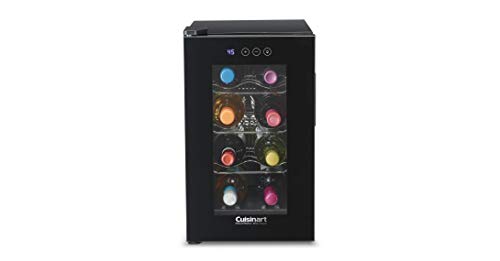
- Thermoelectric cooling for quieter operation
- Touchscreen temperature and light controls
- Compact 8-bottle freestanding design
Best For: Small collections and quiet living spaces
Best Low-Consumption 8-Bottle Cooler
FOHERE Small Wine Refrigerator

- Lists 65 kWh annual energy consumption
- 46–64°F digital temperature range
- Removable shelf and double-layer glass door
Best For: Small collections and energy-conscious buyers
Best 12-Bottle Thermoelectric Value
BLACK+DECKER 12-Bottle Wine Chiller

- 12-bottle capacity with five removable racks
- Quiet, energy-efficient thermoelectric cooling
- 46–66°F control and mirrored door
Best For: Larger collections needing compact freestanding storage
Best Compact Pick
6-Bottle Countertop Wine Cooler

- Quiet thermoelectric cooling
- Digital temperature control
- Compact six-bottle design
Best For: Small collections and countertop placement
Best Temperature Stability
12-Bottle Compressor Wine Cooler
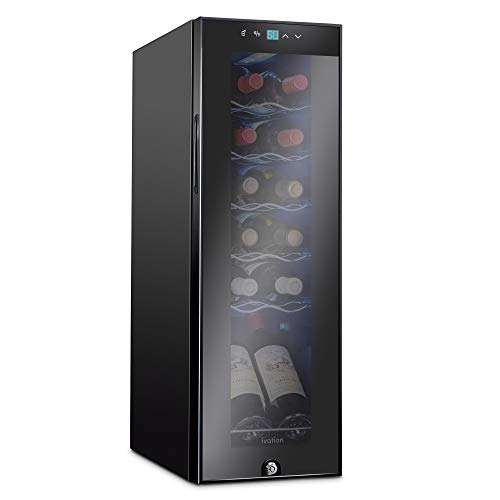
- 41°F–64°F temperature range
- UV-resistant double-paned glass
- Removable racks and key lock
Best For: Stable storage for mixed bottle sizes
Best Large-Capacity Display

- Stores up to 43 bottles
- 40°F–61°F digital cooling
- Tinted glass and blue LED display
Best For: Collectors and home entertaining spaces
Best Slim Space Saver
12-Bottle Slimline Wine Cooler

- Narrow 10.4-inch footprint
- 65% lower daily kilowatt usage than previous models
- 46°F–64°F digital temperature control
Best For: Small collections and tight spaces
Best Long-Term Value
24-Bottle Compressor Wine Cooler

- Compact 17-inch-wide design
- 41°F–64°F digital temperature range
- Upright storage for four open bottles
Best For: Collectors and frequent entertainers
Best Compact Energy Saver – NutriChef 12-Bottle Slim Wine Fridge
For shoppers comparing energy efficient wine coolers, the NutriChef 12-Bottle Slim Wine Fridge combines a narrow footprint with compressor cooling, adjustable temperature control, and an Energy Star specification. Its 41–64°F range accommodates both red and white wine storage.
Best For: Small kitchens, offices, countertops, and buyers who want 12-bottle storage in a slim design.
Pros:
- Stores up to 12 standard-sized bottles in a compact 9.9-inch-deep design.
- Uses adjustable digital temperature control with selectable Fahrenheit or Celsius display.
- Features ultra-quiet operation, LED lighting, a child safety auto-lock, and a key lock.
- Lists 112 kWh annual energy consumption and an Energy Star specification.
Cons:
- Its 41–64°F range may not suit every specialized storage preference.
- The freestanding, countertop-oriented design may not be ideal for built-in installation.
With its slim dimensions, useful controls, quiet operation, and stated energy credentials, this NutriChef is a practical choice when capacity and efficiency both matter.
Best Quiet Thermoelectric Pick – Cuisinart 8-Bottle Wine Cellar
The Cuisinart CWC-800CEN is one of the more straightforward energy efficient wine coolers for smaller collections. Its thermoelectric cooling system is designed for reduced noise and energy consumption, while touchscreen controls make temperature and lighting adjustments simple.
Best For: Apartment dwellers and wine drinkers who prioritize quiet operation and easy touchscreen controls.
Pros:
- Thermoelectric cooling is designed for less noise and energy consumption.
- Holds up to 8 bottles in a compact freestanding cabinet.
- Touchscreen controls and an LED temperature display simplify adjustments.
- Includes soft interior lighting and a limited three-year warranty.
Cons:
- Its 8-bottle capacity is smaller than the 12-bottle options in this roundup.
- The supplied notes do not specify a temperature range or annual energy-consumption figure.
This Cuisinart is a sensible fit for a modest wine collection, especially if low-noise thermoelectric cooling and accessible controls are high priorities.
Best Low-Consumption 8-Bottle Cooler – FOHERE Small Wine Refrigerator
Among energy efficient wine coolers, the FOHERE 8-Bottle Wine Cooler stands out for its stated 65 kWh annual energy consumption and inverter compressor. It offers a 46–64°F adjustable range, a removable shelf, and a double-layer glass door for flexible red and white wine storage.
Best For: Buyers seeking an 8-bottle cooler with low listed annual energy use and adaptable storage.
Pros:
- Lists 65 kWh annual energy consumption and uses an inverter compressor.
- Adjustable 46–64°F digital temperature control supports different wine styles.
- Removable shelf allows the interior to accommodate different bottle sizes.
- Double-layer glass helps protect wine from UV and heat damage, according to the supplied notes.
Cons:
- It has an 8-bottle capacity and only one removable shelf.
- The product notes say built-in installation is not recommended.
- It must remain upright for 24–36 hours before powering on.
The FOHERE offers an appealing efficiency profile for a small collection, but buyers should plan for its upright-settling requirement and freestanding placement limitations.
Best 12-Bottle Thermoelectric Value – BLACK+DECKER 12-Bottle Wine Chiller
The BLACK+DECKER BD60336 is a practical option for shoppers seeking energy efficient wine coolers with larger capacity. Its thermoelectric system is described as energy-efficient and quiet, while five removable chrome racks and a mirrored door add everyday convenience.
Best For: Wine drinkers who want 12-bottle storage, quiet thermoelectric cooling, and a space-saving freestanding cabinet.
Pros:
- Stores up to 12 bottles with five full-length removable chrome racks.
- Thermoelectric cooling is designed for quiet, energy-efficient operation.
- Offers a 46–66°F temperature range with digital temperature control.
- Mirrored door helps block potential UV light, and an interior light improves visibility.
Cons:
- Its listed annual energy consumption is 155 kWh, higher than the FOHERE and NutriChef figures provided.
- The 46–66°F range may be less flexible for some storage preferences.
- It has a one-year limited warranty.
This BLACK+DECKER balances 12-bottle capacity with quiet thermoelectric cooling, making it a convenient choice when storage space and simple wine protection matter more than the lowest listed energy use.
Best Compact Pick – 6-Bottle Countertop Wine Cooler
For shoppers seeking energy efficient wine coolers in a small footprint, this 6-bottle Wine Enthusiast model is designed for countertops, bedrooms, offices, and compact bars. Its thermoelectric cooling, digital temperature control, and compact dimensions make it practical for modest collections.
Best For: Small wine collections and spaces that need a quiet, countertop-friendly cooler.
Pros:
- Compact design stores up to six Bordeaux bottles.
- Thermoelectric cooling runs quietly and efficiently.
- Digital touchscreen and LED display make temperature adjustments straightforward.
- Energy Star specification and 1-year limited warranty.
Cons:
- Freestanding use only; it is not suitable for built-in or undercounter installation.
- Performance is best in ambient temperatures below 75°F, with 60–65°F recommended for the lowest temperature.
- Limited six-bottle capacity.
This is a sensible choice when low noise, small size, and efficient operation matter more than capacity. Be sure to leave the specified clearance around the unit for proper airflow.
Best Temperature Stability – 12-Bottle Compressor Wine Cooler
This Ivation 12-bottle model combines compressor cooling with an energy-efficient LED light and an insulated, UV-resistant double-paned glass door. It is a strong option among energy efficient wine coolers for shoppers who want a broader 41°F–64°F temperature range and more stable cooling than a compact thermoelectric unit may provide.
Best For: Wine drinkers who want temperature stability, a 12-bottle capacity, and flexible storage for different bottle sizes.
Pros:
- Compressor technology maintains temperatures from 41°F to 64°F.
- Built-in fan helps maintain consistent interior temperature.
- UV-resistant double-paned glass helps insulate and protect wine.
- Removable racks, touch controls, key lock, and energy-efficient LED lighting.
Cons:
- Freestanding design has a taller, narrower footprint than a countertop cooler.
- Single-zone storage does not provide separate temperature settings.
- Annual energy consumption is listed at 115.17 kWh per year.
With its compressor system, adjustable shelves, and relatively modest listed annual energy use, this cooler suits buyers prioritizing dependable temperature control in a compact freestanding cabinet.
Best Large-Capacity Display – 43-Bottle Wine Cooler
For collectors who need substantially more room, the Hamilton Beach HBWF4303 holds up to 43 bottles and uses compressor cooling with digital controls. Its double-pane tinted glass, blue LED lighting, and quiet operation make it a practical display-oriented choice among energy efficient wine coolers, though its listed annual consumption is higher than the smaller models here.
Best For: Home bars, kitchens, and dining rooms that need high capacity with an attractive bottle display.
Pros:
- Large 43-bottle capacity for collectors and entertainers.
- Adjustable digital cooling from 40°F to 61°F.
- Double-pane glass helps protect wine from UV exposure.
- Curved wire shelves, blue LED lighting, leveling legs, and reversible door orientation.
Cons:
- Listed annual energy consumption is 200 kWh.
- Freestanding cabinet requires more floor space than compact options.
- Single-door design provides one storage zone.
This model makes the most sense when capacity and presentation are priorities. Its compressor system and broad temperature range support varied wine storage, while the mirror finish and interior lighting give it a furniture-like presence.
Best Slim Space Saver – 12-Bottle Slimline Wine Cooler
For apartments, compact kitchens, or other tight spaces, this 12-bottle model is one of the more practical energy efficient wine coolers. Its narrow 10.4-inch width, thermoelectric cooling, and adjustable 46°F to 64°F range provide convenient storage without taking up much floor space.
Best For: Wine drinkers who need compact upright storage for a small collection.
Pros:
- Narrow design fits space-constrained areas.
- Solid-state cooling uses 65% less daily kilowatt usage than previous models, according to the supplied product information.
- Digital touchscreen makes temperature adjustments straightforward.
- Upright rack accommodates up to four open bottles.
Cons:
- Capacity is limited to 12 bottles.
- Its 46°F to 64°F range may not suit users seeking colder storage.
- Freestanding installation only.
The Slimline is a strong choice when width and energy use matter more than capacity. Removable wavy chrome shelves, interior lighting, and a UV-protective glass door add useful everyday convenience.
Best Heavy-Duty Pick – Ivation 24-Bottle Compressor Cooler
This 24-bottle compressor cooler is a practical option for shoppers comparing energy efficient wine coolers with stronger temperature control. Its 41°F to 64°F range, built-in fan, double-paned glass, and listed annual energy consumption of 122.64 kWh support dependable single-zone storage for red, white, and sparkling wines.
Best For: Medium-size collections that need stable temperatures and sparkling-wine capability.
Pros:
- Compressor cooling is designed to resist the effects of outside heat sources.
- 41°F to 64°F temperature range accommodates sparkling and white wines.
- Double-paned UV-resistant glass helps insulate and protect the collection.
- Locking controls, removable racks, and a soft LED light add convenience.
Cons:
- At 47.6 pounds, it is less convenient to move than smaller models.
- Single-zone storage does not provide separate red- and white-wine settings.
- Freestanding installation only.
With room for 24 bottles and a stated 122.64 kWh annual energy consumption, this Ivation balances capacity with useful efficiency information. It is especially appealing if low-temperature storage and a lock are priorities.
Best Long-Term Value – 24-Bottle Compressor Wine Cooler
This 24-bottle Wine Enthusiast model combines compressor cooling with a space-conscious design, making it a useful contender among energy efficient wine coolers. It offers digital temperature control, a 41°F to 64°F range, and storage for up to four open bottles in an upright holder.
Best For: Collectors who want 24-bottle capacity, compressor cooling, and upright open-bottle storage.
Pros:
- Compressor cooling is designed for consistent operation across a wider range of room temperatures.
- Holds up to 24 Bordeaux bottles in a compact 17-inch-wide cabinet.
- Upright holder stores up to four open bottles securely.
- Includes a one-year parts-and-labor warranty and three-year sealed-system parts coverage.
Cons:
- Listed details indicate manual defrost.
- Single-zone design cannot set different temperatures for different wine types.
- Its 41°F to 64°F range may be too warm for users seeking beverage-style refrigeration.
This model suits buyers who want a medium-capacity cellar with practical organization and compressor-based cooling. Its upright bottle storage and stated warranty coverage make it particularly useful for regular entertaining and longer-term ownership.
How We Picked the Best Energy Efficient Wine Coolers
We evaluated these 10 wine coolers by looking at bottle capacity, cooling technology, temperature adjustability, physical footprint, storage flexibility, controls, noise considerations, and practical features such as locks, mirrored doors, LED displays, and upright storage. Energy efficiency is not determined by one specification alone: insulation, compressor or thermoelectric design, ambient temperature, ventilation, and how often the door is opened all affect real-world consumption.
Because collections vary widely, the list includes small coolers for a few favorite bottles as well as larger freestanding models for regular entertaining. Always verify the current product specifications and installation requirements before buying.
Quick Comparison
| Best For | Recommended Capacity | Cooling Style to Consider | Useful Features |
|---|---|---|---|
| Occasional drinkers or bedrooms | 6–8 bottles | Quiet thermoelectric | Compact footprint, simple controls |
| Small household collections | 12 bottles | Thermoelectric or compressor | Adjustable temperature, slim design |
| Mixed wine collections | 12–24 bottles | Compressor | Broader temperature range, lock, upright storage |
| Entertaining and larger collections | 24–43 bottles | Compressor | Digital controls, shelving flexibility, stronger cooling |
Key Buying Factors for Energy-Efficient Wine Coolers
Capacity and Bottle Layout
Choose capacity based on your normal inventory, not an occasional maximum. Manufacturer counts typically assume standard Bordeaux-style bottles; Champagne, sparkling wine, Burgundy bottles, and larger formats may reduce usable space. Adjustable or removable shelves can make a major difference.
Thermoelectric Versus Compressor Cooling
Thermoelectric coolers are often compact, quiet, and efficient for smaller collections in stable indoor temperatures. They may struggle in warmer rooms or when a large temperature drop is required. Compressor models generally offer stronger cooling and better performance for larger capacities, but they can produce more vibration and cycling noise.
Temperature Control and Placement
Look for an adjustable digital thermostat and confirm that the temperature range suits your wine. A freestanding cooler needs clearance around its ventilation area; placing it in a tightly enclosed cabinet can increase energy use and shorten its life. Keep it away from direct sunlight, ovens, and other heat sources.
Noise, Insulation, and Daily Use
For bedrooms, offices, and quiet living spaces, prioritize quiet operation and minimal vibration. A well-insulated door, efficient seals, and limited door opening help any model maintain temperature with less work. A lock is useful for shared homes, entertaining areas, or valuable collections.
Who Should Buy Which Energy Efficient Wine Coolers?
Choose a 6- or 8-bottle cooler if you want a compact solution for a small apartment, bedroom, or occasional wine storage. A 12-bottle slim model is a practical middle ground for everyday drinkers with limited floor space. Select a 12- or 24-bottle compressor cooler if you store both red and white wines, live in a warmer environment, or want more dependable performance under changing room conditions. For frequent hosts and serious collectors, a 24- to 43-bottle unit provides useful reserve capacity and easier organization.
Before checkout, measure the installation area, confirm door clearance, check the stated temperature range, and account for ventilation space. These steps matter as much as the bottle count when choosing among energy-efficient wine coolers.