If you want cooler air without relying on a noisy, power-hungry air conditioner, energy efficient window fans can be a smart middle ground. They help pull in fresh air, exhaust warm air, and improve circulation with far less energy use than most AC units.
In this roundup, we focused on models that balance airflow, control, fit, and everyday convenience so you can choose a fan that works well in your window and your room.
Best 10 Energy Efficient Window Fans Picks for 2026
Smart Cooling Pick
Bionaire Reversible Airflow Window Fan

- Reversible airflow for intake, exhaust, or exchange
- Programmable thermostat with LED display
- Remote control and no-assembly setup
Best For: Rooms where temperature-based control and convenience matter
Flexible Fit Value
Comfort Zone Reversible Twin Fan

- Low 45.9-watt power draw
- Manual reversible airflow with 3 speeds
- Convertible to a freestanding fan
Best For: Shoppers wanting efficient, flexible cooling with a simple control setup
Simple Efficiency Choice
BLACK+DECKER 9" Dual Window Fan

- Two-speed, mechanically controlled operation
- Reversible airflow for intake or exhaust
- Expandable fit with removable legs
Best For: Basic cooling and ventilation with an uncomplicated design
High-Airflow Pick
Genesis Twin Reversible Window Fan
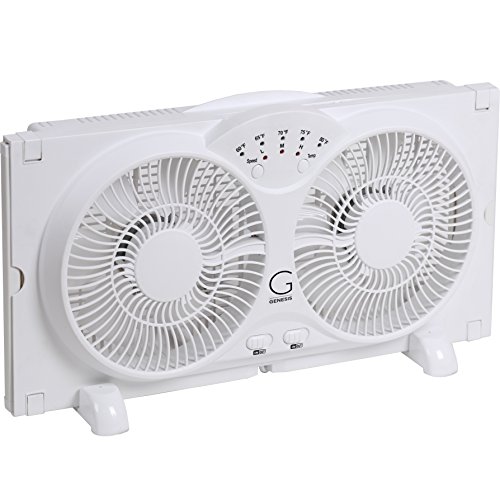
- Lowest wattage here at 30 watts
- Three speeds with thermostat and LED indicators
- Reversible blades and expandable side panels
Best For: Strong airflow with low power use in medium to larger rooms
Whole-Room Reversible Cooling
Vornado TRANSOM Window Fan with 4 Speeds
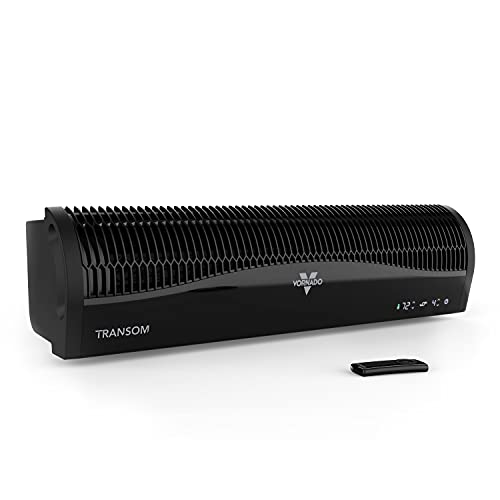
- Reversible intake/exhaust airflow
- 4 speeds plus auto temperature control
- Remote control with low-profile fit
Best For: Rooms needing flexible whole-room ventilation
Ultra-Slim Sliding Window Exhaust
Vertical Window Fan for Sliding Windows

- 10-speed control helps manage energy use
- Brushless motor with very low noise
- Slim clip-on design for sliding windows
Best For: Sliding windows needing quiet exhaust ventilation
Programmable Dual-Blade Control
HOLMES Dual Blade Digital Window Fan
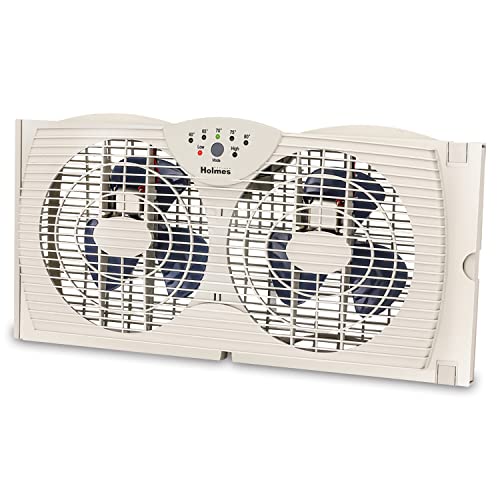
- Programmable thermostat for set temperature control
- Expandable side panels for larger windows
- Dual-blade design with 2 speeds
Best For: Homes needing simple thermostat-controlled ventilation
Quiet, Flexible Cooling

- 70W reversible twin fan with 3 airflow modes
- Low-noise design with 3 speed settings
- Expandable 23.5"-37" panel and foam seal strip
Best For: Bedrooms and rooms needing flexible reversible airflow
Simple Budget Pick

- 68W twin fan with reversible airflow
- Two-speed manual controls
- Expandable side panels fit 25"-32" windows
Best For: Small to medium rooms needing basic reversible ventilation
Remote-Control Convenience

- 70W reversible fan with 3 airflow modes
- Remote control with 3 speed settings
- Expandable 23.5"-37" panel plus foam seal strip
Best For: Rooms where remote control and easy airflow switching matter
Smart Cooling Pick – Bionaire Reversible Airflow Window Fan
If you want an energy efficient window fans option with more control than a basic box fan, this Bionaire model is a strong fit. It offers reversible airflow blades, three speeds, and a programmable thermostat, so you can move air in or out and let the fan cycle based on your set temperature.
Best For: Bedrooms, home offices, or living spaces where you want automated temperature-based cooling and remote convenience.
Pros:
- Reversible blades can draw in fresh air, exhaust warm air, or exchange airflow.
- Programmable thermostat and LED display help manage room temperature more precisely.
- Three speed settings plus remote control add everyday convenience.
- Fits 24″ to 36″ windows and requires no assembly.
Cons:
- At 120 watts, it is not the lowest-wattage option in this group.
- Designed for a fairly specific window range, so fit should be checked first.
Overall, this is the most feature-rich choice here for shoppers who want simple automation and flexible airflow control. The thermostat and remote make it especially practical for regular use in occupied rooms.
Flexible Fit Value – Comfort Zone Reversible Twin Fan
This Comfort Zone model is a practical energy efficient window fans choice if you want straightforward airflow control without extra complexity. It uses a reversible twin-fan design, three speeds, and a lower 45.9-watt rating, making it a solid option for basic cooling and ventilation.
Best For: Buyers who want a low-wattage, reversible window fan that can also convert to a freestanding fan.
Pros:
- 45.9-watt operation is relatively efficient for a twin window fan.
- Manual reversible design can bring air in or push warm air out.
- Accordion expanders lock from 22-1/4″ to 33″ for a secure fit.
- Removable feet let you use it as a tabletop or floor fan.
Cons:
- Reversing airflow requires manually turning the unit around.
- Dial control is simpler than thermostat-based models.
For shoppers who value flexibility and efficiency over advanced features, this is an easy-to-recommend pick. The added bug screen and convertible design make it especially useful for everyday home use.
Simple Efficiency Choice – BLACK+DECKER 9" Dual Window Fan
The BLACK+DECKER 9″ dual window fan is a no-frills option for buyers who want energy efficient window fans with a basic two-speed layout. Its reversible twin-fan design, lower 56-watt rating, and expandable frame make it a practical pick for everyday room cooling.
Best For: People who want a simple, mechanically controlled window fan for basic air circulation and exhaust.
Pros:
- Two speed settings keep operation simple.
- Reversible design can draw in fresh air or exhaust room air.
- Accordion expanders and removable legs help with window fit.
- Brushless motor and rust-resistant construction support durability.
Cons:
- Only two speeds, so airflow tuning is limited.
- No thermostat or remote control features.
This model makes sense if you want dependable airflow with minimal setup and a straightforward interface. It does not have the smart controls of pricier units, but it covers the basics well.
High-Airflow Pick – Genesis Twin Reversible Window Fan
If airflow volume is your priority, this Genesis twin fan stands out among energy efficient window fans for its combination of a 30-watt rating and high air movement. It includes three speeds, reversible blades, and a thermostat with LED indicators, so it gives you more control over both comfort and efficiency.
Best For: Larger bedrooms or spaces where strong airflow and temperature-guided operation are the main goals.
Pros:
- 30-watt power draw is the lowest in this group.
- Three speeds and a built-in thermostat add useful control.
- Reversible blades support intake or exhaust operation.
- Expandable side panels help the fan fit a wider range of windows.
Cons:
- Brushed motor design is less premium than brushless alternatives.
- Heavier than some other window fans at 8.4 pounds.
For shoppers focused on efficiency and airflow together, this Genesis model is the standout. The low wattage and thermostat make it especially appealing when you want strong circulation without unnecessary power use.
Whole-Room Reversible Cooling – Vornado TRANSOM Window Fan with 4 Speeds
If you want energy efficient window fans that can both pull in fresh air and push stale air out, this Vornado TRANSOM is built for practical everyday use. Its 4-speed settings, electronically reversible chamber, and low-profile window fit make it a strong pick for rooms that need flexible ventilation without a complicated setup.
Best For: Bedrooms, living rooms, and home offices that need reversible airflow and easy remote control.
Pros:
- Electronically reversible design switches between intake and exhaust with one button.
- 4 speed settings and auto temperature control add convenient day-to-day control.
- Low-profile body fits single- or double-hung windows 26″-40″ wide.
- Remote control and quiet 45 dB operation suit regular indoor use.
Cons:
- Only installs in horizontal position.
- Window screen removal may be necessary depending on window depth.
- Designed for U.S. voltage and use only.
For shoppers comparing energy efficient window fans for whole-room comfort, this model stands out for its reversible airflow and simple controls. It’s especially useful when you want a flexible cooling and ventilation option that can be adjusted quickly from across the room.
Ultra-Slim Sliding Window Exhaust – Vertical Window Fan for Sliding Windows
Among energy efficient window fans, this vertical sliding-window model is built around low power use, a brushless motor, and 10-speed control for precise airflow. It’s a good fit if you mainly want fast exhaust ventilation in a slim, clip-on design that won’t interfere much with window movement.
Best For: Sliding windows that need a compact exhaust fan for odor removal, humidity control, and quick air exchange.
Pros:
- 10 speed levels help fine-tune airflow and reduce energy consumption.
- Brushless motor and low 16 dB noise support quiet operation.
- Ultra-thin body is designed not to affect window opening and closing.
- No-drill installation clips onto the window frame in seconds.
Cons:
- Single-direction exhaust only; it cannot reverse.
- Requires careful measuring because it is size-specific.
- Best suited to sliding windows rather than every window type.
This fan makes sense when your priority is targeted exhaust rather than full-room circulation. Its slim build, low noise, and adjustable speed range make it a practical ventilation tool for kitchens, bathrooms, and other spaces where stale air builds up.
Programmable Dual-Blade Control – HOLMES Dual Blade Digital Window Fan
If you’re comparing energy efficient window fans for straightforward whole-room airflow, this HOLMES model keeps the controls simple with two speeds and a programmable thermostat. The dual blade design and expandable side panels make it a practical choice for common double-hung or slider windows.
Best For: Users who want thermostat-based control and an expandable fit for larger windows.
Pros:
- Programmable thermostat helps maintain a set temperature automatically.
- Dual blade setup is designed for consistent airflow.
- Expandable side panels and extender help secure the fit in larger windows.
- Water-resistant motors add durability in rainy conditions.
Cons:
- Only 2 speed settings are available.
- At 30 dB, it is not the quietest option in the group.
- Bulkier than low-profile window fan designs.
This is a good pick if you want a set-and-manage approach to window ventilation instead of constant manual adjustments. The thermostat and expandable frame make it especially appealing for households that want an easy fit and dependable air circulation.
Quiet, Flexible Cooling – Shinic 9" Twin Window Fan
If you’re comparing energy efficient window fans for a bedroom or living space, this Shinic twin model stands out for its 70W motor, three airflow modes, and foam seal strip that helps reduce air leaks. It’s built to bring in cool air, push hot air out, or circulate air across the room, which makes it a practical option when you want targeted airflow without running a larger cooling system.
Best For: Bedrooms or other rooms where low-noise operation, reversible airflow, and a tighter window seal matter most.
Pros:
- Three airflow modes: cool, exhaust, and circulate
- Low-noise operation with three speed settings
- Expandable panel fits windows from 23.5″ to 37″
- Foam sealing strip included to improve airflow efficiency
Cons:
- Requires window-mount installation
- Uses manual/remote operation rather than smart features
Overall, this is a versatile twin window fan for shoppers who want reversible airflow and a stable fit across a wider range of window sizes. The included cover, bug screen, and standing feet add useful flexibility for everyday use.
Simple Budget Pick – Amazon Basics Twin Window Fan
For shoppers looking at energy efficient window fans in a straightforward package, this Amazon Basics twin fan keeps things simple with two speeds, reversible airflow, and expandable side panels. Its 68W motor and ETL certification make it a practical choice for small to medium rooms when you want basic ventilation without extra complexity.
Best For: Small to medium bedrooms or home spaces where easy manual control and a standard window fit are priorities.
Pros:
- Reversible airflow for intake or exhaust use
- Two-speed operation for simple comfort control
- Expandable side panels fit windows 25″ to 32″ wide
- ETL listed with a copper motor for reliable operation
Cons:
- Only two speed settings
- Manual controls only, with no remote included
This is a good fit if you want a no-frills window fan that covers the basics well. It’s not the most feature-rich option, but its reversible design and adjustable width make it easy to slot into common window setups.
Remote-Control Convenience – Shinic 9" Window Fan
This Shinic model is a solid choice if you want energy efficient window fans with easier day-to-day control. It offers three airflow modes, three speeds, and a remote, while the 70W design and included foam seal strip are aimed at helping you move air efficiently through a window opening.
Best For: Bedrooms, living rooms, or family spaces where remote control and reversible airflow make daily use easier.
Pros:
- Three airflow modes: intake, exhaust, and circulation
- Remote control included for convenience
- Three speed settings for more adjustment
- Expandable panel and foam seal strip help improve fit and sealing
Cons:
- Requires 2 AAA batteries for the remote, not included
- Still depends on proper window installation for best performance
For buyers who want a little more convenience than a basic window fan, this Shinic model has a useful feature mix. The remote, reversible airflow, and sealing accessories make it especially practical for regular seasonal use.
How We Picked the Best Energy Efficient Window Fans
We looked for Energy Efficient Window Fans that offer strong airflow without unnecessary complexity. Key factors included reversible operation, thermostat or remote controls, multi-speed settings, adjustable fit, and features that support quieter, more targeted cooling.
We also favored models that are practical for common home setups, including standard double-hung windows and wider frames, since a good seal and proper fit can make a bigger difference than raw power alone.
Quick Comparison
For most buyers, the best choice depends on how you plan to use the fan. Dual-fan models are often better for moving more air across larger rooms, while single-fan or sliding-window designs can be a better match for narrower spaces or simpler cooling needs. Programmable thermostats are helpful if you want more automation, while remote controls improve convenience for bedrooms and upstairs rooms.
Key Buying Factors for Energy Efficient Window Fans
Reversible Airflow
Reversible intake and exhaust modes are one of the most useful features in Energy Efficient Window Fans. Intake brings in cooler outside air, while exhaust pushes hot indoor air out. That flexibility helps you adapt to changing weather and room conditions.
Fit and Window Type
Always check the width range and installation style before buying. Some fans expand to fit standard windows, while others are made specifically for vertical or sliding windows. A secure fit helps prevent air leaks and improves efficiency.
Speed Settings and Noise
More speed options give you better control over comfort and noise. Lower settings may be ideal for sleeping, while higher speeds can help during hot afternoons or after cooking. If quiet operation matters, look for low-noise designs and user-friendly controls.
Controls and Automation
Remote controls, timers, and programmable thermostats can reduce guesswork and help the fan run only when needed. That can improve comfort and may support better energy use over time.
Who Should Buy Which Energy Efficient Window Fans?
Choose a dual-window fan if you want stronger airflow for bedrooms, living rooms, or shared spaces. Pick a compact or single-fan model if you need a simpler option for smaller rooms. Sliding-window fans are best for apartments or homes with nonstandard windows, while reversible, thermostat-equipped models suit shoppers who want the most convenience from their Energy Efficient Window Fans.